Most agencies sell you the highlight reel. A flood of calls, booked jobs, and money rolling in from day one.
We’re going to do the opposite.
We’ve managed over $10 million in ad spend for HVAC contractors, and we’ve watched a lot of good owners get stressed out over completely normal things. Every penny you spend is precious, and we know that. So before your ads go live, here are five things about running ads that are going to frustrate you, why they happen, and exactly how we handle them.
This isn’t to talk you out of advertising. It’s the opposite. The contractors who understand these five things upfront are the ones who stay calm, keep their budget working, and win. The ones who don’t know them tend to panic in week two and pull the plug right before it pays off.
First, Where Will Your HVAC Ads Actually Run?
Before we talk about frustrations, it’s important to understand something most HVAC contractors never fully see:
Not all leads come from the same place, and not all platforms behave the same way.
Most HVAC businesses end up running ads across four core channels. Each one attracts different types of homeowners, works on different logic, and produces different expectations for cost and lead quality.
If you don’t understand this upfront, it’s very easy to compare results incorrectly and assume something is “not working” when it actually is.
Let’s break it down.
Google Local Services Ads (LSA)
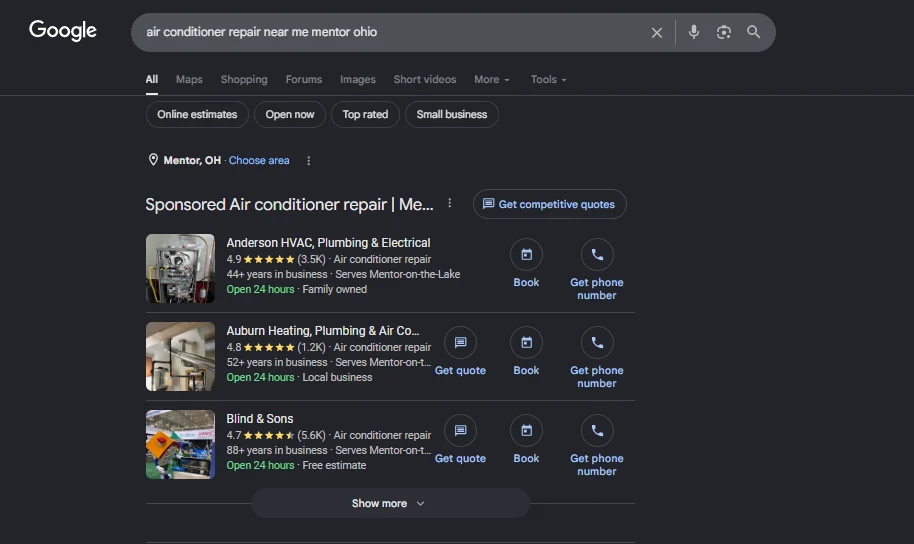
Google Local Services Ads appear at the very top of search results with the “Google Guaranteed” badge. These are designed specifically for home service businesses like HVAC.
What makes them different is simple:
You don’t pay per click. You pay per lead.
That means you’re only charged when a homeowner actually calls or messages your business through the ad. However, Google still applies a verification process to determine whether a lead is valid.
Why HVAC Contractors Like LSA
- Highest intent traffic (people actively searching for service)
- Pay only for leads, not browsing activity
- Strong visibility above organic and PPC results
The Tradeoff
- Limited control over targeting compared to PPC
- Lead volume can fluctuate based on competition in your area
LSA is often the most “direct response” channel in HVAC marketing, but it’s not the only one you should rely on.
Google PPC (Pay-Per-Click)
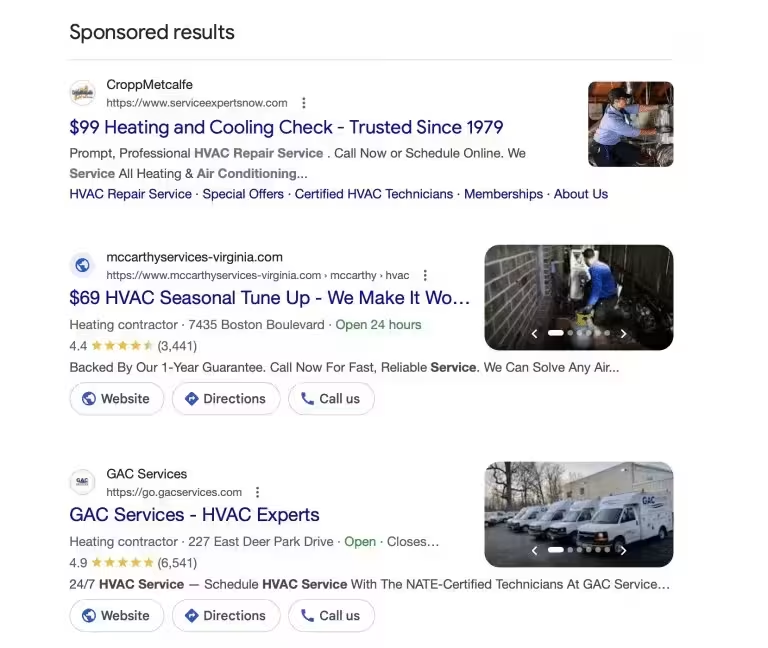
Google PPC ads appear above organic search results when someone searches for terms like “AC repair near me” or “furnace replacement cost.”
Unlike LSA, you pay every time someone clicks your ad—even if they don’t call.
This makes PPC both powerful and sensitive.
Why PPC Is So Effective
- You can target very specific keywords (high purchase intent)
- You can scale aggressively when it’s working
- You show up exactly when someone is searching
Why It Can Feel Expensive
- You pay for every click, not every lead
- Some clicks won’t convert into calls or jobs
- Competition in HVAC markets can drive up costs quickly
PPC is often the backbone of HVAC lead generation, but only when it’s managed carefully and optimized over time.
Yelp Ads
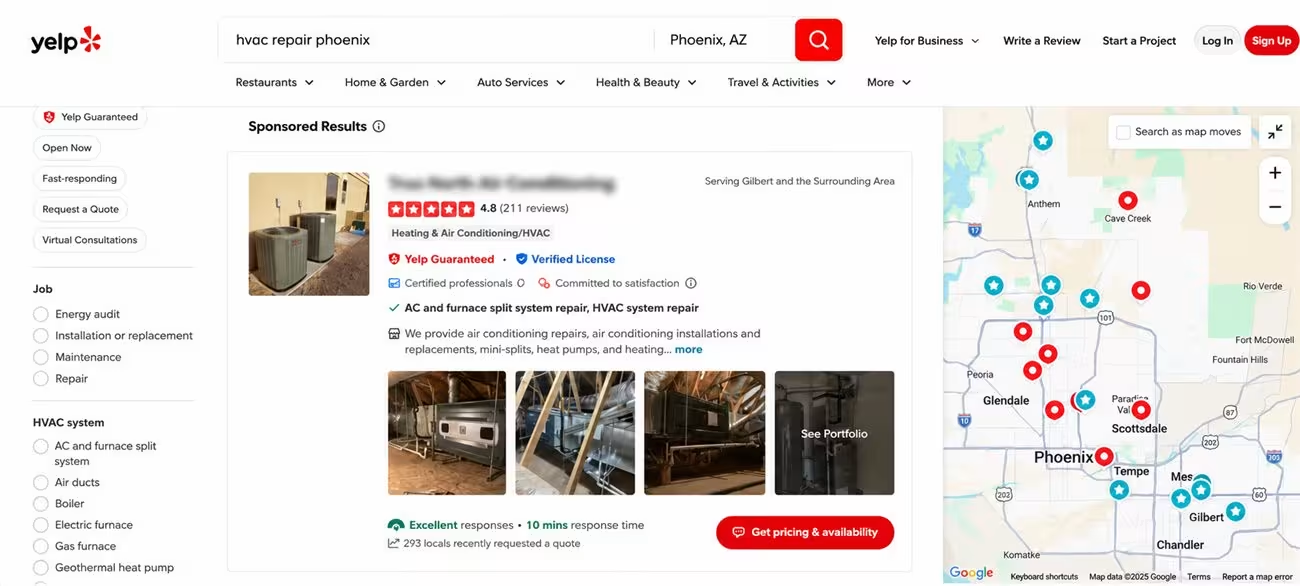
Yelp ads function differently from Google. Instead of capturing people actively searching, Yelp often reaches homeowners who are in comparison mode.
They’re not always ready to book immediately; they’re collecting quotes, reading reviews, and evaluating options.
Why Contractors Use Yelp
- Lower cost per lead compared to Google in many markets
- Strong visibility for install and replacement jobs
- Works well when combined with fast follow-up systems
The Challenge
- Leads often require multiple follow-ups
- Higher percentage of “shopping” behavior vs immediate booking
- Performance depends heavily on responsiveness
Yelp can be profitable, but only when treated as a nurturing channel, not instant-booking traffic.
Meta Ads (Facebook & Instagram)
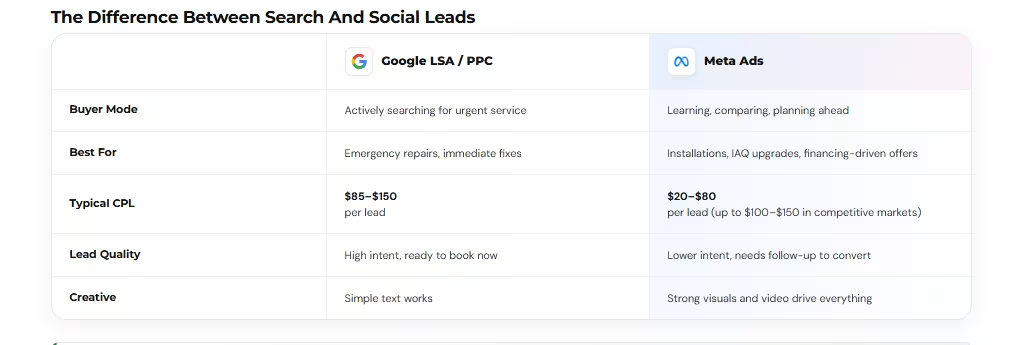
Meta ads don’t rely on search intent. Instead, they place your business in front of homeowners while they’re scrolling social media.
This means you’re reaching people before they’re actively looking for HVAC services.
Why HVAC Companies Use Meta Ads
- Lower cost per lead compared to search-based ads
- Strong reach in local geographic areas
- Good for building awareness and filling slower pipelines
The Reality of Meta Leads
- Lower immediate intent compared to Google
- More follow-up required to convert leads
- Works best when paired with a strong sales process
Meta ads are often misunderstood. They don’t replace Google. They expand your pipeline.
Why This Matters Before You Read Anything Else
Most frustrations contractors experience with advertising an HVAC business come from a simple misunderstanding:
Each platform behaves differently and produces different types of leads.
When you compare them incorrectly, it feels like something is broken when it’s actually just misunderstood.
For example:
- A $50 Meta lead is not the same as a $150 Google lead
- A Yelp inquiry is not the same urgency as an LSA call
- A PPC click is not a guaranteed customer
They are different tools, not interchangeable results. Once you understand this, the rest of the setbacks start to make a lot more sense.
1. Why Do My HVAC Ads Cost So Much and Deliver So Little in the First Two Weeks?
This is the one that catches almost everyone off guard.
Your ads go live, the money starts going out, and the phone barely rings. It feels like Google, a multi-trillion-dollar company, is taking your money and handing you nothing in return.
The Learning Phase (What’s Really Happening)
Here’s what’s actually happening: Google PPC has a learning phase.
When a new ad campaign starts, Google doesn’t immediately know who your best customers are. Instead, it begins a short “learning phase” where it tests different combinations of:
- Keywords
- Locations
- Search behaviors
- Call outcomes
The goal is not to generate perfect leads immediately. It’s to understand who is most likely to become a paying customer for your business, specifically.
What Google Is Trying To Figure Out
During this early stage, the system is analyzing real-world behavior from your leads to refine performance.
It’s learning things like:
- Which types of HVAC jobs you actually book (repairs vs installations)
- Which service areas produce profitable customers
- Which search terms lead to real revenue—not just phone calls
- What kind of callers your business is most likely to convert
All of that information from those early clicks gets fed back into the algorithm so it can sharpen your targeting. Think of it as paying a small tuition now for much cheaper, much sharper leads later.
This phase usually takes about two weeks. So during that window, expect fewer leads and a higher cost per lead than you’ll see later. Cost per lead is simply what you pay for each call or form that comes in.
Here’s an example. Say you’re spending $3,000 a month, about $100 a day. In those first two weeks, your cost per lead will look high, and the volume will look thin. That is completely normal. It comes down at month one, month two, and month three as the algorithm learns and starts sending you the right people.
Every click, call, and form submission helps train the system.
What To Expect In The First 1–2 Weeks
This is where expectations matter most.
During this period, it is completely normal to see:
- Higher cost per lead than you’ll see later
- Fewer overall leads while the system is learning
- Uneven performance from day to day
This phase can feel uncomfortable, but it is temporary.
In HVAC advertising, this is the cost of building long-term efficiency.
Why This Phase Actually Matters
Most contractors focus on what they’re paying during this stage. But what they’re really paying for is something more valuable:
Optimization
This early data is what allows the system to improve over time, leading to:
- More consistent lead flow
- Better-quality calls
- Lower cost per lead after stabilization
Without this phase, performance would never improve.
And here’s the part worth holding onto: this happens to everyone. Whether you’re a local HVAC shop, a national ice cream chain, or Nike, every advertiser on Google goes through the same learning phase. It isn’t a sign your campaign is broken. It’s the system doing the work that makes your ads pay off later.
It’s also completely normal to find this frustrating. You’re spending money, and the instinct is to think, “This giant company is taking my cash and giving me nothing.” What they’re giving you is the learning that makes everything after week two work.
How we handle it:
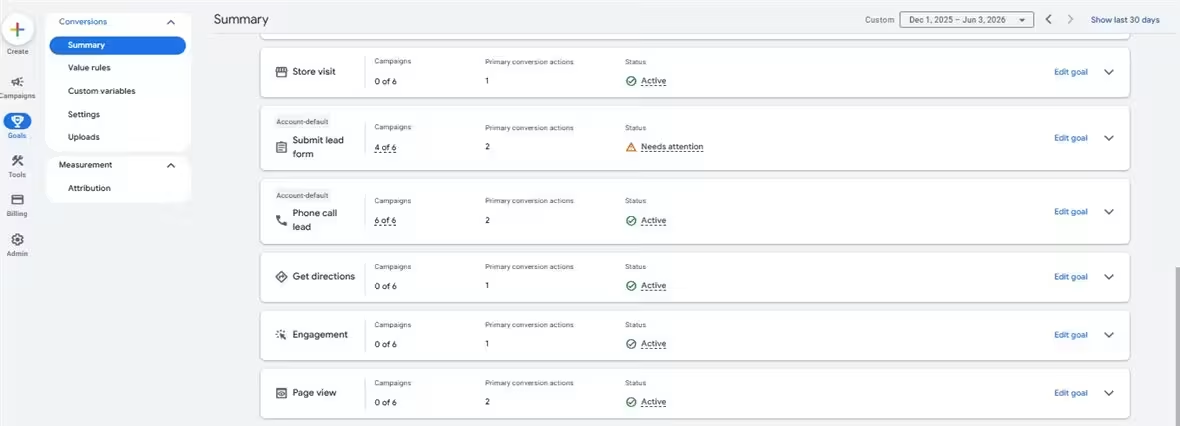
We don’t disappear during this stretch. Your account manager talks with you through the early weeks, often daily, so you always understand what’s happening and why your numbers look the way they do. We’d rather over-communicate while it’s stressful than leave you staring at a dashboard wondering if you’ve made a mistake. You haven’t.
Ready to learn how our digital marketing experts run your ads? Book a free 30-minute strategy call, and we’ll help you decide how to make the best out of advertising your business.
2. Why Am I Getting Calls That Have Nothing to Do With Booking a Job?
You’ll answer the phone expecting a customer and instead get someone who has no intention of hiring you. It feels like watching money walk out the door.
A few of these always slip through, no matter how tightly the campaign is built. They come from three main places:
- Wrong-intent calls. Someone meant to reach a hardware store to buy a DIY mini-split, or they were looking for Home Depot, and dialed you by mistake.
- Out-of-area callers. Someone works in your town but lives 30 miles away. Maybe they’re visiting their mom, maybe they commute in. Because the platform sees them as local to you, your ad shows up — and they call from where they actually live, outside your service area.
- Job seekers. People see your ad, decide you look like a strong company (because you are), and call asking for a job instead of service. On PPC, that click already cost you $20 or $30. They weren’t trying to hurt you — they just didn’t understand how the system works.
At first glance, it feels like wasted money. But what’s actually happening is more predictable than it seems.
Not Every Call Is A “Customer Intent” Call
When someone clicks your ad, it doesn’t mean they are fully ready to hire. It simply means they were searching for HVAC-related information at that moment.
That intent can vary a lot:
- Some are ready to book immediately
- Some are comparing options
- Some are researching prices
- Some are completely unrelated but still triggered the ad
This is normal across every HVAC campaign.
Out-of-Area Calls (More Common Than You Think)
One of the most misunderstood issues is location targeting. A caller may:
- Work in your service area but live outside it
- Spend their day in your target city but live 30–60 miles away
- Appear “local” to Google based on device behavior, not home address
So when their HVAC system breaks, your ad shows up, even if they’re technically outside your ideal service zone.
This is not broken targeting. It’s how location data works in modern ad systems.
Job Seekers & Non-Customer Calls
Another common category is job-related inquiries.
Some people see your ad and assume, “This looks like a company that’s hiring.” These calls are not malicious. They simply misunderstood intent.
On PPC campaigns, you still pay for that click, even though it was never going to become a customer.
Wrong-Intent Searches
You’ll also see callers who:
- Were trying to reach a supplier (not a contractor)
- Thought they were contacting a retail store
- Were looking for DIY solutions or troubleshooting help
These are usually the lowest-intent traffic type, but they still appear occasionally in any HVAC campaign.
How We Reduce This (Without Over-Filtering Good Leads)
We don’t try to eliminate all non-customer traffic, which would also reduce the number of useful leads. So how do we keep this from draining your budget?
Negative Keywords
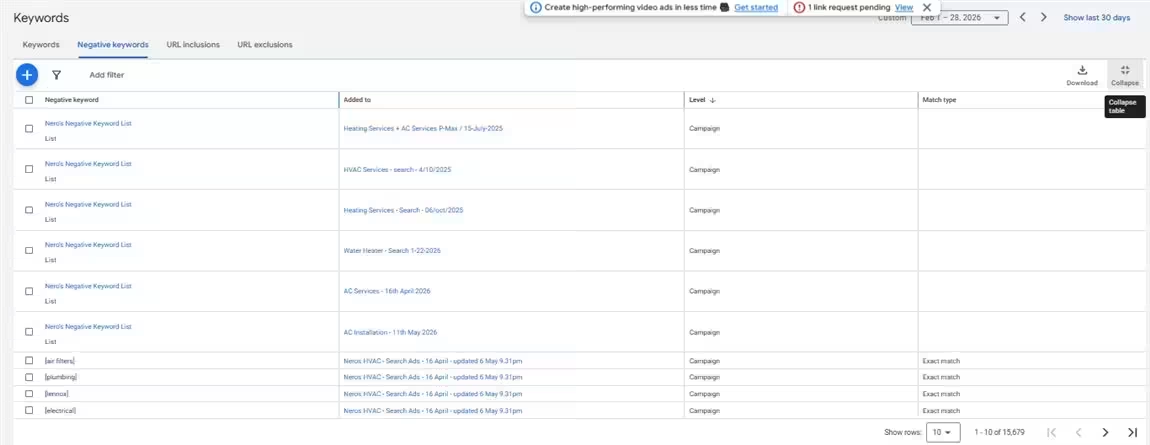
A negative keyword is a term you tell Google to never show your ads for. We build your campaigns with as many as 14,000 negative keywords.
We block irrelevant searches like:
- “HVAC jobs”
- “HVAC salary”
- “how to fix AC myself”
- “DIY furnace repair”
That blocks the overwhelming majority of irrelevant searches before they ever reach you.
Click Monitoring & Filtering
We also watch for click fraud and competitor clicks. If we see someone rapidly clicking your ad and bouncing off your landing page, or people overseas paid to click competitors’ ads, we exclude those IP addresses so they stop seeing your ads entirely.
We monitor:
- Repeated spam clicks
- Competitor activity
- Suspicious traffic patterns
And exclude bad actors where possible.
The Important Reality
Even with strong filtering, you will never get 100% “perfect” leads. Because intent lives in the customer’s mind, not just the keyword they type. A homeowner can type the “right” search term, but still not be ready to book.
That’s not an ads problem, it’s a human behavior reality.
How We Handle It
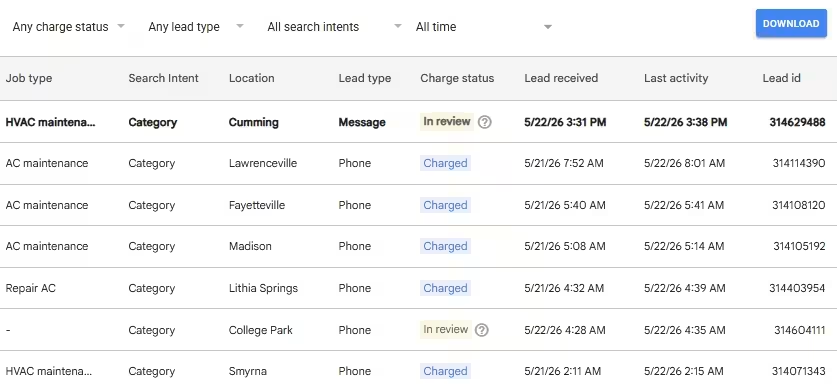
We can shrink this to a trickle, but we can’t make it zero. People’s intent in their heads and the words they actually type don’t always line up. A competitor who lives a mile away might click your ad once in a blue moon out of spite, and that’s frustrating, but it’s rare, and it’s not something any agency can fully prevent.
We don’t just send you reports. We actively help interpret what you’re seeing.
If irrelevant calls are higher than expected, we:
- Refine targeting
- Expand negative keyword lists
- Adjust geographic filters
- Review search terms in detail with you
You’ll always understand whether what you’re seeing is normal or something that needs adjustment.
One bonus worth knowing
On Google Local Services Ads (LSA), the system often hears these bad calls and credits the money back to you. So a job-seeker call on LSA usually costs you nothing, while the same call on PPC still costs you the click. That difference is one reason we lean on LSA for high-intent leads.
3. Why Doesn’t Every Click I Pay For Turn Into a Booked Job?
You’ll have people call, ask for an estimate, and then go with a competitor. Or they’ll call and the phone rings out because you’re slammed. Either way, you paid for that click and didn’t get the job.
That stings. But here’s the reframe: a click buys you a conversation, not a closed deal.
- A click is not a customer
- A lead is not a booked job
- And marketing does not replace your sales process
It simply creates opportunities.
A Click Starts The Conversation—Not The Sale
When someone clicks your ad, what you’re really getting is:
- A homeowner showing interest
- A request for information or pricing
- A chance to earn the job through follow-up and trust
But at that stage, nothing is guaranteed. Most homeowners will shop around. They compare quotes, weigh pricing, and sometimes choose someone else. Some call when you’re in the middle of a busy season and can’t get to the phone; this happens most to small shops that are stretched thin.
There’s no version of advertising where every single call and form becomes a booked job. That’s the sales process at work, not a failure of the ad.
The Metric That Matters
Instead of judging performance by clicks or leads alone, we focus on:
- Cost per lead
- Cost per booked job
- Close rate
- Revenue per job
These numbers show the true health of your marketing system.
When jobs aren’t booking, the lead isn’t always the problem. Sometimes it’s the process between the call and the close. Say you’re only closing 10% of your installation estimates. That’s a signal worth looking at. We’d want to see you closer to 30%.
Where Improvements Usually Come From
When performance feels “off,” it’s often not the ads alone.
If your numbers are low, we’ll talk through your sales process with you and help you find where deals are slipping. Maybe it’s the response time. Maybe it’s a follow-up. Maybe it’s how estimates get presented.
None of this is a knock on you. Every growing company tightens its sales process, and this is simply an honest place to find easy wins.
We typically find improvements in:
- Faster response times
- Better call handling
- Stronger follow-up systems
- Clearer pricing and estimate structure
- Better alignment between service mix and lead type
In many cases, small operational changes increase conversion rates more than any ad adjustment.
How we handle it:
We track every call and form against actual booked jobs, not just raw lead counts.
That means when a month runs slow, we can tell you whether it’s a lead-quality issue or a follow-up issue, and point you to the specific fix instead of guessing. You’re never left wondering whether the ads are the problem or the process is.
Ready to convert clicks into calls? Talk to us about how we manage advertising for your business.
4. Why Are My Yelp and Meta Leads Lower Quality Than My Google Leads?
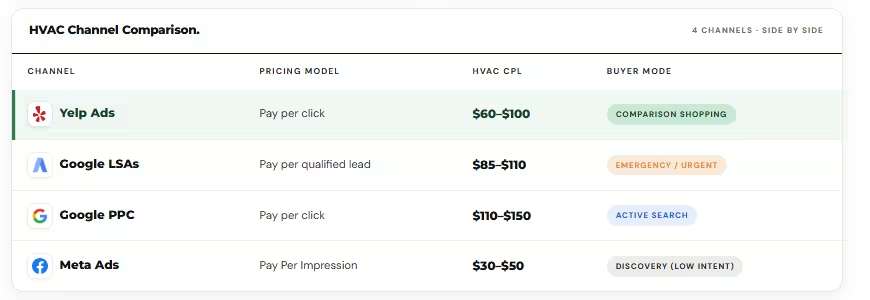
If you run ads on Meta or Yelp, brace yourself: the leads will feel flakier than what you get from Google.
You’ll call someone back, and they’ll say, “I don’t even remember filling out a form.” That happens a lot on Meta. You’ll get more deal-seekers and more half-interested clickers.
Lower Cost Comes With Lower Intent
Here’s why, and it’s not a flaw; it’s a trade-off. You’re paying a lot less for these leads than you do on Google. It’s a get-what-you-pay-for situation. Cheaper leads mean lower average quality.
Cost Per Job Can Still Make Sense
But this is the part most contractors miss: your cost per booked job can still come out even — or lower. On Yelp especially, because you’re paying so little per lead, your cost per actual booked job can beat Google in the right market, even though a smaller share of those leads close.
What It Takes To Make These Channels Work
The leads aren’t free money, though. Winning on these platforms takes a specific approach:
- Call back fast. Response time is everything here. The quicker you reach out, the more of these leads you’ll actually connect with before they forget they ever inquired.
- Follow up more than once. These buyers rarely book on the first touch. Persistence is what turns a lukewarm Meta lead into a booked job.
- Set realistic expectations. Even with a dialed-in process, your best-case close rate on Meta or Yelp is around 20–30%. Plan your follow-up volume around that number, not around Google’s.
Not All Leads Will Be Good, And That’s Normal
To be clear, there will be genuinely bad leads in the mix. We’re not going to pretend otherwise. But when booking rates are low, there’s often room to improve the follow-up, too. It’s usually both, and the only way to know which is to look at the numbers honestly.
How We Handle It
We monitor your results against industry norms. If your close rate is low, we help you figure out whether it’s a lead-quality problem or a follow-up gap. Because the fix is completely different for each, and we’d rather solve the right one.
5. Why Is My Yelp Rating Lower Than My Google Rating?
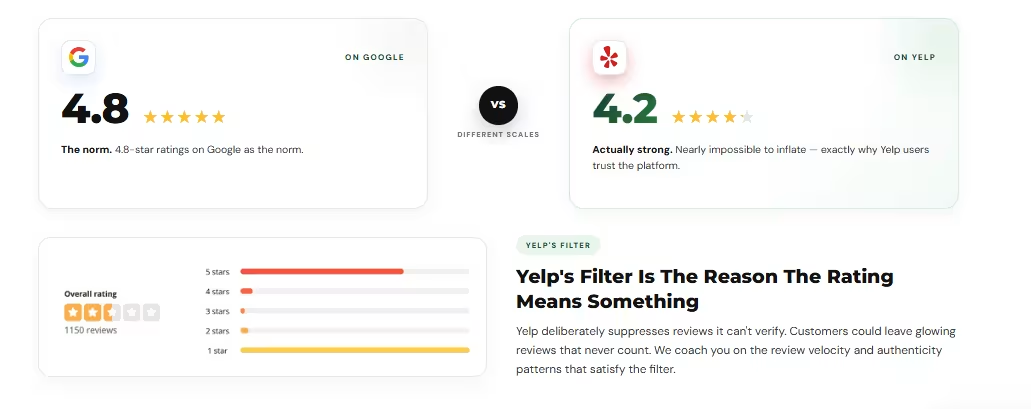
You run a careful, high-quality service. Your Google profile sits at a proud 4.9. Then a grumpy 2-star review lands on Yelp, and it stings.
Here’s the difference, and it’s built into the platforms themselves.
- On Google, you’re allowed to ask happy customers for reviews. That’s consistent with Google’s policy, and most contractors are selective. They ask the gracious, clearly satisfied customers who are inclined to say kind things. Naturally, that lifts your rating.
- On Yelp, soliciting reviews is against the rules. Yelp wants organic, unprompted feedback from people who use the platform on their own. So there’s no “grade inflation.” The customers who go out of their way to leave a review skew toward the ones with something to complain about, and people tend to be blunter on Yelp than on Google.
The result:
You might sit at 4.9 on Google and 4.1 to 4.4 on Yelp for the same quality of work. That’s not a reflection of your service slipping. It’s a reflection of how the two platforms collect reviews.
We bring this up early on purpose. These reviews can really hurt when you’ve taken great care on a job, and the sting is worse when it blindsides you. Knowing it’s coming and knowing it’s normal takes most of the pain out of it.
How we handle it
We help you respond to tough reviews the right way: factual, calm, neutral, and professional. A composed, fair reply is read by every future customer who scrolls through, and it often does more for your reputation than the original review does against it. You’re never left to fire off an angry response at midnight; we handle it with you.
How You Should Actually Judge Whether HVAC Ads Are Working For You
The contractors who win at advertising treat it like a high-stakes poker game.
They don’t get rattled losing a single hand, because they know losing some hands is part of the game. They play with a cool head and watch their performance over 20, 40, 60 hands — not over three calls in a row.
Short-Term Losses Are Normal
Why does that matter? Because you will have stretches where three calls in a row go nowhere. And then the fortieth call is a $20,000 install. If you’d quit after the third dead end, you’d never have reached it.
We Focus On Averages, Not Emotion
That’s why we coach you to think in averages; the numbers that actually tell you whether advertising is paying off:
- Cost per lead. What you pay for each call or form that comes in.
- Leads per month. Your total volume, so you can see the trend instead of reacting to a single slow day.
- Cost per booked job. What you pay for work you actually win. The number that matters most.
- Return on ad spend. The revenue you earn for every dollar you put in.
Averages Tell The Real Story
Here’s why the averages beat the anecdotes. Imagine a month where you spend $3,000 and book six jobs. That’s $500 per booked job.
If three of those calls felt like a waste of time in the moment, it’s tempting to call the month a failure, but if even one of those six jobs was a $9,000 install, the whole month paid for itself many times over. The bad calls fade into the math. The averages tell the real story.
Further Reading
We Make Decisions Based On Data, Not Emotion
We make decisions off that data, not off the emotional swing of one bad afternoon. And we’ll always tell you the truth: if we have a legitimate concern about your ad performance, you’ll hear it from us plainly.
The frustrations above are normal. A campaign that genuinely isn’t working is a different conversation, and we won’t hide from it.