fbpx...

How HVAC Contractors Can Generate More Heating & Furnace Leads During a Winter Storm

Winter storms don’t just test HVAC systems — they test how prepared an HVAC business really is. When temperatures drop fast, homeowners search urgently for help. Furnaces fail, heat pumps ice over, pipes freeze, and families want clear answers immediately. In these moments, HVAC contractors have a choice: React late and scramble to keep up Or respond calmly, visibly, and usefully while demand is at its highest The companies that win during winter storms aren’t the ones pushing aggressive sales messages. They’re the ones who: Show up clearly in search Communicate calmly and helpfully Make it easy for families to get support fast Here’s how HVAC contractors can generate more heating and furnace leads during a winter storm, while also building trust and goodwill in their communities. Using the January 25 Winter Storm as a Real-World Example To make this practical, we’ll use the major winter storm that began on January 25 as a case study. Often referred to as the Arctic Siege, this storm impacted more than 118 million people across the United States, from the Northeast down into Texas. It brought snow, sleet, freezing rain, power outages, and extreme stress on heating systems. As the storm approached, RS Gonzales worked with HVAC contractors across multiple states to: Prepare their marketing systems Share helpful information with homeowners Maximize visibility for emergency heating searches Handle a sudden influx of calls and leads Below, we’ll break down what HVAC contractors can do during a winter storm, followed by the foundational systems that make those actions possible when it matters most. Lead With Help, Not Hype During a winter emergency, homeowners are cold, anxious, and often worried about costs. This is not the moment for aggressive offers or gimmicks. The HVAC companies that stand out are the ones sharing: Safety tips Clear service availability Reassurance that help is available 1. Email + Text Your Existing Customers Your existing customer list is one of your most valuable assets during a storm. Why? They already trust you They’re more likely to call you first They often forward helpful messages to friends and neighbors Text messages in particular see open rates near 99%, compared to ~30% for email. This is why having a clean, organized CRM matters before the storm hits. Informative Email and Text Message Campaign One of our clients, Su’Coy Heating, AC & Duct Cleaning sent a clear, compassionate email and text message during the storm with practical advice: Clear side vents to prevent furnace shutdowns Switch heat pumps to Emergency / Auxillary Heat if iced over Gently brush snow off outdoor units (no shovels or ice picks) Run a slow drip to prevent frozen pipes This type of communication builds trust before the call ever comes in — and when systems fail, those homeowners already know who to call. People remember who helped them feel calm when things went wrong. The open rate on that email was over 51%—double the standard open rates of 20-30% on a less urgent email marketing campaign. 2. Use Local Media & PR to Build Authority Fast Winter storms create a surge in demand for local experts. One simple but powerful tactic is issuing a short local press release that covers: Emergency service availability Storm preparedness tips Safety guidance for homeowners Media Interview With Local TV Station After we helped Nero’s Heating & Air publish a winter storm preparedness press release, they were contacted by DC News Now, a local TV station in Prince George’s County, MD and invited to do a live on-air interview. That single segment: Positioned the company as a trusted local expert Reached thousands of homeowners at once Drove brand recognition far beyond paid ads Earned Nero’s a backlink from a website with a Domain Rating of 73 This kind of exposure compounds trust — especially when paired with strong Google visibility. It’s also the gift that keeps on giving. The video clip will live on Nero’s 24/7 Emergency Heating Repair service page, giving them credibility and boosting their ranking for heating and furnace related-keywords for many winters to come. https://www.youtube.com/watch?v=Nz-DgHDgYAg 3. Maximize Google Local Services Ads (LSAs) During the Storm During emergencies, Google Local Services Ads often outperform standard PPC. Why? Because homeowners searching for “emergency furnace repair” want: A phone number A trusted, verified provider Immediate help One critical LSA budgeting tactic most contractors miss Google LSAs allow you to set very high weekly ad budgets. You will almost never spend anywhere near that full amount — but increasing the budget signals availability to Google. For example, one HVAC contractor in central New Jersey increased their LSA weekly budget to $60,000. They spent $1089 on 11 leads during a 48-hour period, including 9 furnace repairs and 2 installations. That translates into a highly-profitable $99 Cost Per Lead. But Google prioritized them during peak storm demand Result: a sharp increase in inbound heating leads over several days With a maxed-out ad budget, Google prioritized them during peak storm demand. Better year, they attracted new customers and built loyalty by restoring family’s comfort during a crisis. LSAs are one of the fastest ways to capture demand while it’s happening. 4. Post Service Updates on Your Google Business Profile (Correctly) During a winter storm, your Google Business Profile (GBP) often becomes your most visible digital asset. But not all posts are equal. What works best Use GBP Updates, not standard posts, to clearly state: You are open during the storm You offer emergency heating services You are operating 24/7 or extended hours Updates appear more prominently and signal real-time availability — exactly what homeowners are scanning for during emergencies. 5. Use Social Media to Reinforce Availability (Not Sell) Social media doesn’t replace search during emergencies — but it reinforces trust. Effective winter storm posts focus on: Current weather conditions Emergency hours Safety reminders Reassurance that your team is ready This mirrors what homeowners are seeing on the news and keeps your brand visible without feeling promotional. 6. Use Website Pop-Ups to Capture High-Intent Heating & Furnace Leads During a winter storm, homeowners are anxious, cold, and looking for immediate reassurance. This is one of the few moments where a well-designed website pop-up doesn’t feel intrusive — it feels helpful. A timely,

Read More

Local Citation Building for HVAC Contractors: The 2026 Playbook for Google Maps & AI Search

Local citation building for HVAC contractors is the process of listing consistent business information across trusted directories to improve Google Maps, local SEO, and AI search visibility. For a while, directory listings were treated as “old-school SEO.” In 2026, local citations matter more than ever. Especially if you want your business to be visible in ChatGPT, Google Gemini, Grok or Perplexity. According to a noted study of local search ranking factors in 2026, citation accuracy and consistency have regained importance, especially as search engines and AI systems rely on trusted business data to validate location, legitimacy, and relevance. This guide explains: What local citations are (and why HVAC contractors need them) Why citations matter for Google Maps, local SEO, and AI search How to prioritize citation building the right way When citation cleanup is necessary Real HVAC case studies showing results within weeks Source: White Spark Local Search Ranking Factors Report What Are Local Citations? A local citation is any online mention of your HVAC business’s: Name Address Phone number (often referred to as NAP) Common citation sources include: Business directories Data aggregators Industry-specific HVAC directories Local chambers of commerce Mapping platforms and apps Search engines use citations to answer one key question: “Is this HVAC business real, trustworthy, and located where it says it is?” Example of a citation on Neustar Localeze Why Citations Matter More for HVAC in 2026 HVAC is a high-intent, local service industry. When someone searches: “AC repair near me” “HVAC contractor in [city]” “furnace repair emergency” Google needs confidence that it’s showing legitimate local businesses, not spam. Citations help by: Confirming your physical location or service area Reinforcing trust signals for Google Maps rankings Supporting AI-powered search results that pull from multiple data sources Strengthening your Google Business Profile visibility Citation consistency is now especially important for: Competitive local markets New HVAC businesses Service-area businesses transitioning to physical locations AI-generated local results NAP Consistency: The Foundation of Local SEO NAP stands for Name, Address, Phone Number. When it comes to your listings on directories, for HVAC contractors, consistency matters more than volume. Even small discrepancies (like “St.” vs “Street” or old phone numbers) can: Split trust signals Confuse Google’s location data Hurt Map Pack rankings This is why citation building is not just “listing your business everywhere.” It’s about controlled, accurate distribution of your data. Step 1: Start with Data Aggregator Citations (Most Important) If you only do one thing, do this. Data aggregators distribute your business information to hundreds of smaller directories, apps, and mapping platforms. The 5 Most Important Data Aggregators for HVAC Data Axle One of the largest business data providers in the U.S. Feeds information to search engines, apps, and directories. Neustar (Localeze) Focuses on business identity verification and location trust. YP Network Feeds YellowPages, Superpages, DexKnows, and related networks. Foursquare Supplies location data to Apple Maps, Uber, Snapchat, and many mobile apps. GPS Network Helps power navigation systems and mapping platforms, including in-car navigation systems for Toyota, Ford and all major car manufacturers Between these five, your HVAC business data reaches hundreds of endpoints Google and AI systems trust. This data from Google Search Console shows an HVAC contractor who received 163 backlinks from the top three data aggregators alone: How to Build Aggregator Citations the Right Way There are dozens of citation building services that offer done-for-you citations. It’s a competitive market, which means pricing is usually comparable across vendors. Recommended Tools for Automated Citations BrightLocal – Automated submissions, clear tracking, one-time cost (~$120, no subscription or commitment required) Search Atlas – Citation building + SEO insights (also ~$120, but you need a subscription to their software to use the citation building tool) An automated citation campaign in progress What We Don’t Recommend Yext (for most HVAC contractors) Yext often: Charges ongoing monthly fees Removes listings if you stop paying Creates long-term dependency instead of ownership For HVAC contractors, owning your citations matters. Before paying a citation building service, make you sure you confirm that they will give you the username and password for each individual directory. You don’t want to change your address in two years and discover you have no access to your accounts. That often leads to duplicate listings—which undermines your SEO. Step 2: Expand into Local & HVAC-Specific Directories Once aggregators are live, you can build authority with: Local directories (Chamber of Commerce, city listings) National business directories HVAC and home services directories These reinforce topical relevance and industry trust. Step 3: Citation Cleanup (When Accuracy Matters Most) Citation cleanup is required if: You changed addresses You were a service-area business and now have a location Old agencies built listings you can’t access Your NAP data is inconsistent across platforms Cleanup Options DIY (time-consuming, often blocked by login issues) Tools like BrightLocal or Loganix Your marketing agency (We audit and clean up citations for all our HVAC partners in the first month of service) Inaccurate citations don’t just fail to help — they actively hurt rankings. Step 4: Choose HOW You Will Build All Those Directory Listings Now that you understand why local citations matter, the next question isn’t just how to build them — it’s who should handle them. For most busy HVAC contractors, that means weighing time, accuracy, and long-term results. At RS Gonzales, manual citation building is an important part of our comprehensive HVAC SEO services. That’s why it’s included in the first month of every engagement, so HVAC contractors: Don’t waste hours managing directory logins Avoid costly citation errors Get a clean, authoritative foundation for Google Maps, SEO, and AI visibility Most contractors decide their time is better spent running jobs — not managing listings. Comparing Your Options for HVAC Citation Building Citation Method Pros Cons Best Fit Automated Citations (Data Aggregators) • Fast setup • Low upfront cost (often ~$120) • Distributes data to many directories at once • Limited control over accuracy • Often misses key details (hours, services, descriptions) • Errors can be difficult to correct later • Less effective in competitive HVAC markets New HVAC businesses needing quick baseline visibility DIY Manual Citations • Full control over NAP accuracy • Ability to add detailed business info •

Read More
2026 HVAC growth trends graphic featuring large red numbers "2026" on a green background, with a faint illustration of an HVAC unit and connected user icons, emphasizing industry insights for HVAC companies.

2026 Marketing Trends

2026 HVAC Growth Trends What Contractors Need to Watch (and Prepare For) The HVAC companies that grow in 2026 won’t necessarily be the biggest — or the cheapest. They’ll be the ones that understand where the market is headed, plan ahead, and build systems that support steady growth instead of reacting to chaos. Based on what we’re seeing across dozens of HVAC companies nationwide — including seven- and eight-figure operators — here are the most important trends and predictions that will shape HVAC growth in 2026. 1. The Trades Talent Shift Is Accelerating College graduates are entering one of the toughest job markets in decades. According to the Federal Reserve Bank of New York, underemployment among recent college grads remains historically high, while wages in the skilled trades continue to rise. HVAC technician salaries have increased steadily, and demand still far outpaces supply. What this means for HVAC owners: More young professionals are open to trade careers But they’re looking for mentorship, structure, and long-term opportunity The HVAC companies that win talent in 2026 won’t just post job ads. They’ll clearly communicate: Training pathways Career progression Stability and long-term growth Your website, Google presence, and online reputation increasingly double as recruiting tools, not just lead generators. 2. Homeowners Will Scrutinize Big Purchases More Closely Interest rates remain elevated. Home insurance, utilities, and everyday costs continue to rise. As a result, homeowners are: Repairing longer Comparing options more carefully Looking for contractors who explain value, not just price Data from Energy Star shows that high-efficiency HVAC systems can reduce energy costs by 20–30% annually, yet many homeowners still see replacements as a painful expense. Winning contractors in 2026 will: Position new systems as long-term investments Use education to justify pricing Build trust before the estimate, not during it Marketing that educates converts better than fear-based or discount-driven messaging. 3. Data-Driven HVAC Companies Will Pull Away From the Pack The most successful HVAC companies we work with know their numbers cold: Cost per lead by channel Close rate by service type Profit margin per job Customer lifetime value According to a McKinsey research report, companies that effectively use customer and performance data are 23 times more likely to acquire customers and 19 times more likely to be profitable — a trend that’s increasingly visible in the HVAC industry as well. In 2026, intuition alone won’t be enough. If you can’t answer: “Which channel brings our best customers?” “What’s our profitable cost per lead?” “Which services drive the most margin?” …scaling becomes guesswork. Marketing systems that track calls, attribution, and performance will separate operators from technicians. 4. Trust Will Continue to Outperform Scale Homeowners are increasingly skeptical of aggressive upsells — especially from private equity–backed HVAC brands. Surveys from BrightLocal show: 87% of consumers trust local businesses with strong reviews more than large brands Review recency and authenticity matter more than sheer volume In practice, we’re seeing some smaller HVAC companies: Outrank large competitors Win higher-quality leads Close at higher rates Why? They feel local, real, and accountable. They lean into the fact that they were born and raised in the communities they now serve. They show candid photos of real technicians on their website. And they follow up personally with customers after an installation to guarantee they’re comfortable and happy. In 2026, authenticity isn’t a buzzword — it’s a competitive advantage. 5. AI Search Will Quietly Reshape HVAC Lead Generation Homeowners are starting to ask AI tools like ChatGPT and Google Gemini: “Who’s the best HVAC contractor near me?” “Is this company reputable?” “Who installs heat pumps in my area?” AI tools don’t just look at reviews. They pull from: Website structure and schema Local consistency Content clarity Trust signals across the web We’re already helping HVAC companies appear in AI results ahead of larger competitors — simply because their information is clearer and more credible. The takeaway: SEO in 2026 must speak to humans, Google, and AI models — not just Google Maps. 6. Google Local Services Ads Will Plateau LSAs remain valuable — but they are not a volume lever. Google intentionally caps LSA visibility to spread leads across contractors. Even companies with: 10+ trucks Hundreds of five-star reviews often see limited LSA volume outside peak seasons. What works better: LSAs as a baseline SEO and PPC layered on top Multiple lead sources feeding the business Contractors relying on LSAs alone will hit growth ceilings in 2026. 7. Marketing Will Become an Operational Decision For growing HVAC companies, marketing is no longer something you “try.” It becomes infrastructure: Used to plan hiring Used to manage cash flow Used to forecast growth The best operators treat marketing like: Dispatch Inventory Accounting That mindset shift is one of the biggest predictors of long-term success. 8. Brand Will Matter More — Even for Local HVAC Brand doesn’t mean flashy logos. It means: Consistent messaging Professional presentation Clear expertise Homeowners are more likely to choose companies that: Appear established Educate before selling Show up everywhere they search Strong brand perception increases close rates — even at higher price points. 9. Recruiting and Customer Marketing Will Merge The same digital assets that attract customers also attract technicians: Professional website Clear messaging Strong reviews Visible leadership In 2026, HVAC companies with weak digital presence will struggle to hire — even if pay is competitive. 10. DIY Marketing Will Become Less Viable at Scale Between: AI search Tracking Ads SEO Reputation management Compliance and data privacy Marketing complexity is increasing — not decreasing. DIY can work early on. But as companies grow, focus becomes fragmented. And the lack of a growth-focused marketing strategy can be fatal. That’s why more HVAC owners are choosing specialized marketing partners sooner — not later. Final Thoughts: Planning for 2026 Starts Now The HVAC companies that thrive in 2026 will: Think in systems Track their numbers Build trust at scale Plan ahead instead of reacting If you’re thinking about where your business is headed in the next year, a strategy session can help. We’ll look at: Where your marketing stands today What’s holding growth

Read More

How to Choose the Best HVAC SEO Company for Your Business

Every successful HVAC contractor knows that growth requires smart investment, and in today’s digital market, that investment is a specialized HVAC SEO company. Trying generic marketing? That’s just throwing money away. Your pain point is simple: you need qualified calls, not wasted clicks. Learning how to identify the best HVAC SEO company is the single most important step you can take right now. When you implement powerful SEO for HVAC contractors, you aren’t just improving rankings; you are creating a long-term asset that maximizes your visibility, ensures a steady stream of highly qualified leads, and secures your future profitability. Why HVAC Businesses Need a Specialized SEO Partner If you’ve ever worked with a general digital marketing firm, you likely noticed their strategies felt generic. That’s because HVAC SEO services require a deep, nuanced understanding of a homeowner’s specific needs, which are vastly different from, say, an e-commerce store. Local Intent & Emergency-Based Searches In the HVAC world, a search is often a desperate call for help. When a customer types “AC repair near me” or “emergency furnace service,” they are not browsing; they are in crisis. Your SEO needs to prioritize the Local Map Pack (Google Business Profile) and targeted service area pages to capture this hyper-local, high-value, and time-sensitive traffic. A generic agency misses this local urgency entirely. Importance of Industry Knowledge & Seasonality Effective SEO for HVAC companies demands constant awareness of the calendar. Demand spikes dramatically in the extreme heat of summer and the deep cold of winter. Your strategy must be timed to peak when your local customers need you most, targeting specific, seasonal keywords like “furnace maintenance tune-up” in the fall and “AC unit replacement cost” in the spring. Service Areas, Not Just Cities You don’t just serve one city; you serve a dozen surrounding suburbs and neighborhoods. Specialized SEO for HVAC contractors involves creating specific, optimized service-area pages (often called “city pages”) and leveraging your Google Business Profile (GBP) to ensure you rank for queries in every single market you serve, systematically expanding your local dominance. Why Generic Agencies Often Fail HVAC Companies The core problem is misalignment: generic agencies treat an HVAC business like any other local service, leading to fundamental errors that cost you leads and revenue. This is why you must vet for the best HVAC SEO company. Wrong Keywords & Irrelevant Content: They waste your budget chasing generic, high-volume keywords like “heating repair” that have national competition, rather than focusing on high-converting, long-tail, local terms like “Trane dealer installation [Your City]” or “heat pump repair service [Your County].” Their content is often superficial, failing to build the trust and authority needed to convert a concerned homeowner. Wasted Budget on Non-Converting Traffic: Without industry expertise, they often drive irrelevant traffic, people looking for DIY advice or commercial services when you only handle residential. This leads to a high bounce rate, low conversion rates, and a budget drained on clicks that never turn into phone calls. [Image illustrating high-bounce rate vs low-bounce rate traffic funnel] Ignoring the Google Business Profile (GBP): For any home services company, GBP optimization is your single most important ranking factor. Generic firms often neglect this or treat it as a secondary detail, missing the opportunity to leverage reviews, service listings, and localized posts that are vital for climbing the local search ranks and outperforming your competitors. Feature Generic SEO Agency Specialized HVAC SEO Company Primary Goal Increase website traffic and keyword rankings (Vanity Metrics). Increase booked jobs and service calls (Revenue Metrics). Keyword Focus Broad terms (“HVAC repair,” “heating services”) with national competition. Hyper-local, high-intent terms (“24/7 furnace repair [City],” “Trane AC installer near me”). Local SEO Strategy Treats Google Business Profile (GBP) as a checklist item. Makes GBP/Maps optimization and review management the absolute priority. Content Strategy General blog posts (“5 Tips for Energy Savings”) that don’t convert. Technical, conversion-focused content (e.g., “Repair vs. Replace Air conditioner,” detailed service area pages). Industry Knowledge Low. No understanding of SEER ratings, seasonal rebates, or specific equipment brands. High. Strategies align with seasonality (peak summer/winter), emergency search behavior, and industry terms. Reporting Metrics Focuses on Clicks, Impressions, and high-level traffic growth. Focuses on Cost Per Lead (CPL), Call Volume, and conversion rate from organic search. Budget Efficiency High risk of wasted budget on irrelevant traffic and generic campaigns. Optimized for the highest return, targeting customers who are ready to book service immediately. Your Outcome Modest traffic growth, but the phone still rings inconsistently. Predictable lead flow, local market dominance, and sustained growth for your business. 4 Key Qualities of the Best HVAC SEO Company Finding the best HVAC SEO company means looking beyond sales pitches and focusing on tangible proof and genuine expertise. The right partner will not only get you to the top of the search results but will also ensure those rankings translate into high-quality, booked appointments. 1. Proven Experience in SEO for HVAC Contractors Never hire an agency on potential alone. Their track record in your specific niche is non-negotiable. Industry Case Studies, Not Guesses: Ask for concrete examples of their work with other HVAC or home services contractors. Look for detailed case studies that show before-and-after results, including growth in organic traffic, but more importantly, growth in the number of qualified leads and total booked revenue. Proof of Concept: The agency should be able to articulate how they handled seasonality (the slow season versus the busy season) and aggressive competitor analysis in a specific local market. This confirms they understand the unique sales cycle of SEO for HVAC contractors. Testimonials and Longevity: Look for long-term client retention, if other HVAC companies have stayed with them for years, it’s a strong indicator that their HVAC SEO services consistently deliver ROI. 2. Strong Understanding of Local HVAC SEO For a local service provider like an HVAC company, 90% of your business comes from the immediate service area. Your agency must be a master of localized strategy. Map Pack Rankings: The Google Map Pack (the top 3

Read More

How Much Should HVAC Companies Really Spend on Google Ads

If you’re an HVAC contractor thinking about Google Ads, one of the first questions you probably have is simple: “How much is this actually going to cost me?” That’s a fair question. And honestly, it’s one we get all the time. In this post, I want to walk through: The two types of Google ads HVAC companies should be using What you can realistically expect to pay per lead Why Google Ads don’t work instantly How to set a budget without wasting money The Two Types of Google Ads HVAC Companies Need When most contractors say “Google Ads,” they are usually talking about two different platforms without realizing it. 1. Google Local Service Ads (LSAs) Google Local Service Ads show up at the very top of Google, above everything else. These are the ads with: A blue “Google Verified” badge Your company name Reviews A “Call” button LSAs are pay-per-lead, not pay-per-click. That means: You only pay when someone contacts you—either a call or a message Google doesn’t charge you for spam, job seekers, and unrelated calls You can dispute irrelevant leads if you don’t offer that service Cost Per Lead is set by supply and demand and outside your control This makes LSAs one of the lowest-risk ad options for HVAC companies. It’s also possible for HVAC contractors 2. Google Pay Per Click Ads These are the ads that appear below Local Service Ads, at the top of the search results. With Google Search Ads: You pay per click Traffic goes to a landing page or website Conversions depend on your site and offer This is higher risk, higher reward. You might: Get more volume Pay for clicks that don’t convert Convert 1 out of 5, or even 1 out of 10 visitors Cost per lead will vary depending on the quality of your offer, your landing page, and your keyword tracking That’s why landing pages, tracking, and strategy matter so much here. Google Local Services Ads vs. Google Pay-Per-Click (PPC) Factor Google Local Service Ads (LSAs) Google Pay-Per-Clcik (PPC) Where Ads Appear Very top of Google search results Below LSAs, at top of search results How You Pay Pay per qualified lead Pay per click High intent, service-ready calls High intent, service-ready calls Varies, depends on landing page and offer Spam / Job Seekers Filtered by Google (disputable leads) You pay for every click, qualified or not Setup Difficulty Low Medium to High Website Required No (But Recommended) Yes Control Over Messaging Limited High Cost Per Lead Usually lower and more stable Can be higher and more variable Volume Potential Limited and steady Higher volume potential Best For Consistent, low-risk lead flow Scaling lead volume and growth Learning Curve Short Longer Seasonal Impact Moderate increases in peak seasons Can scale aggressively in peak seasons Risk Level Low Medium to High Long-Term Growth Supportive Strong when paired with SEO Why Local Service Ads Are a Great Starting Point For most HVAC companies, Local Service Ads should come first. Here’s why: Lower cost per lead Less setup required Google pre-qualifies leads Strong intent (people are actively looking for service) We often recommend LSAs for HVAC companies with the following qualities: Startup to $300,000 per year revenue 1 truck or a solo operator with no Customer Service Rep answering the phones Looking for steady, predictable leads Understands that growth will be slow and steady Think of LSAs as steady fuel, not a growth rocket. You won’t get hundreds of leads overnight. But you can enjoy consistent, high-quality calls. Real Numbers: What HVAC Companies Actually Pay for LSAs Let’s talk real data. LSA Campaign in New Jersey Here are examples from an HVAC LSA campaign in New Jersey. It’s a dense and competitive market with a high cost of living. Plus, this is a smaller operation with just three trucks, which many contractors assume would limit lead volume and drive up costs. The data tells a more nuanced story. Here’s what stands out: Company size alone does not determine LSA performance Despite being a smaller business, this contractor generated consistent LSA leads in a very competitive market. LSAs do not exclusively favor large companies with massive fleets. Demand plays a bigger role than market competition Lead volume closely followed seasonal demand. – 48 qualified leads in June, driven by a heatwave and urgent AC repairs – 21 qualified leads in early winter, as homeowners shifted to furnace maintenance and early heating breakdowns Cost per lead moves opposite demand When demand spikes, cost per lead drops. – $53.17 per lead in June – $105.02 per lead in early winter This inverse relationship is consistent across most LSA markets. Smaller contractors can compete effectively in LSAs In high-demand periods, Google prioritizes availability and relevance over company size. Well-configured services and strong responsiveness matter more than fleet size. Bottom line: In competitive markets like New Jersey, LSAs can still produce strong results for smaller HVAC companies — especially during peak demand. The biggest swings in lead volume and cost aren’t driven by business size, but by seasonality, service mix, and market demand. This is why LSAs perform best when they’re part of a broader lead strategy that adapts throughout the year. LSA Campaign in Florida This HVAC company operates in central Florida, runs a large operation with 10 trucks, and has 600+ five-star Google reviews. On paper, you’d expect Google Local Services Ads to produce a steady, high volume of leads. But that’s not always how LSAs work. Here’s what this data from this LSA campaign in central Florida actually shows: Business size does not guarantee unlimited LSA leads Even strong, established companies will often see LSAs cap out. Google intentionally spreads LSA exposure across multiple contractors so no single business dominates the entire lead pool. LSAs are a shared ecosystem, not a winner-takes-all channel Once you hit a certain threshold, more reviews or more trucks don’t necessarily unlock more leads. Visibility is throttled to keep the marketplace balanced. Seasonality still matters — even in Florida In November, Florida demand shifts. Cooling and heating calls slow down, and water heater repair and installation become a primary source of LSA leads.

Read More

How HVAC Contractors Can Use Schema Markup to Dominate AI Search Rankings

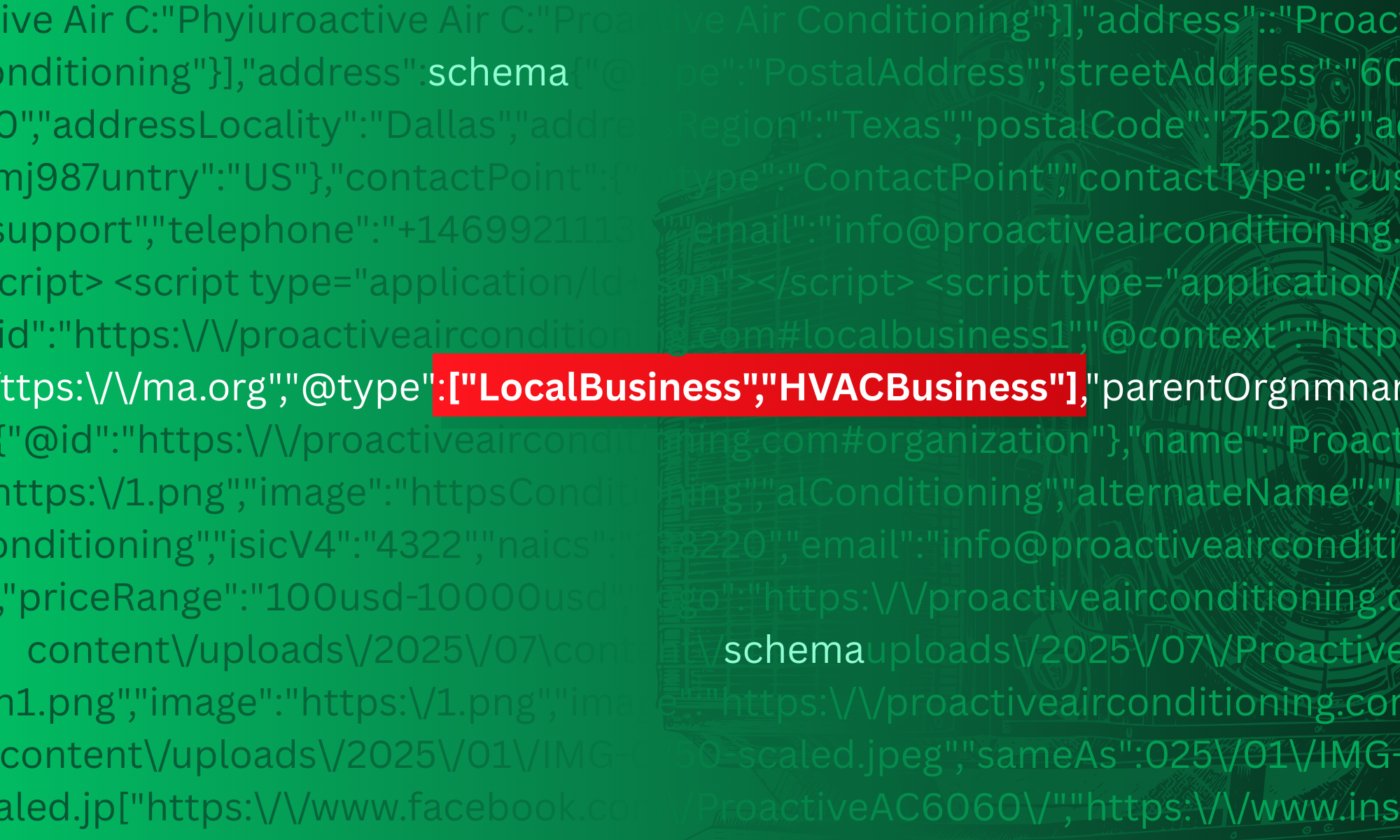
In today’s digital world, HVAC contractors are facing fierce competition when it comes to online visibility. With more people using AI-driven search engines like ChatGPT and tools like Google, getting your business noticed has never been more important. One powerful tool to boost your rankings is schema markup. If you’re wondering what schema markup is and how it works, don’t worry—we’ve got you covered. In this guide, we’ll explain how schema helps HVAC businesses rank higher and how RS Gonzales’ Local SEO services can make it easy for you to implement. What Is Schema Markup? Schema markup is a technical term that simply means structured data. It’s a code that tells search engines exactly what your website is about in a language they understand. Think of it like a detailed map of your website. Schema markup highlights important details such as: Services you offer, like heating repair or AC installation. Your business location and service areas. Reviews and ratings from happy customers. Contact details like your phone number and hours of operation. By adding this code to your website, search engines like Google—and even AI tools like ChatGPT—can easily identify your business and show it to potential customers searching for HVAC-related services. Why Is Schema Markup Important for HVAC Contractors? As technology evolves, AI-driven search engines are becoming the go-to for people looking for local services. Regular SEO tactics like keywords and backlinks are still valuable, but schema markup gives your website extra detail that sets it apart. Here’s why schema matters: 1. Improve Rankings in AI Search AI tools like ChatGPT are changing how people search for HVAC businesses. Unlike traditional search engines, AI engines rely heavily on structured data to deliver relevant and accurate results. Adding schema markup makes it easier for them to “read” your website, which improves your chances of appearing in searches for HVAC contractors. 2. Boost Local Visibility If someone searches for “HVAC repair near me,” schema markup ensures your contact information, service areas, and even reviews are shown at the top of the results. This is powerful for contractors who focus on local customers. 3. Provide Instant Information to Customers Schema markup highlights the most important details about your business directly in search results. For example, someone searching for “AC installation” will immediately see your phone number and ratings without needing to click your website. How Does Schema Work With AI-Driven Search Engines? AI-driven tools like ChatGPT aren’t search engines in the traditional sense. They rely on large datasets and relevant structured data—like your schema markup—to provide answers or recommendations to users. Imagine a homeowner asks an AI chatbot, “Which HVAC contractor near me has good reviews and affordable pricing?” If you have the right schema markup, your website can be pulled into the AI’s response. Without schema, your business might never be noticed. Common Types of Schema Markup for HVAC Businesses Using schema markup doesn’t have to be complicated. There are specific types of structured data that work well for HVAC contractors: Business Information Schema This includes your company name, type of business, phone number, and hours of operation. Local Business Schema If you’re targeting specific cities or neighborhoods, this schema lists your service areas and ensures Google displays your business for local searches. Georadius Schema Georadius schema pinpoints the exact latitude and longitude of your business, which helps you get found on both AI engines and on Google Maps. In addition, using georadius schema, you can specify every zip code and town in your service area. Service Schema Specify what services you offer, like duct cleaning, furnace repair, or heat pump installation. When people search for these services, your website becomes more likely to appear. Knows About Schema Knows About schema includes what’s known as SEO “entities.” Entities are like keywords, but with context that helps search engines pinpoint your exact meaning. So, a page on AC Repair in Scottsdale might include links to Wikipedia articles about air conditioners, evaporator coils, air handler units, Scottsdale and Maricopa County.  FAQ Schema Many customers will ask a question when searching for your services: “who is the best HVAC contractor in Chicago?” or “how much does an AC installation cost in Portland?” That makes Frequently Asked Questions schema a particularly powerful tool for local SEO. It allows you to embed answers to dozens of common questions into the back end of every service page or blog.  Review and Rating Schema Highlight your positive customer reviews and testimonials. This schema builds trust and helps attract more local leads. Best Software for Schema Markup If you want to DIY your local SEO and website development, there are several tools to help you create Schema markup. Some are more advanced, some are great for beginners. Here’s a roundup of our recommendations:  Schemawriter.ai Schemawriter.ai is the Rolls Royce of schema markup. It comes with advanced capabilities that help you create thousands of lines of schema just by entering information about your business. In particular, it’s the only software on the market that offers a simple way to create georadius schema or service schema. That’s particularly powerful for local HVAC businesses that want to boost their Google Business Profile with signals about their service area and offerings.  Search Atlas Search Atlas is our favorite all-in-one SEO software for HVAC contractors. It makes it easy to embed SEO entities into your schema, or add dozens of FAQs. Its local business schema is more basic than Schemawriter, and it can’t create georadius schema. Being an SEO Swiss Army knife, it’s not the definitive specialized tool for schema per se. It’s best used as a supplement rather than your only source for best-in-class schema.  Yoast Yoast is a solid, starter option for small HVAC companies that don’t want to spend money on software. It offers a free WordPress plug-in that creates basic schema. Mostly, it will ensure you have your Name, Address and Phone Number (NAP) listed, which is an important starting point for getting found on Google Maps.  Schema.org Schema.org is a free, open source platform that serves as the guardian of

Read More

Do Google Reviews Affect HVAC Rankings? What You Should Know!

Do Google Reviews Affect HVAC Rankings? All You Should Know! Have you always wondered if those Google reviews on your Business Profile truly impact your bottom line? Imagine this: your HVAC system suddenly stops working on the hottest day of the year. You don’t have time to browse pages; you need a solution now, so you grab your phone and search for “HVAC repair near me.” That’s the moment local visibility becomes everything for an HVAC contractor. To win that click and the subsequent service call, your business needs to dominate the local results. Any savvy HVAC marketing agency or HVAC SEO company knows the secret weapon: reviews. They are no longer a passive reputation metric; they are a major ranking factor that Google uses as social proof to determine your business’s trustworthiness and authority in the local “Map Pack.” Why Google Reviews Matter for Local HVAC Rankings When someone searches “AC repair near me” or “furnace repair in [City],” Google has to decide which HVAC companies to show first in the Map Pack. Your Google reviews are one of the strongest signals it uses to make that decision. For any HVAC contractor wanting to improve their local rankings, reviews are not just “nice social proof.” They are a core ranking factor that influences: How often you appear in the Local Map Pack How high you rank compared to other HVAC contractors How many people actually click and call your business How Google Connects Reviews to Local Search Visibility Google’s job is to show the best, most trustworthy local businesses for each search. Reviews help Google answer three big questions about your HVAC company: Do real customers like this business? Is this business active and serving people today? Is this company a better choice than nearby competitors? Every time a customer leaves a review, responds, or updates feedback, it sends a fresh signal to Google that your business is active and relevant. In local HVAC SEO, that ongoing activity is gold. Reviews also influence click-through rate (CTR): More stars + more reviews = more clicks More clicks tell Google: “Users prefer this contractor,” which can further reinforce your rankings So reviews don’t just reflect your reputation; they actively shape how often and how high you appear in local search. Reviews and Google’s Local Ranking Factors: Relevance, Distance, Prominence Google has publicly stated that local rankings are based on three main pillars: 1. Relevance How well your business matches what the user is searching for. Reviews often contain keywords like “AC repair,” “furnace replacement,” or specific city names. When customers mention your services and locations in their reviews, it quietly boosts your relevance for those terms. This is why review strategy is always baked into quality Google Business Profile optimization work. 2. Distance How close your business is to the searcher’s location. Distance is mostly determined by your address and service area, not reviews. But reviews help confirm you actually serve customers in those areas. Example: “They fixed our AC in Alexandria” tells Google your work is happening in that city. 3. Prominence How well-known and trusted your business appears to be online. This is where reviews have the biggest impact: Number of reviews: More reviews = stronger prominence. Average rating: Consistently high ratings suggest quality and reliability. Recency of reviews: Newer reviews show you’re active and trusted now, not just years ago. Responses: When you reply, it signals active HVAC reputation management and engaged customer service. An HVAC contractor with 200+ mostly 5-star reviews, recent feedback, and professional responses will almost always outrank a competitor with 10 old reviews, even if both are in the same area. How Google Reviews Influence the Local Map Pack (Top 3 Results) The Local Map Pack, those three businesses that appear at the top of nearly every service search, is where most HVAC customers end up clicking. Getting into that top section can dramatically increase calls, but Google is selective about who gets in. Reviews play a major role in determining which companies earn those coveted spots. Google uses review signals to understand which businesses are trusted, active, and provide consistently good experiences. When a contractor is getting steady, positive feedback, it tells Google that real customers are choosing and recommending them, making them a safe bet to show at the top of local search. Review Count (Quantity) One of the simplest ranking signals is how many reviews you have. While a high number of reviews doesn’t guarantee a top position, it strongly influences Google’s confidence in your business. More reviews = more proof that customers are choosing you. For HVAC businesses, this matters because customers often look for reassurance when hiring someone to fix urgent problems. A contractor with 150 reviews naturally looks more established than someone with 12. How Quantity Impacts Map Pack Visibility: A higher review count increases your overall authority. Google sees consistent customer activity as a sign of a healthy, reliable business. More reviews attract more clicks, which strengthens your position even further. In competitive markets, where dozens of contractors operate within the same radius, the companies with a strong, steady flow of reviews often rise to the top of the Map Pack. Review Quality (Star Rating & What Customers Say) While the number of reviews is important, what customers actually say carries even more weight. A business with a large volume of reviews but a low average rating won’t perform as well as one with slightly fewer reviews but consistently positive feedback. Google looks at your overall rating, but it also pays attention to: How detailed the reviews are Whether customers describe real experiences Mentions of services, professionalism, responsiveness, etc. High-quality reviews build trust instantly. When someone is urgently searching for help, whether it’s a broken AC or a heating issue, they’re more likely to click on the contractor with glowing, descriptive feedback. Those clicks reinforce Google’s belief that your business is a preferred choice, helping your visibility over time. Positive reviews also influence conversions. Even if

Read More
HVAC Website Blog Banner 2 | RS Gonzales | HVAC Business and Marketing Solutions

10 Common SEO Mistakes HVAC Contractors Should Avoid

In today’s market, visibility is everything. If potential clients can’t find your HVAC company online, they’ll call your competitor. That’s why effective SEO for HVAC contractors is the single most critical investment you can make. The truth is, nearly 92% of service calls today start with a Google search, yet many great HVAC contractors are still stuck on page two, unintentionally hurting their rankings with outdated websites or generic marketing. Mastering local SEO for HVAC contractors and embracing a robust HVAC digital marketing strategy is the key to success. Stop settling for an ordinary approach; understanding the right HVAC SEO tactics is the first step toward becoming the dominant force in your local market. Ready to learn why your HVAC SEO has been struggling? Let’s get started! Reasons Why Your HVAC SEO Has Been Underperforming Mistake #1: Ignoring Local SEO Essentials The greatest oversight an HVAC contractor can make is treating their website like a national retailer. Your business thrives on local service calls, yet many HVAC companies fail to focus their SEO for HVAC contractors strategy on the precise areas they serve. This oversight results in significant missed opportunities for local SEO for HVAC contractors, essentially handing jobs directly to the competition. The Crucial Local Focus To effectively dominate your service area, you must think locally at every step of your HVAC digital marketing strategy. Not optimizing for city + service keywords: This is the foundation. If you only optimize for generic terms like “AC repair,” you’re competing with every company nationwide. You must target phrases like “AC repair [Your City]” or “Furnace installation [Your County].” Your website’s title tags, headers, and body content need to explicitly mention the cities and towns you serve. Overlooking local search intent: A customer searching for a local service has transactional intent; they need a solution right now. Your content must reflect this urgency and local relevance. This includes optimizing your Google Business Profile (GBP), which is arguably the most critical local ranking factor today. Missed opportunities for local SEO for HVAC contractors: This goes beyond simple keywords. It means neglecting local citations (listings on sites like Yelp, Angie’s List, etc.), failing to acquire geo-tagged customer reviews, and not utilizing map pack optimization. These are the signals that tell Google you are a legitimate, active service provider in that specific area. By ignoring these local SEO essentials, you are unintentionally sending strong signals to Google that your business is not relevant to nearby searchers, thereby severely hurting your local rankings and lead flow. Mistake #2: Poor Google Business Profile (GBP) Optimization The Google Business Profile (GBP) is your company’s single most important digital storefront for local SEO for HVAC contractors. When a customer searches on their phone, the Local 3-Pack at the top of the page is almost entirely controlled by GBP data. Ignoring this platform means you are willfully choosing to be invisible to your most high-intent, local customers. How Weak GBP Hurts HVAC SEO and Local Visibility A poorly optimized or incomplete profile is a massive red flag to Google’s algorithm, drastically limiting your reach. Incomplete Profiles, Wrong Categories, No Service Areas: Incomplete Information: Failing to fill out every section, from business hours and description to high-quality photos, sends a signal that your business is not legitimate or active. Wrong Categories: If your primary category isn’t set to the most specific, high-intent term (like “HVAC Contractor” or “Air Conditioning Repair Service”), Google won’t know when to show you. Missing Service Areas: If you operate a service without a storefront, neglecting to define your exact service areas means you won’t show up for relevant searches in the surrounding towns you serve. The Loss of the “Prominence” Factor: Google ranks local businesses based on three core pillars: Relevance, Distance, and Prominence. A weak GBP directly attacks your Prominence by: Limiting Reviews: An unmanaged profile won’t prompt or display customer reviews, which is a major trust and ranking signal. Hiding Engagement: You miss out on features like Google Posts for specials or the Q&A section, which keeps your profile fresh and engaged. Inconsistent NAP (Name, Address, Phone): Inconsistent business details across the web, often starting with a messy GBP, confuse Google and prevent it from verifying your business as trustworthy. By neglecting this free and powerful tool, your entire HVAC digital marketing strategy suffers, leaving your biggest competitors to dominate the top of the search results and secure the best leads. Mistake #3: Inconsistent NAP Across the Internet The concept of NAP (Name, Address, Phone Number) consistency is a cornerstone of effective local SEO for HVAC contractors. When search engines like Google scan the internet, they look for hundreds of references, called citations, across directories, social media, and industry-specific sites (like Yelp, HomeAdvisor, and your Google Business Profile). The goal is to verify that your business is real, active, and trustworthy. Mismatched NAP is a Huge Negative Signal Mismatched name, address, and phone details are a critical flaw in your HVAC digital marketing strategy. This confusion is a huge negative signal for local rankings. Trust Erosion: If Google finds even small variations, like using “RS Gonzales Heating & Air” on one site and “R.S. Gonzales HVAC Co.” on another, or using a slightly different suite number, it signals a lack of organization or, even worse, an unreliable business. Google prefers to rank businesses it can fully verify. The Power of Citations: Every consistent citation is like a vote of confidence for your company. Every inconsistent citation actively detracts from your authority. This is why many HVAC companies struggle to rank, despite having a good website; the foundational data is fractured. Why It Hurts HVAC SEO: Inconsistent NAP data directly impacts the “Distance” and “Prominence” factors Google uses for local ranking. If your address is ambiguous or your phone number is different on key platforms, Google will hesitate to place you in the highly coveted Local 3-Pack. Getting this right is a simple yet powerful way to boost your SEO for HVAC contractors without

Read More
HVAC Website Blog Banner | RS Gonzales | HVAC Business and Marketing Solutions

How to Rank Your HVAC Company on Google Maps

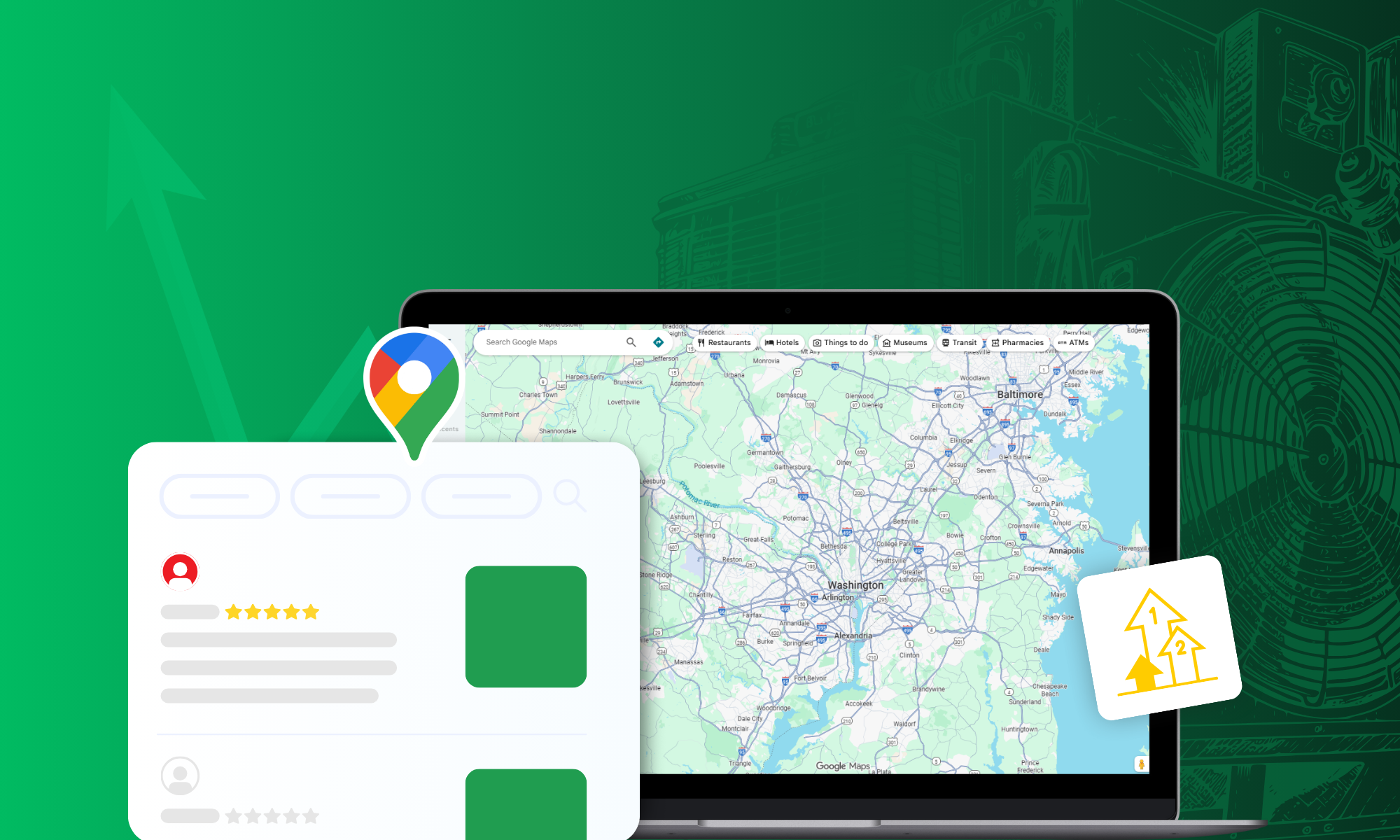
When homeowners need heating or cooling help, they do exactly what you probably do: they open their phone and search for an HVAC contractor near them. That’s why ranking on Google Maps isn’t just “nice to have,” it’s one of the most powerful growth levers in HVAC SEO for contractors today. A strong Maps presence can literally double (or triple!) the calls coming into your business, especially during peak seasons. But here’s the catch: showing up in the top three results doesn’t happen by accident. It takes smart, consistent local HVAC SEO, strategic GBP optimization, and ongoing Google Business Profile management to stay ahead of competitors who are fighting for the same customers you are. Whether you’re handling your own HVAC digital marketing or considering Google Business Profile management services, knowing what actually improves visibility is key. In this guide, we’ll walk through the essentials so you can boost your rankings, strengthen your presence, and get more results from your HVAC SEO. Google Business Profile Setup & Optimization (Relevance) Google won’t rank your HVAC company on Maps unless it knows exactly who you are, what you do, and where you serve. That’s why proper GBP optimization is the first and most important step in any local HVAC SEO strategy. Whether you’re handling things yourself or working with an HVAC SEO company, getting this foundation right sets you up for long-term success. Claim & Verify Your Google Business Profile (GBP) Before anything else, make sure your profile is claimed and verified. If it’s not, Google simply won’t show you in local search results, no matter how great your website or HVAC digital marketing may be. Verification proves your business is real, local, and ready to serve customers in your area. NAP Consistency (Name, Address, Phone) Google is obsessed with accuracy. Your business name, address, and phone number must match exactly everywhere online, your website, directories, and your Google listing. Clean NAP data strengthens trust and helps your rankings rise faster, especially for HVAC contractors trying to outrank nearby competitors. Categories & Services (Make Google Understand Your Business) Choosing the right categories is a small step with a huge impact. Make “HVAC contractor” your primary category, then add relevant secondary ones like “Air Conditioning Repair Service” or “Heating Equipment Supplier.” This tells Google what searches you should appear for; one of the biggest wins in SEO for HVAC companies. Fully Optimize Your Business Information Don’t leave any fields blank. A fully optimized profile gives Google the context it needs to connect you with the right customers. Service Areas: Make sure your service zones are accurate and only include places you actually serve. Google favors clear, focused areas. Business Description: Add a friendly, keyword-rich description that highlights who you are and what makes your company reliable. Business Hours: Keep hours updated, especially on holidays or during seasonal schedule changes. This is where professional Google Business Profile management really shines. Many HVAC businesses use Google Business Profile management services to stay consistent and avoid mistakes that hurt rankings. Add High-Quality Photos & Videos Photos are one of the fastest ways to build trust. Upload real images: your team, trucks, jobs, equipment installs, before/after shots, and anything that shows professionalism. Videos work even better. They boost clicks, calls, and engagement, all of which help your profile rank higher. Think of this as visual local HVAC SEO: the more real and active your business looks, the more Google recommends you! The Review Engine (Prominence & Trust) If you want to climb to the top of Google Maps, reviews aren’t optional, they’re one of the strongest ranking signals in local HVAC SEO. Google looks at three things: how many reviews you have, how fast you get them, and how positive they are. And the HVAC companies winning in local search are the ones treating reviews like a system, not an afterthought. Whether you’re doing your own HVAC digital marketing or working with an HVAC SEO company, building a strong review engine directly boosts your visibility, trust, and customer conversions. Build a Review Request System The fastest way to get more reviews is to ask at the right moment, every single time you finish a job. Set up an automated SMS or email request so customers get a friendly reminder while their experience is still fresh. A consistent request system is one of the highest-ROI moves in SEO for HVAC companies, because it increases review velocity, something Google loves. More steady, ongoing reviews = higher Maps rankings. Respond to Every Review (Good or Bad) Google wants to see engagement. Customers want to see that you care. And your future customers judge you based on how you communicate publicly. Thank people for positive feedback. Stay calm, professional, and solution-focused with negative reviews. Every response signals trust and credibility to Google, an advantage that will differentiate your GBP from that of others. Increase Review Velocity & Diversity Google doesn’t just look at how many reviews you have, it looks at how often you get them and where they come from. Spread your requests across trusted platforms: Google Yelp Angi (formerly Angie’s List) Facebook This “review diversity” strengthens your authority across the entire local ecosystem, which boosts rankings not just on Google Maps but everywhere your customers search. For contractors who want consistency without the headaches, many Google Business Profile management services help automate this process and keep the review engine running smoothly. Your Website’s Local SEO Foundation (Relevance + On-Site Signals) Your Google Business Profile can only take you so far; your website still plays a huge role in how high you rank on both Google Maps and regular search. Strong on-site optimization tells Google, “Yes, this HVAC company really serves this area, offers these services, and delivers trustworthy info.” This is the heart of local HVAC SEO, and it’s something every HVAC company treats as a priority. Optimize Your Website for Local Intent If you want to show up for local searches, your website needs to sound local.

Read More
HVAC Website Blog Banner | RS Gonzales | HVAC Business and Marketing Solutions

Local SEO Checklist for HVAC Business

Your Local HVAC SEO Roadmap: 10 Steps to Beat the Competition When a homeowner’s air conditioner breaks down in the middle of a heatwave or their furnace stops working on a freezing night, their first step is almost always the same: they grab their phone and search for an immediate, local solution. This is the moment of truth for your business. In the competitive world of home services, your local visibility doesn’t just drive traffic; it drives real, HVAC leads and appointments. The reality is that a strong online presence is non-negotiable, and it all hinges on a solid HVAC SEO strategy. Without it, you are essentially invisible to their customers searching for services right now. Investing in professional HVAC SEO services is no longer a luxury; it’s a critical component of successful HVAC marketing. This comprehensive roadmap is designed to transform your online presence. We will walk you through 10 actionable steps, focused specifically on local SEO for HVAC contractors, that will help your business rise above the competition. So, let’s delve in! Your 10 Point Local HVAC SEO Checklist 1. Start with Google Business Profile – Your Local SEO Foundation If you’re serious about capturing local leads, your Google Business Profile (GBP), formerly Google My Business, is the single most critical asset in your HVAC digital marketing toolbox. Think of it as your virtual storefront on the world’s busiest street. A verified, perfectly optimized GBP is the bedrock of successful HVAC SEO. When a potential customer searches for “furnace repair near me,” Google uses your GBP as the primary data source for the answer. Don’t just claim it, optimize it! Verification is Non-Negotiable: First and foremost, verify your profile. Without this, your profile has no authority. Fill Out Everything: Include accurate hours (especially emergency hours), a compelling business description, and list every specific service you offer (e.g., “Heat Pump Installation,” “Duct Cleaning”). (Example of an optimized GBP Business description) Load Up the Photos: Businesses with high-quality photos get more clicks. Upload pictures of your team, your trucks, your staff in action, and your office. This builds trust and shows you’re a legitimate local SEO HVAC contractor. Use the Posts Feature: Treat your GBP like a mini-social media feed. Announce specials, post about seasonal reminders, or highlight 5-star reviews. This activity signals to Google that your business is active and relevant, which is a major boost for your overall HVAC SEO. This foundation is crucial because it directly influences your ranking in the “Local Pack”—those top three results that appear on the Google map. Getting into that top-tier position is the goal of all effective local SEO for HVAC. 2. Nail Your NAP Consistency (Name, Address, Phone) Consistency is the unsung hero of SEO for HVAC companies. While it sounds simple, NAP consistency (Name, Address, Phone Number) is an absolute must-have for a winning HVAC SEO strategy. Google and other search engines rely on third-party sources (known as citations) across the web, like Yellow Pages, Yelp, industry-specific directories, and social media, to confirm that your business information is accurate and trustworthy. If your data is mismatched, Google gets confused, and confusion leads to lower rankings. Be a Stickler for Detail: The name of your business on every site must match your GBP exactly. If your GBP says “Smith & Sons Heating and Cooling, LLC,” make sure it doesn’t appear as “Smith and Sons HVAC” on Yelp. This includes abbreviations, punctuation, and suite numbers! The Phone Number Rule: Use a single, trackable main phone number across all platforms. This ensures every mention reinforces your business identity. Audit Your Citations: Use tools to audit the major online directories and fix any discrepancies immediately. Even small error, like “Street” versus “St.”can hurt your ranking. The Trust Signal: Maintaining perfect NAP consistency is one of the strongest local SEO HVAC contractors can send to Google, essentially telling the search engine, “I am a real, stable business operating at this exact location.” This trust is essential for success in hvac digital marketing. 3. Optimize Your Website for Local Searches Your company website is your 24/7 sales agent. But to truly dominate, it needs to be laser-focused on local intent. Generic, nationwide content won’t cut it. Your site needs to loudly declare that you are the trusted local expert in your specific service area. This is where high-impact HVAC SEO services truly shine. We want to embed those highly valuable, location-specific keywords that match what potential customers are typing into Google. Geo-Specific Keywords: Think like your customer. They’re searching for “furnace installation [City Name]” or “AC repair [Neighborhood].” You must use these exact phrases. Title Tags and Meta Descriptions: These are the clickable headlines and snippets that appear in search results. Every service page and your homepage should feature a clear combination of service + city (e.g., “Air Conditioning Repair & Service in Dallas, TX”). This is paramount for successful HVAC SEO. Heading Tags (H1, H2, H3): Your main headings must incorporate local keywords. Instead of a generic H1 like “Our Services,” use “Trusted AC & Heating Services for the Dallas Metro Area.” Sprinkle in Your Value: Don’t forget to casually mention that you offer superior HVAC SEO services or are the leading HVAC SEO company, if that is your specialty. Alternatively, focus on why you are the go-to provider for local residents. A well-optimized site shows Google you’re relevant, authoritative, and the clear choice for local SEO for HVAC success. 4. Create Dedicated Service Area Pages Simply listing a wide service radius on your contact page isn’t enough to convince Google that you’re a trusted local SEO HVAC contractor in every city you serve. To truly signal your relevance and depth of service, you must build dedicated service area pages. This is a powerhouse strategy for SEO for HVAC companies that operate across multiple towns or neighborhoods. These pages are what separate top-tier businesses from the rest, proving you’re serious about HVAC marketing. The Purpose: Each page should be its own mini-homepage, focused

Read More