


Local SEO is how you become that first name. It puts your HVAC business in front of ready-to-book homeowners in your service area, without paying for every click. This guide walks through how it works and the levers you can pull, whether you do it yourself or hand it off.
What Local SEO Decides: Who Gets the Call
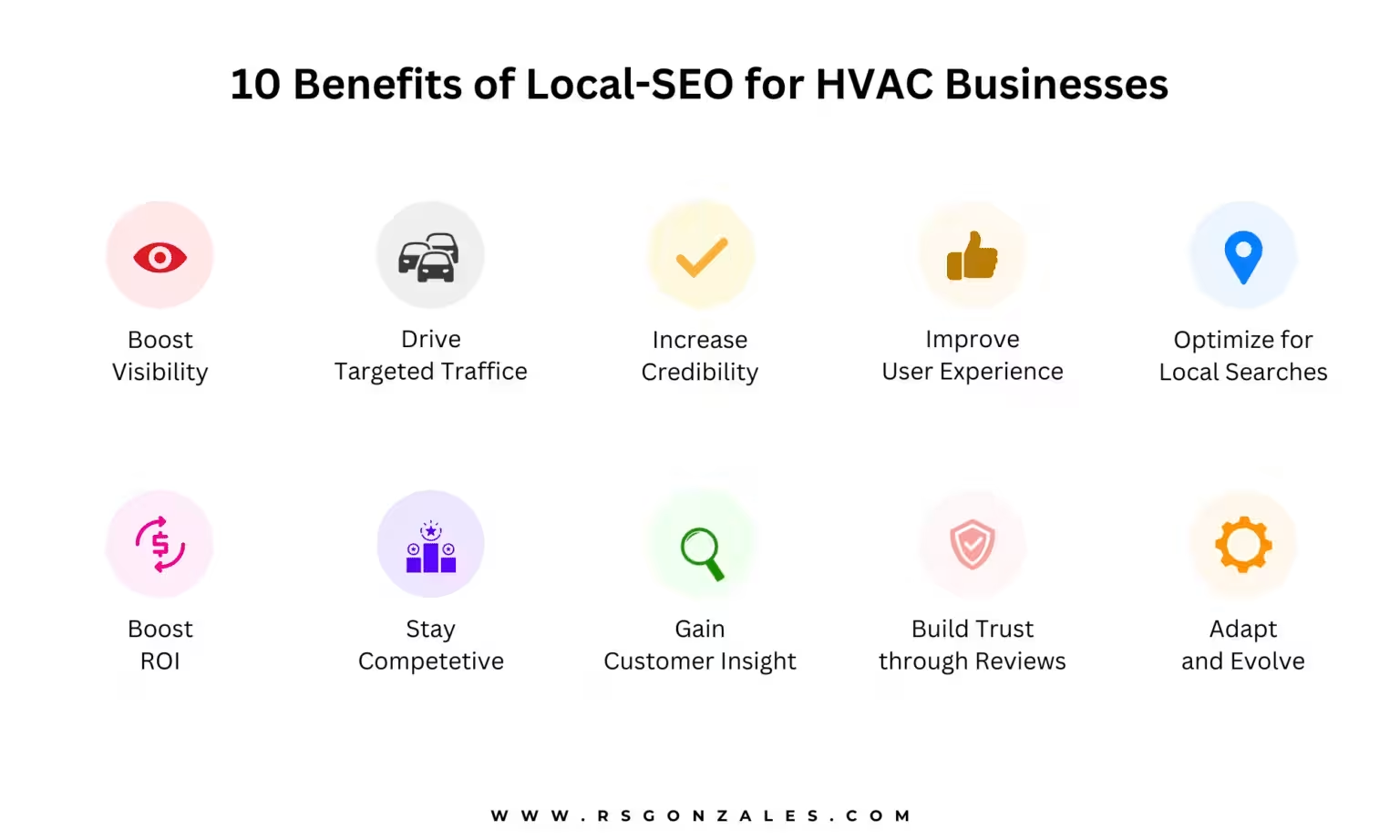
Local SEO is the work that helps nearby homeowners find you, trust you, and call you when they’re ready to book. Regular SEO chases traffic from anywhere. Local SEO chases the right local clicks, the ones inside the few miles you serve.
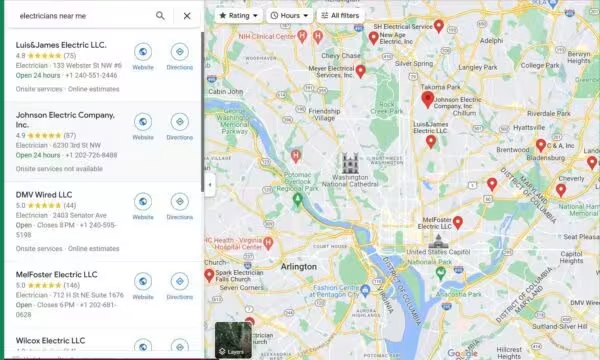
The prize is the Google Map Pack, the top three results with the little map that sit above everything else. Winning the map pack drives more calls than the rest of the page combined, and the math gets brutal the further down you sit.
- The #1 spot takes about 27.6% of clicks. It’s the single most valuable spot in your market.
- The top three together take more than half of all clicks. Everyone below the map fights over the scraps.
- Page two reaches almost nobody. If you’re not on page one, most homeowners never learn you exist.
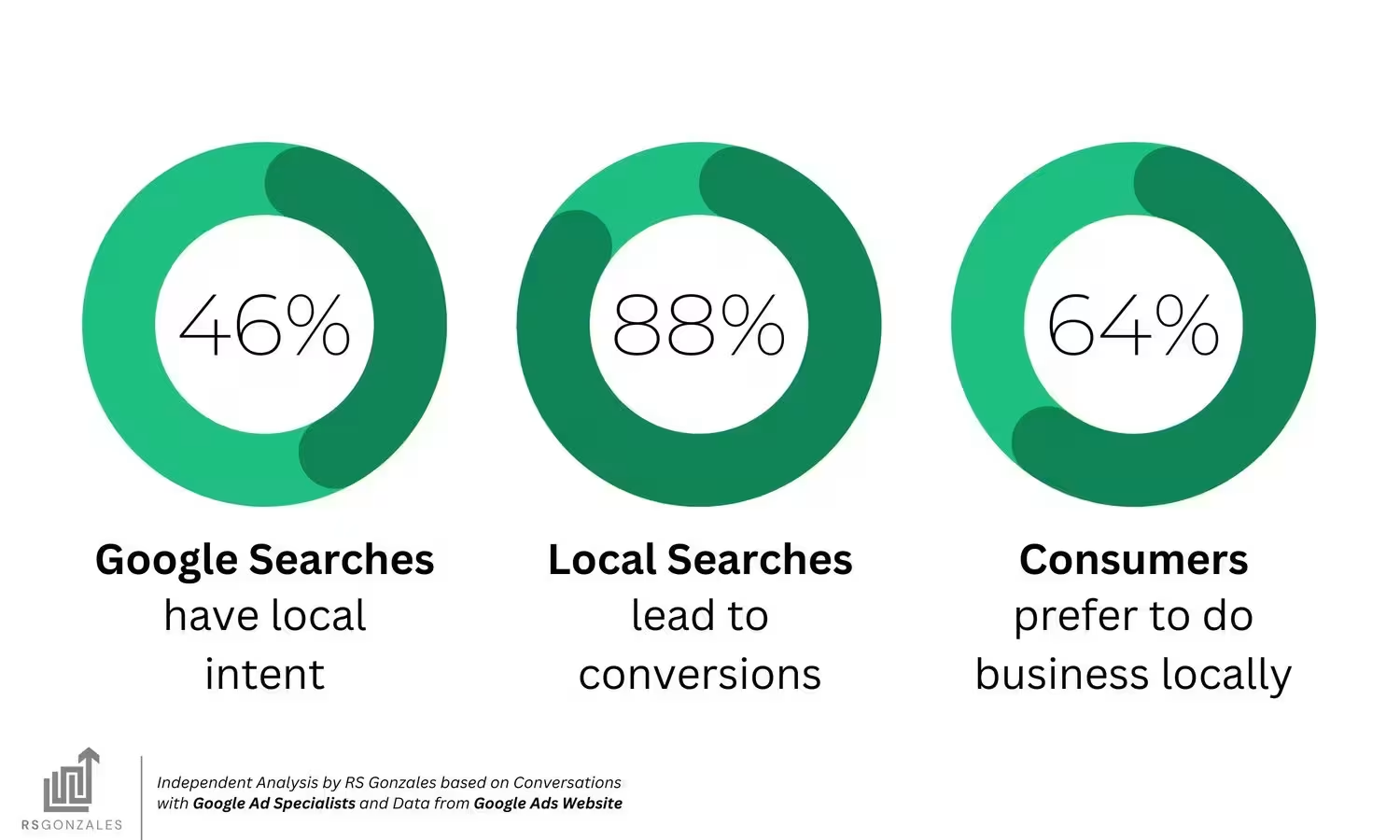
Nearly half of all Google searches are looking for something local, and for an emergency trade like HVAC, that share runs higher. Ranking here isn’t vanity; it’s the difference between a full schedule and a quiet phone.
Local SEO vs Regular SEO: Why HVAC Plays by Different Rules
National SEO and local SEO look similar on the surface, and they share some basics like a fast website and helpful content. But the goal is different, and for a contractor, that changes almost everything about where you spend your effort.
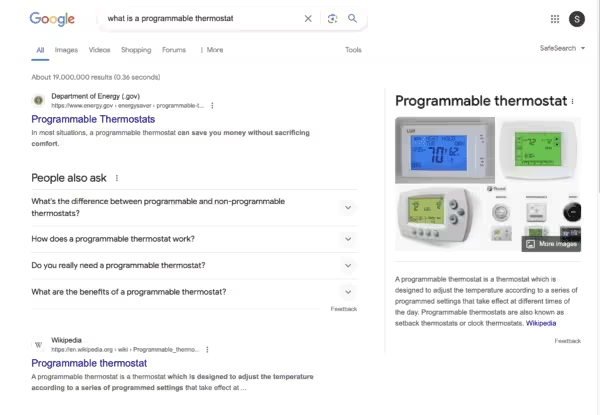
A national brand wants traffic from anywhere and a sale on the page. You want the phone to ring from homeowners a short drive away. Here’s how the two compare:
|
|
Local SEO (built for you)
|
National SEO (a different game)
|
|---|---|---|
|
Who it reaches
|
Homeowners in your service area
|
Anyone, anywhere
|
|
Search example
|
"AC repair near me"
|
"How does a heat pump work?"
|
|
Buyer intent
|
Ready to call and book
|
Mostly browsing
|
|
Google Business Profile
|
One of your biggest ranking factors
|
Barely matters
|
|
Main goal
|
Calls and booked jobs
|
Traffic and awareness
|
Google ranks local results on three things: relevance, distance, and prominence. That means you don’t have to beat Home Depot or a national chain. You have to be the most complete, most proven, closest-feeling option for the neighborhoods right around your shop.
Here’s the encouraging part. HVAC is the most fragmented major industry in the country, so nobody owns a whole market. The smart play is focus: own the top spots within about three miles of your address first, then push out to four or five miles as you build. It’s better to be a big fish in a small pond.
The 7 Lovely That Decide Your Local Ranking
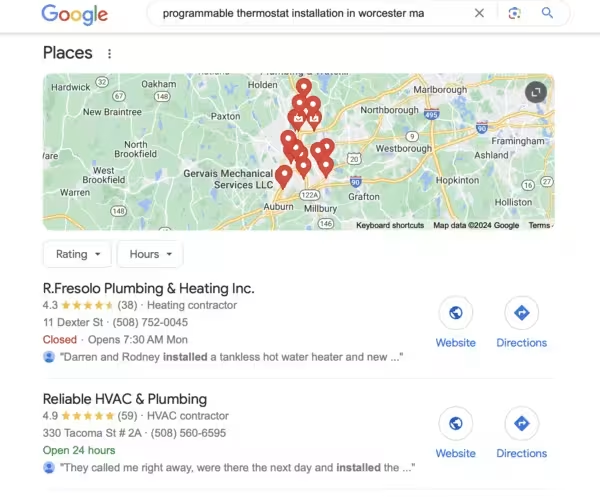
Local SEO isn’t one trick; it’s a handful of parts that have to work together. Miss one and the whole thing wobbles, like a stool with a missing leg. Here are the seven levers, in the order most contractors should tackle them.
1. Claim and Complete Your Google Business Profile
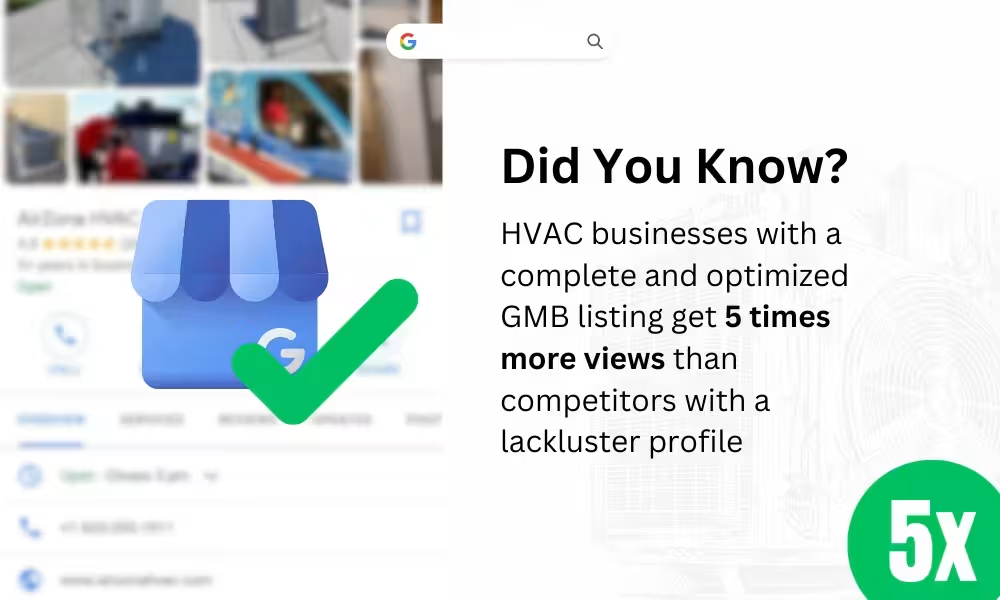
Your Google Business Profile is the single most powerful lead driver in local search, and it’s free. Formerly called Google My Business, it’s the box with your name, phone, hours, photos, and reviews that shows up in the map pack. For many homeowners, it’s the only thing they look at before calling.
A half-finished profile ranks like a half-finished profile. Fill in every field and keep it active:
- Complete every detail. Hours, services, categories, service area, website, and a full description. The more you give Google, the more it shows you.
- List each service separately. A little-known quirk: the algorithm favors profiles that list services as distinct items, each with its own description, so “AC repair,” “furnace installation,” and “duct cleaning” should each stand on their own.
- Post at least weekly. Google rewards a heartbeat. A quick post about a promotion, a finished job, or a seasonal tip signals your profile is alive.
- Use your own photos, never stock. Google can spot stock images, and generic photos can hurt you. Show your trucks, your team, and your finished work.
For a step-by-step walkthrough, see our guide on how to optimize your HVAC Google Business Profile.
See How We Optimize HVAC Google Business Profiles
2. Keep Your NAP Identical Everywhere
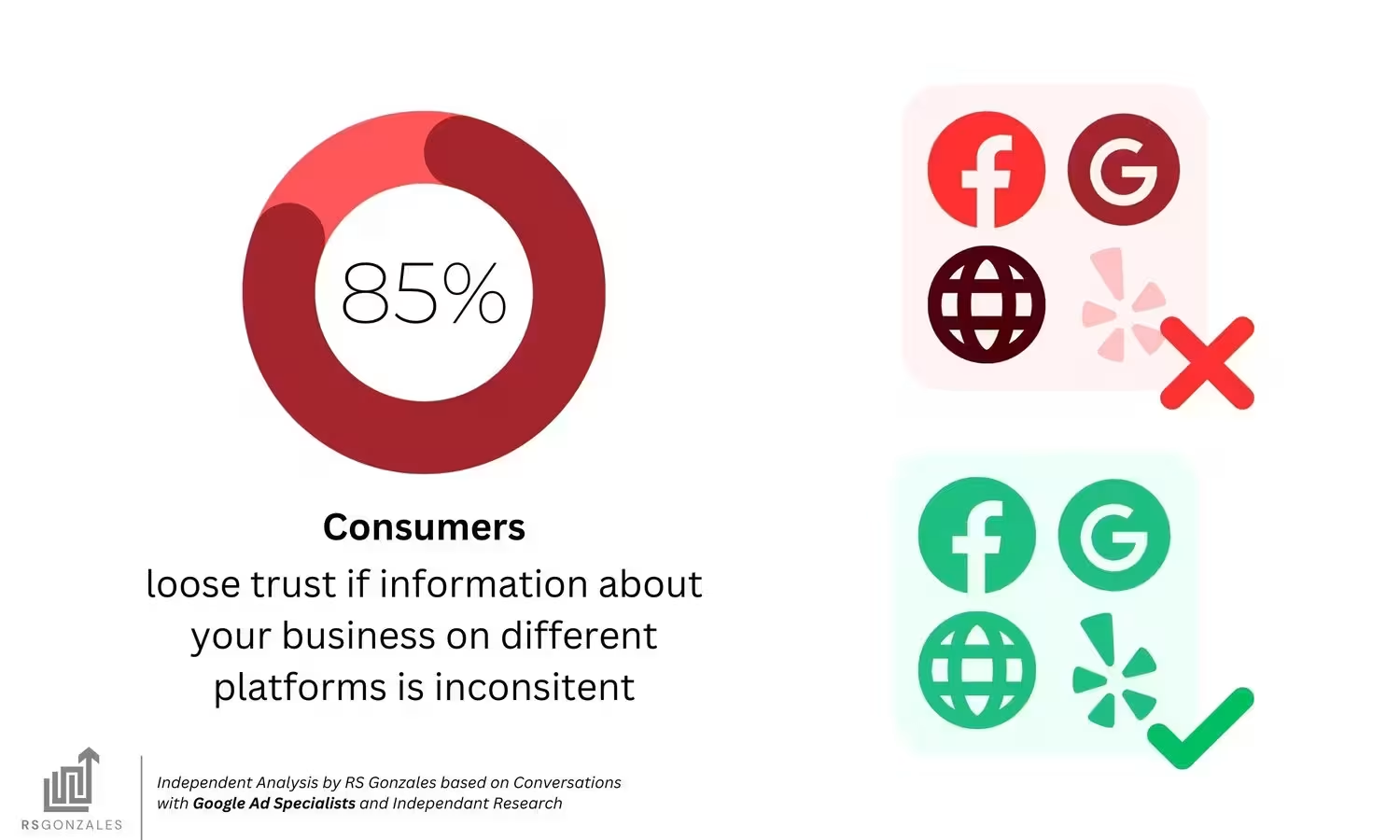
NAP stands for Name, Address, and Phone number. It sounds trivial, but inconsistent NAP data across the web is one of the most common ways contractors sabotage their own rankings.
When your address reads “St.” on one directory and “Street” on another, or an old phone number lingers on a listing you forgot about, Google loses confidence in where you are. That doubt costs you map-pack visibility. Consistency, not volume, is what matters.
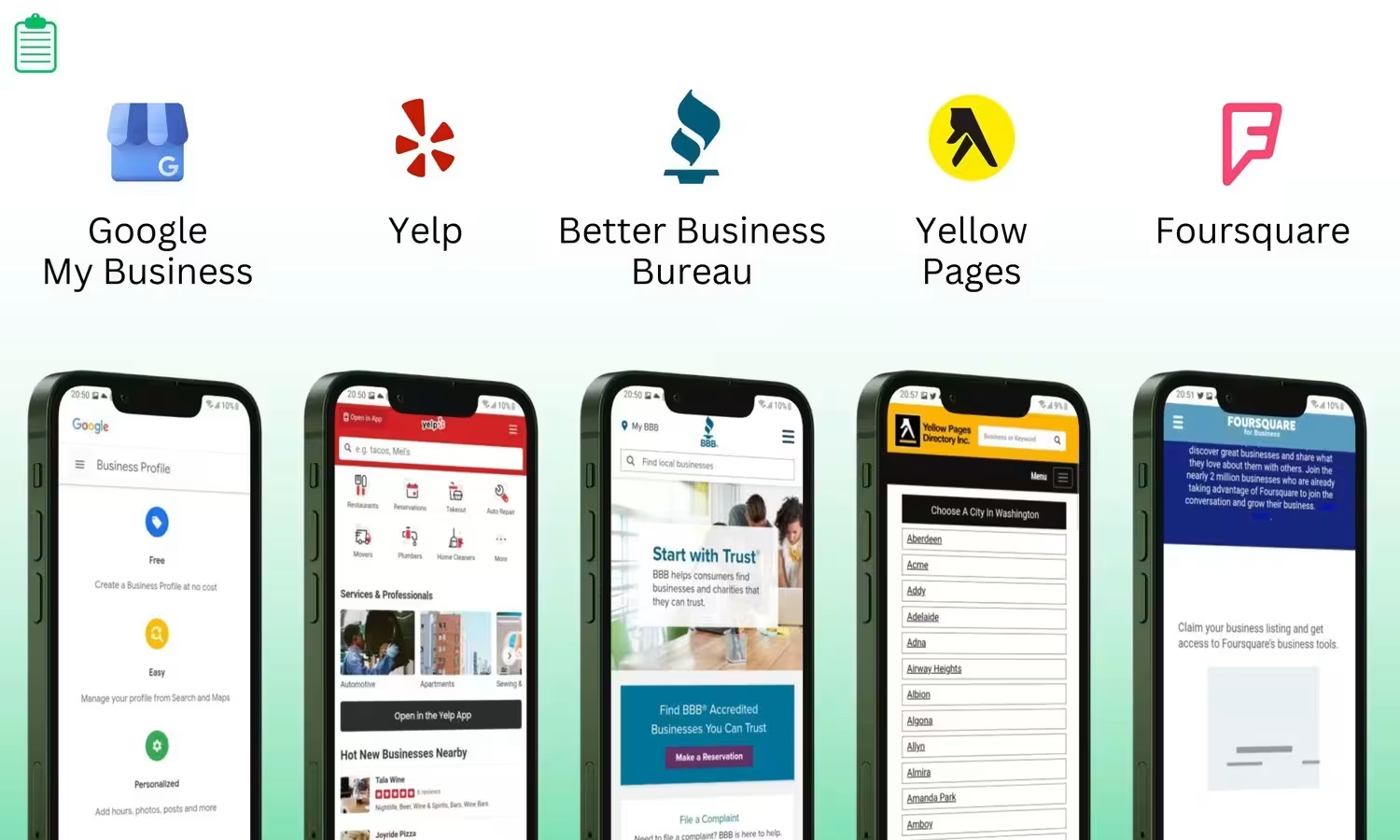
- Audit your listings. Check your name, address, and phone across every directory and fix anything that doesn’t match, down to the punctuation.
- Use a service-area setting if you work from home. You can hide your home address while still telling Google the towns you cover, so you show up for local searches without publishing where you live.
- Feed the data aggregators first. A handful of large data providers push your information out to hundreds of smaller directories and mapping apps, so getting those right saves you enormous manual work.
Citations, the online mentions of your NAP across trusted directories, are the foundation the rest of your local authority sits on. Our local citation building guide for HVAC contractors covers which ones matter in 2026.
3. Earn Reviews, Then Keep Earning Them
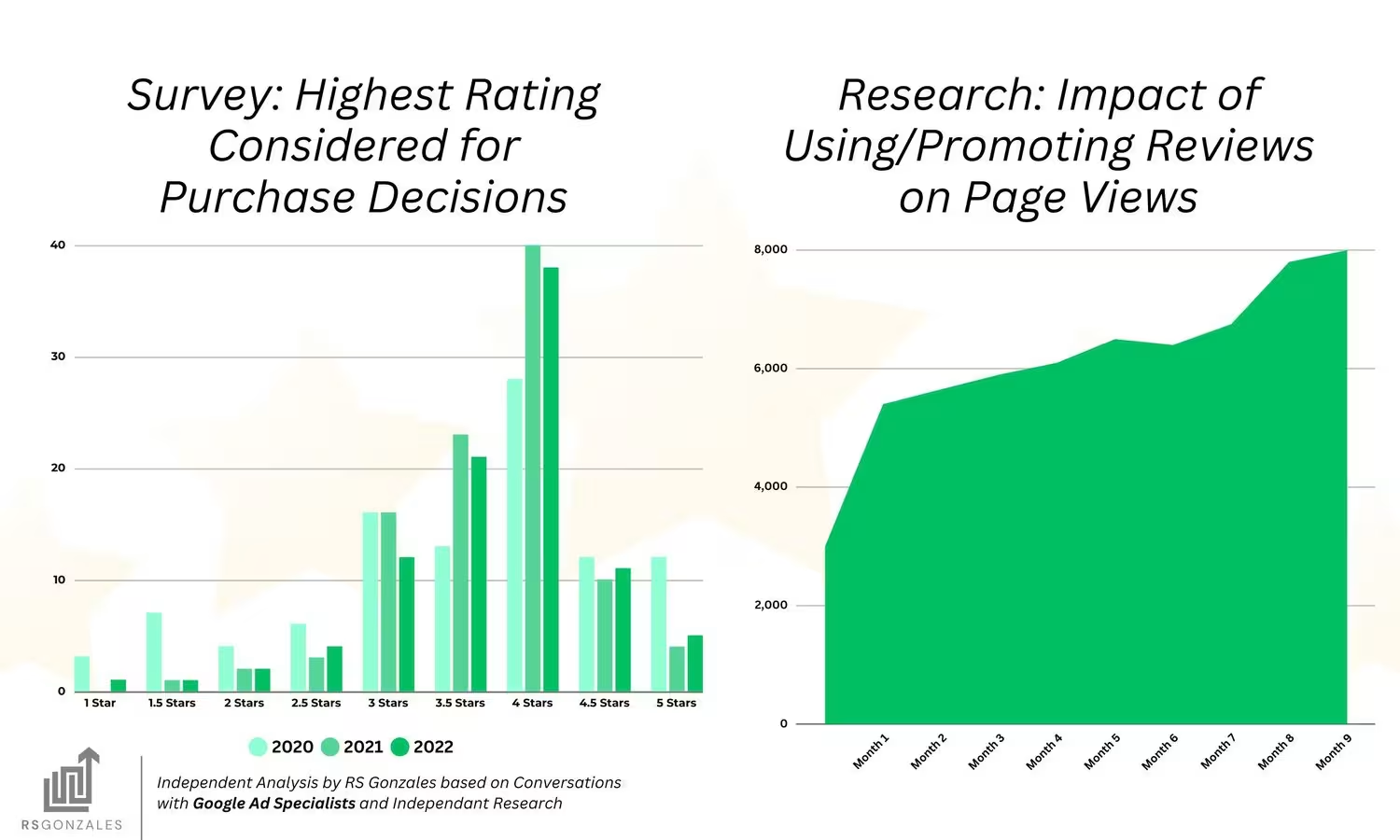
Reviews do two jobs at once: they convince homeowners to call, and they push you up the local rankings. 81% of homeowners check Google reviews before they hire, so your star rating is often the deciding factor before anyone reads a word of your website.
It isn’t only the total that counts, it’s the pace. Google favors businesses earning fresh reviews steadily, what’s called review velocity. A profile that gathered 100 reviews two years ago and none since looks stale next to one adding a few every week.
- Ask every satisfied customer. The simplest lever most contractors underuse. Make it a standard step after every completed job.
- Make it effortless. Send a direct link by text so a review takes thirty seconds, not a hunt through Google.
- Respond to every review, good or bad. A prompt, gracious reply shows homeowners and Google that you’re present and you care.
A brand-new HVAC company in Mentor, Ohio came to us with no website, no reviews, and no customer list. By focusing on a complete Google Business Profile, a steady push for reviews, and a tight local radius, it earned 45 five-star reviews and 136 leads in its first 90 days. Results like these aren't typical, but they show what the local levers can do when they work together.
See How We Manage Reviews and Reputation
4. Target the Words Homeowners Search
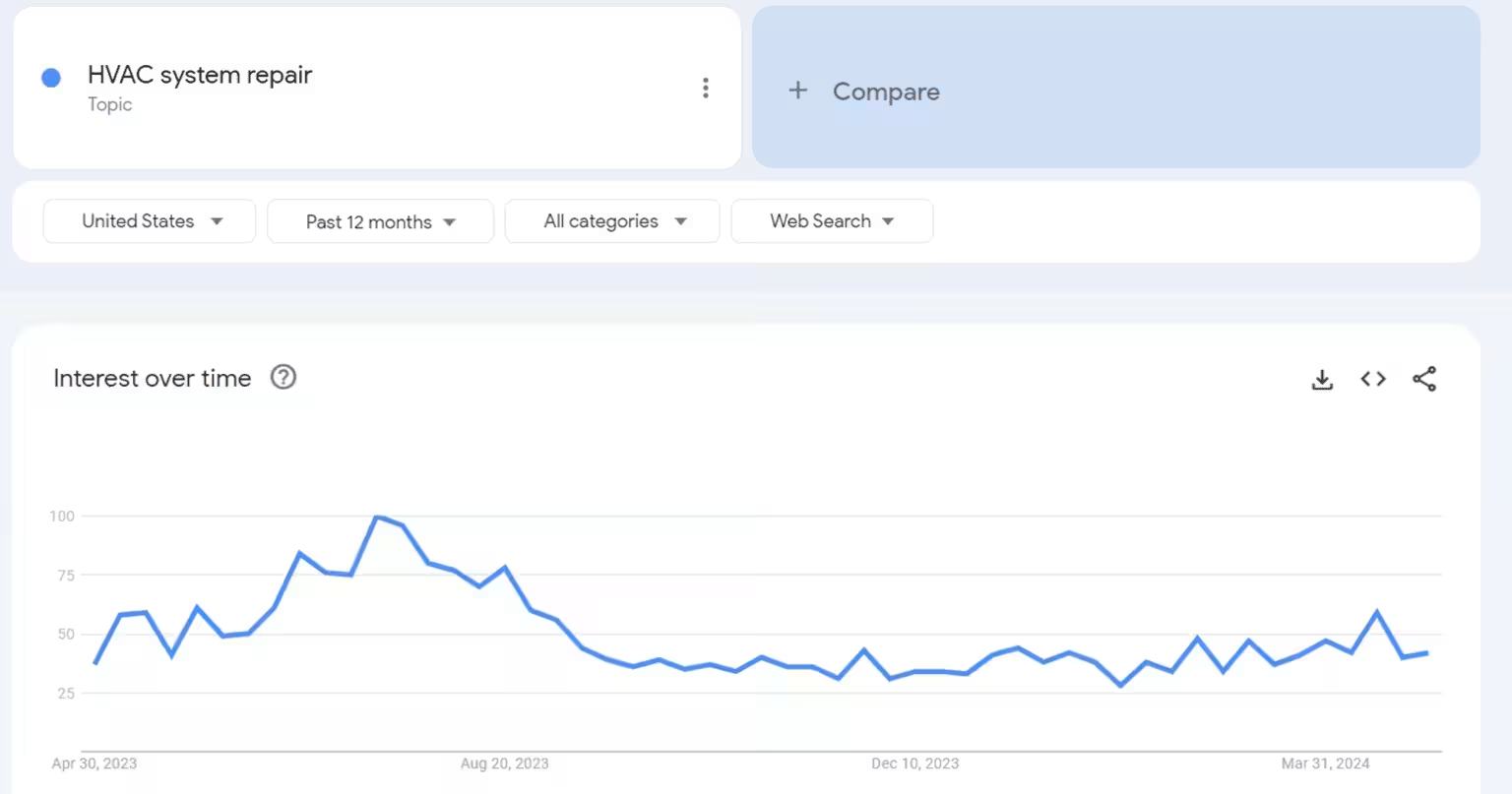
You can’t rank for searches you never planned for. Keyword research is figuring out the exact words homeowners use, then building your profile and pages around them. Guessing is how you end up optimized for phrases nobody types.
Two kinds of keywords matter, and you need both:
- Short, high-intent terms like “AC repair near me” or “furnace repair [your city].” High demand, high competition, and a homeowner ready to call.
- Longer, specific phrases like “ductless mini-split installation in [your city]” or “why is my AC blowing warm air.” Lower competition, and often a searcher closer to booking than they look.
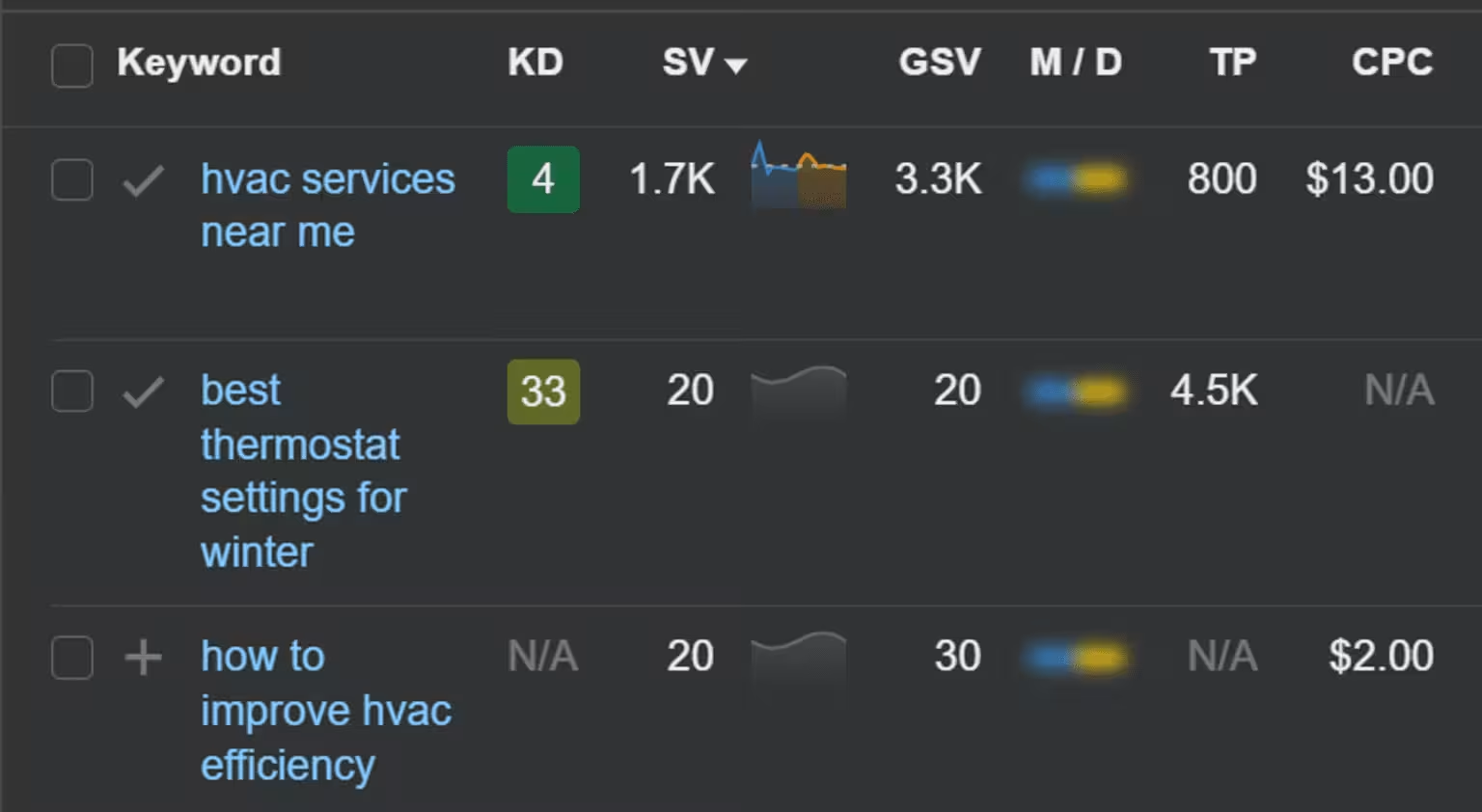
A quick example. A search for “AC repair” looks obvious, but the data shows homeowners also type things like “emergency AC repair,” “24 hour AC repair,” and “affordable AC repair,” each a slightly different customer. Free tools like Google Keyword Planner and Google Search Console show you which of these your neighbors use, so you build around demand you can see instead of a hunch.
5. Build Service and Location Pages That Answer Homeowner Questions
One homepage can’t rank for every service in every town, no matter how good it is. When a single page tries to cover AC repair, furnace installs, duct cleaning, and five cities at once, it confuses Google and homeowners alike, and it ranks for none of them well.
The fix is a dedicated page for every service and every city you serve. Each one should go deep, answering the questions a homeowner has about that specific job: what it costs, how long it takes, the warning signs, and why you’re the one to call. Thin, copy-pasted pages fail both Google and the reader.
This is the part of local SEO where a team usually earns its keep, because building conversion-focused service and location pages is slow, detailed work. Done right, each page becomes a 24/7 salesperson for one job in one place.
6. Make Your Site Fast, Mobile-First, and Crawlable
Homeowners searching for emergency HVAC help are almost always on their phones, and they judge a site in as little as 17 to 50 milliseconds. If yours loads slowly, breaks on mobile, or looks dated, they leave before they call, and that lost visitor is a lost job.
Google works in four steps: it has to crawl your pages, read them, trust them, and then rank them. Break any step and even strong content stays buried. A clean technical foundation clears all four:
- Speed. Fast load times that meet Google’s targets, because bounce rates climb the longer a page takes.
- Mobile-first design. A layout built for a thumb and a small screen, with your phone number one tap away.
- Alt text and clean structure. Describe your images and use proper headings so Google understands each page.
- Schema markup. Structured data that spells out your services and location for both Google and AI tools.
Schema is one of the highest-impact technical moves you can make. Our guide on schema markup for HVAC contractors shows how it feeds both search engines and AI answers.
7. Earn Local Backlinks From Community Ties That Count
A backlink is another website linking to yours, and Google reads each one as a vote of confidence. But a vote from a respected local source counts for far more than a hundred from random directories. Quality beats quantity every time.
Directory listings are the floor, not the ceiling. They give you a baseline, but Google knows anyone can register for them, so they don’t prove you’re a local leader. Genuine community ties do:
- Partner with local organizations. Co-host a home-safety event with the fire department or a workshop with a local nonprofit, and you earn a link plus goodwill.
- Sponsor local events and teams. Sponsorships often come with a link from the event’s website and put your name in front of the exact community you serve.
- Get a local press mention. You don’t need the city’s biggest paper. A neighborhood newsletter that spotlights local businesses sends a strong “local, local, local” signal.
These trust signals are the backbone of what Google calls E-E-A-T, its framework for experience, expertise, authoritativeness, and trust. The more your community vouches for you, the more Google does too.
Where AI Search Fits Now
Something new is worth getting ahead of. More homeowners are skipping Google and asking ChatGPT, Gemini, or Claude, “Who’s a good HVAC contractor near me?” Most contractors aren’t optimizing for that yet, which makes it a rare head start rather than a crowded race.
AI answer engines pull from the same signals that power local SEO, then decide which businesses to name.
A complete, consistent profile, clear location data, and content that answers questions plainly all raise your odds of being the one recommended in AI search.
The consequence of ignoring it is simple: when a homeowner asks an AI tool for a name, and your business isn’t in the answer, you were never in the running.
The moves that help are the ones you’re already making, aimed a little differently. Structure your pages around the questions homeowners ask, keep your location data clean everywhere, and write in plain language that names your services, areas, and business clearly enough for a machine to map.
How Long Before Local SEO Pays Off?
Here’s the honest answer most agencies won’t give you: local SEO takes months, because trust takes months to build. Google’s algorithm moves like an aircraft carrier, slowly, and only after it sees enough proof. You can’t launch a site today and outrank a twenty-year incumbent tomorrow.
A realistic HVAC timeline usually looks like this:
- Days 1 to 30. Foundation work: profile optimized, first citations and pages built. Mostly behind the scenes.
- Days 30 to 90. “Near me” visibility starts, traffic begins to climb, and Google Business Profile calls often come first.
- Months 4 to 6. Top-three map-pack rankings start landing for your core services.
- Months 6 to 12. Traffic compounds and your cost per lead drops below what ads charge.
Anyone promising you the #1 spot in 30 days is selling something else. What matters is tracking the right things along the way: calls and booked jobs, not vanity traffic numbers.
Want Help Figuring Local SEO Out? That’s What RS Gonzales Is Here For!
Every lever in this guide is something you can do yourself. Claiming your profile, fixing your NAP, asking for reviews, and writing honest service pages cost more time than money, and plenty of contractors get strong results doing exactly that.
If you want a running list, our HVAC local SEO checklist lays out the steps.
The honest catch is that local SEO is never finished. It’s weekly posts, fresh reviews, new pages, technical upkeep, and watching what competitors do, month after month, on top of running your business. That’s usually the point where contractors decide their time is better spent on jobs than on directory audits.
If you’re weighing this against paid ads, our breakdown of SEO vs paid ads for HVAC helps you choose.
Whichever way you go, the goal is the same: be the first name a nearby homeowner sees, and make it easy for them to call. If you’d rather hand the whole system to a team that works only with HVAC contractors, see how we run local SEO and what it could look like in your market.