

Starting an HVAC business can range from:
- How fast can I get leads?
- How quickly can I be profitable?
- How much money do I really need?
The honest answer:
It costs more than most people expect.
- $20,000–$40,000 on a shoestring
- $50,000–$150,000 for a serious launch
- $200,000–$300,000+ for a fast-scaling operation
And that does not include your lost W-2 income.
Let’s break this down properly.
The Non-Negotiables: Legal Structure & Licensing
Before you touch a furnace, air conditioner, or heat pump, you must build the legal foundation.
EIN (Employer Identification Number)
You’ll need an Employer Identification Number (EIN) from the IRS. It’s like a Social Security Number for your business.
This is free and can be obtained online in minutes.
Without an EIN, you cannot:
- Open a business bank account
- Apply for business credit
- Properly separate personal and business taxes
Business Structure (LLC, S-Corp, Sole Proprietor)
Most HVAC startups form an LLC (Limited Liability Company) for liability protection.
You can:
- File yourself online (low cost)
- Hire an attorney or CPA (higher cost, more guidance)
|
Item
|
Estimated Cost
|
|---|---|
|
EIN
|
Free
|
|
LLC Filing (DIY)
|
$100–$500
|
|
LLC Filing (Attorney)
|
$1,500–$3,000+
|
|
DBA (if needed)
|
$100–$150
|
|
State Business License
|
$100–$300
|
|
Contractor License
|
$200–$600
|
|
City License (if required)
|
$100–$500
|
Most states require a contractor license separate from your business license.
You will also need your EPA Section 608 Certification to legally handle refrigerant. The certification itself is free from the Environmental Protection Agency. Approved third-party vocational schools, unions and trade associations offer both prep courses and proctored in-person or online exams. You may $100-500 for training programs or exams, depending on the provider.
Insurance: Where Many Startups Underestimate Risk
You are entering homes. You are installing HVAC systems. You are working with gas lines, electrical, and refrigerant.
You need protection.
Minimum insurance typically includes:
- General Liability Insurance
- Workers’ Compensation Insurance
- Commercial Auto Insurance
- Tools & Equipment Coverage
|
Insurance Type
|
Estimated Annual Cost
|
|---|---|
|
General Liability
|
$500–$2,000
|
|
Workers’ Comp
|
$500–$2,000+
|
|
Commercial Auto
|
$1,000–$3,000
|
|
Tools Coverage
|
$300–$1,000
|
|
Estimated Total
|
$1,000–$5,000+
|
Many contractors starting out take risks here to save money. But before you skimp on insurance, ask yourself what happens to your business, your family and your financial future if:
- Someone breaks into your truck and steals your equipment.
- You or an employee gets into a car accident—and injures another person.
- A customer sues you for damage (perceived or real) to their home during a service call or installation.
- An employee is injured on the job and requires extended medical care or can no longer work.
When it comes to insurance, make sure you read the fine print. Ask questions and make sure you understand where you’re protected—and where you aren’t—in each of these worst-case scenarios.
Tools & Equipment: You Can’t Fake Professionalism
You need core HVAC equipment immediately:
- Vacuum pump
- Refrigerant recovery machine
- Refrigerant scale
- Gauges
- Drill and install tools
|
Equipment
|
Estimated Cost
|
|---|---|
|
Core Tool Setup
|
$5,000–$10,000
|
You can borrow occasionally. But long-term, you need your own professional setup.
The Truck: Your Largest Early Investment
Your service van is not just transportation.
It is:
- Your storage unit
- Your supply house
- Your mobile billboard
|
Item
|
Estimated Cost
|
|---|---|
|
Used Service Van
|
$20,000–$30,000
|
|
Monthly Payment
|
$600–$800
|
|
Basic DIY Logo Decal
|
$100–$300
|
|
Full Van Wrap
|
$1500–$3,500
|
A wrapped truck builds trust instantly. It makes you look established even if you are brand new.
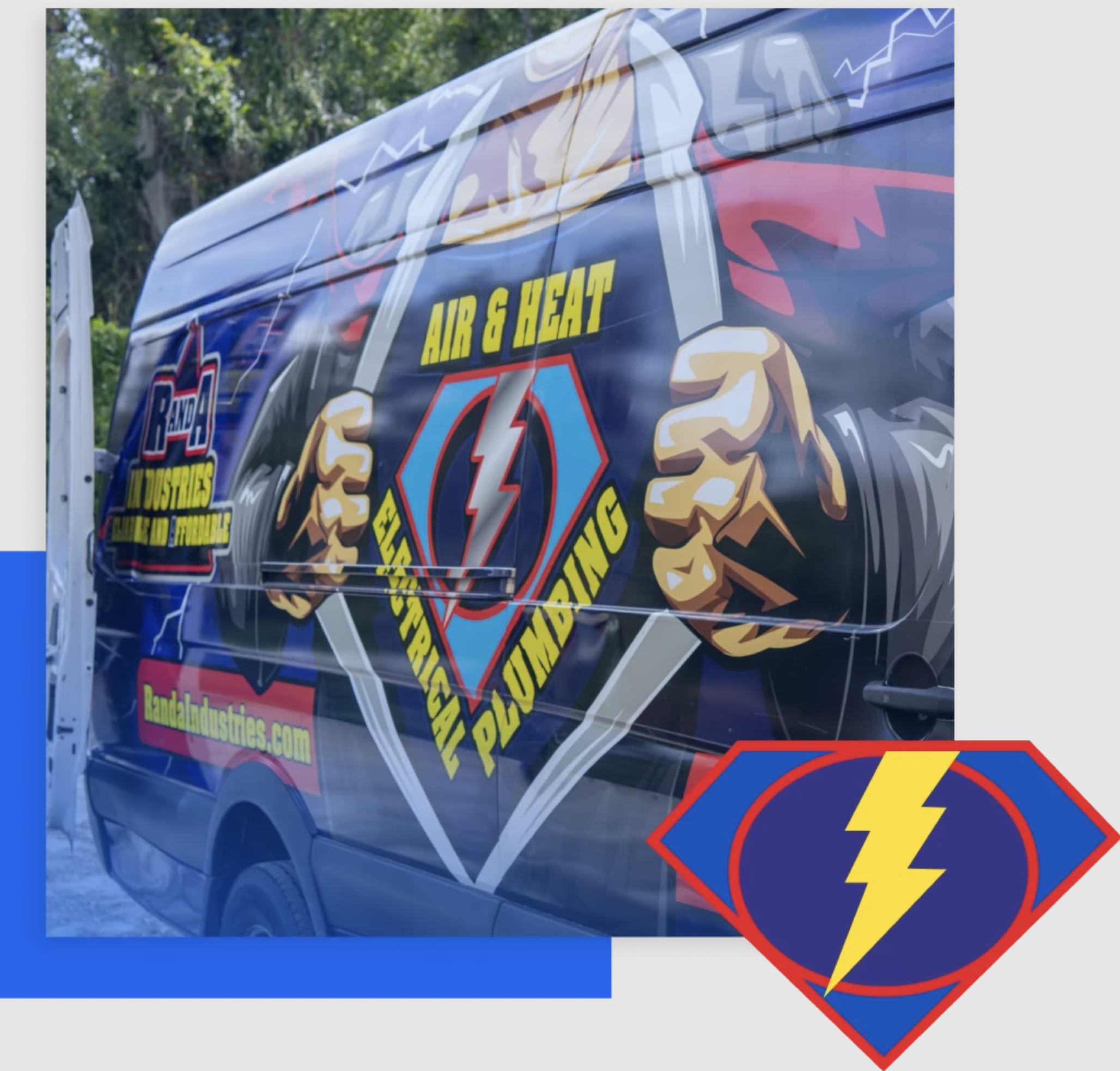
R&A Industries of Oviedo, FL creates an unforgettable first impression with their van wraps.
Business Infrastructure: The Systems Most Techs Ignore
This is where many HVAC entrepreneurs struggle.
You are no longer just a technician.
You are now a business operator.
You need:
- Separate business bank account
- Accounting software (QuickBooks or similar)
- CRM (Housecall Pro, ServiceTitan, Jobber, etc.)
- Dedicated business phone number
- Possibly an answering service or AI receptionist
|
Item
|
Monthly Cost
|
|---|---|
|
Business Bank Account
|
$0–$15
|
|
QuickBooks
|
~$50
|
|
Bookkeeping
|
$200–$400
|
|
CRM
|
$50–$300
|
|
Business Phone Line
|
$20–$100
|
|
Answering Service
|
~$150
|
Never use your personal phone number. It makes work-life balance impossible, and doesn’t scale when you hire a CSR or want other people to answer the phones.
Never mix business income with personal expenses. It will create chaos at tax time and damage your financial clarity.
The Hidden Cost: Opportunity Cost
If you currently make:
- $100,000 per year
- $120,000 per year
- $150,000 per year
That income disappears when you leave your job. So does your health insurance or other benefits.
That is real cost.
Many startups feel “cash poor” in month three not because the business failed — but because they underestimated this transition.
This is why some smart contractors:
- Start part-time
- Take weekend service calls for their side hustle
- Build slowly before quitting their job
- Stash $50,000 in the bank for start-up costs and unforeseen expenses
- Gain buy-in from a spouse with reliable employment and great benefits who can cover family expenses for the first year
If anyone tells you it costs only $10,000 to start an HVAC business, they haven’t factored in the hidden opportunity cost. Assume that you will be unable to pay yourself a salary for 12-18 months—while you also have money going out the door for start-up business expenses.
Create a financial runway before you start the business. Without it, you may not survive the first year.
The Marketing Question: How Will You Get Leads?
This is where the cost diverges dramatically.
You have three main lead generation paths:
- Word-of-mouth & hustle
- Paid platforms (Google Ads, Local Service Ads)
- Third-party lead networks (Thumbtack, Yelp, Angi)
If you want predictable growth, you need control over your marketing channels.
This is where digital marketing becomes critical.
Why Your Business Address Matters (Critical for SEO)
This is one of the most overlooked startup details.
To rank on Google Maps and generate organic leads, you need:
- A legitimate, verifiable business address
- A properly optimized Google Business Profile
- A physical location Google can validate
Google claims that “service-area businesses” without a physical address can rank well on Google maps. But the data tells a different story. Without a visible business address, your ability to rank organically is severely limited.
Your options:
|
Option
|
Estimated Cost
|
|---|---|
|
Home address + yard sign
|
~$300 one-time
|
|
Co-working space
|
$100–$400/month
|
|
Small office/warehouse
|
$600–$2,000/month
|
Google requires strict verification. That includes a video walk-through of your office, including you unlocking the building, showing exterior and interior signage, and providing a tour of the office space and any equipment stored there. You cannot fake this.
The cheapest option is to list your home address as your business address
Google will approve a home-based business — if you can demonstrate that you welcome customers at that location. To do so, you will need to attach a large sign to the exterior of your house—either on the siding, near the front door, or near a back-door entrance to your home office.
The downsides of this approach include:
- Lack of privacy: Customers can see where you live and what your home looks like.
- Unsightly: Your family and your neighbors may not love a large commercial sign.
- Temporary: As you grow into a proper commercial space, you will need to change your address and update your directory citations on Google, Facebook—and hundreds of directories.
The reality is that without that “red pin” on Google Maps, SEO becomes much harder.
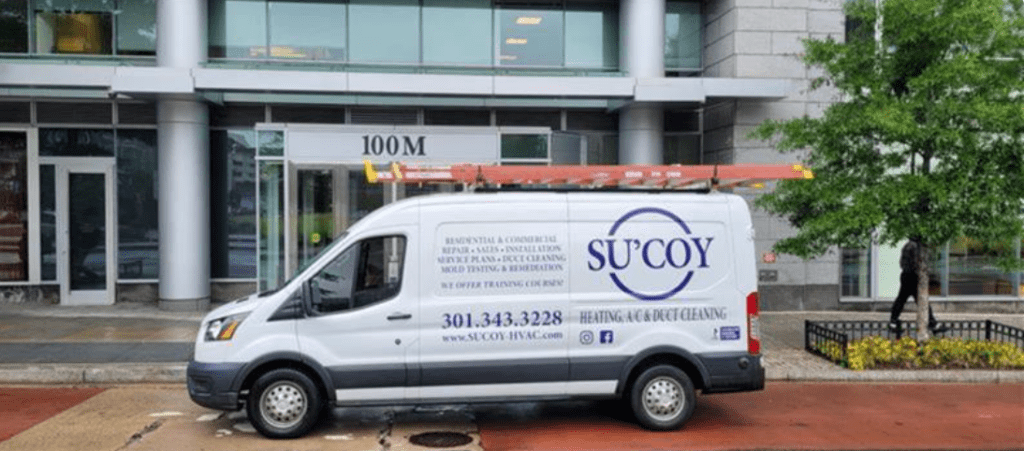
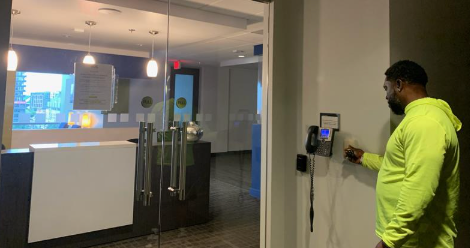
Su’Coy Heating, AC & Duct Cleaning shows exterior and interior photos as proof of its office space in Washington, DC.
Three Startup Models (With Real Cost Comparison)
Now that you understand the core startup costs — from licensing and insurance to trucks, tools, and marketing — let’s look at how those numbers change depending on how you choose to launch. Your startup path will dramatically shape your capital needs, growth speed, and overall risk level.
1. DIY Hustle Model
You:
- Build your own Wix or Squarespace site
- Design logo, graphics and flyers on Canva
- Market in Facebook groups
- Knock on doors
- Personally ask for every review
|
Category
|
Estimated Cost
|
|---|---|
|
Licensing & Insurance
|
$2,000–$6,000
|
|
Tools
|
$5,000–$10,000
|
|
Truck
|
$20,000–$30,000
|
|
Website (DIY)
|
$200–$500
|
|
CRM
|
$50/month
|
|
Marketing
|
Mostly sweat equity
|
Total Startup: $20K–$40K
Slow growth. High hustle. Low capital.
Who This is Best For:
This path is for the true builder. The polymath. The technician who is just as curious about business as they are about HVAC systems.
You are organized. You are disciplined. You are willing to watch hours of YouTube tutorials to figure out LLC filings, website builders, CRM setup, and Google Business Profile verification. You are comfortable juggling service calls in the morning and answering customer calls at night.
You have likely worked inside successful HVAC companies and paid attention. You know what “good” looks like. And you are willing to grind.
You are also an excellent salesperson. You are not afraid to knock on doors, introduce yourself to local businesses, ask for referrals, or pitch yourself in Facebook groups. You believe in yourself enough to say:
“I can do this better. Give me a shot.”
If you don’t love learning, selling, and solving problems outside the field — this model will feel overwhelming.
If you do, it can be incredibly powerful.
2. Skilled Operator + Marketing Investment
You:
- Have HVAC expertise
- Have $50K–$100K saved
- Hire a marketing agency
- Launch Google Ads at $2,000–$3,000/month
- Build brand properly from day one
Total Startup: $50K–$150K
Faster growth. Professional positioning. Higher upfront cost.
This is where many of our clients start.
We help with:
- Brand naming
- Logo development
- Website build (live in 30 days)
- Google Ads setup
- CRM integration
- Review systems
Who This is Best For:
This model is for the technician who wants to build a real company — not just create a job for themselves.
You understand use. You understand that time and money are trade-offs. You know that doing everything yourself slows growth.
Often, this works best when there are two partners:
- One focused on field operations and technical excellence
- One focused on sales, operations, and systems
You are comfortable investing in the right tools:
- A strong CRM
- A CPA who keeps you compliant
- A marketing partner who helps you grow
- Software that saves time
You may have savings. Or a spouse with steady income. Or two partners pooling capital together. But you are willing to invest to move faster.
You don’t just want to survive.
You want to scale.
3. Greenfield HVAC Company/ Investor Model
You:
- Have $200K+ capital
- Hire CSR immediately
- Hire service techs
- Lease office
- Run aggressive ads
|
Expense
|
Monthly Range
|
|---|---|
|
Payroll
|
$20K–$30K
|
|
Office Lease
|
$1K–$3K
|
|
Ads Budget
|
$3K–$10K
|
|
Marketing Agency
|
Varies
|
Startup Range: $200K–$300K+
Fastest path to scale. Highest burn rate.
Who This Model Is Best For
This model is for the operator who understands business deeply — even if they are not an HVAC technician themselves.
You may be:
- A former executive
- A general contractor
- A lawyer or investor
- Someone who has built and sold businesses before
You have access to capital — either your own, investor-backed, or through SBA financing. You understand financial projections. You are comfortable with a 12–36 month runway before real profitability.
You know that building a business is an investment phase, not an instant income stream.
You may already own other assets or businesses that offset early cash burn. You think in terms of enterprise value, long-term EBITDA, and exit potential.
You are patient. Strategic. Analytical.
You are not building for this month.
You are building for 5–10 years from now.
Summary Table: HVAC Startup Cost Comparison
|
Model
|
Startup Range
|
Growth Speed
|
Capital Required
|
Risk
|
|---|---|---|---|---|
|
DIY
|
$20K–$40K
|
Slow
|
Low
|
High
|
|
Skilled Operator
|
$50K–$150K
|
Medium–Fast
|
Moderate
|
Moderate
|
|
Investor
|
$200K–$300K+
|
Fast
|
High
|
Low
|
The Reality Check
Starting an HVAC business is not just about knowing how to fix a furnace or install an air conditioner.
You must learn:
- Sales
- Marketing
- Financial management
- Hiring
- Customer service
- Review generation
- Lead follow-up systems
If you underestimate this, you will burn out.
If you prepare properly, you can build a multi-million-dollar operation.
How RS Gonzales Helps HVAC Startups Launch the Right Way
Starting an HVAC business can feel overwhelming. There are licenses to file, insurance policies to compare, trucks to buy, software to choose, and leads to generate — all at once. Most new owners are trying to figure this out at night after long days in the field.
We step into that chaos and bring structure.
We Build Your Foundation the Right Way
Before you can scale, you need a real foundation. We help you clarify your positioning — what makes you different in your market? Veteran-owned? Family-run? Focused on heat pumps, indoor air quality, or high-efficiency systems?
Then we build the digital infrastructure every serious HVAC company needs:
- A professional website designed for SEO and Google Ads
- A fully optimized Google Business Profile
- Service pages targeting terms like furnace repair, AC installation, and heat pump replacement
- Call tracking and lead attribution
If you don’t yet have a physical address, we guide you through your options so you can compete in “near me” searches. If you do, we make sure it is positioned properly so your map ranking actually works in your favor.
We Help You Capture and Convert Every Lead
Early cash flow matters. Missed calls cost real money.
We set up the systems that protect your revenue from day one:
- A dedicated business phone number
- Call routing and tracking
- AI call answering (if needed)
- Automated text and email follow-up
- Review generation systems to build trust fast
We integrate with platforms like Housecall Pro and ServiceTitan. For startups under $1M in revenue, many choose to use our CRM as their all-in-one system — saving hundreds of dollars per month while still having scheduling, invoicing, and automation in place.
When you’re ready, we launch Google Ads and Local Service Ads with a tight geographic focus. We monitor cost per lead weekly and adjust quickly. We don’t “set and forget.”
We Act as a True Growth Partner
Beyond marketing, we help you think through pricing, hiring timing, budget allocation, and expansion strategy. We’ve seen what works — and what stalls growth.
Starting an HVAC company is risky. You may be walking away from a steady paycheck. You may be investing your savings.
Our role is to shorten the learning curve, prevent expensive mistakes, and help you move from startup to stable profitability as quickly as possible — with a system that is built to scale.
You don’t have to figure this out alone.
Ready to Start Your HVAC Business the Right Way?
If you are serious about launching an HVAC company — and you want to:
- Avoid expensive beginner mistakes
- Launch faster
- Build credibility immediately
- Generate leads quickly
Let’s talk.
👉 Schedule a strategy call with RS Gonzales and let’s map out the fastest path to a profitable HVAC startup.