
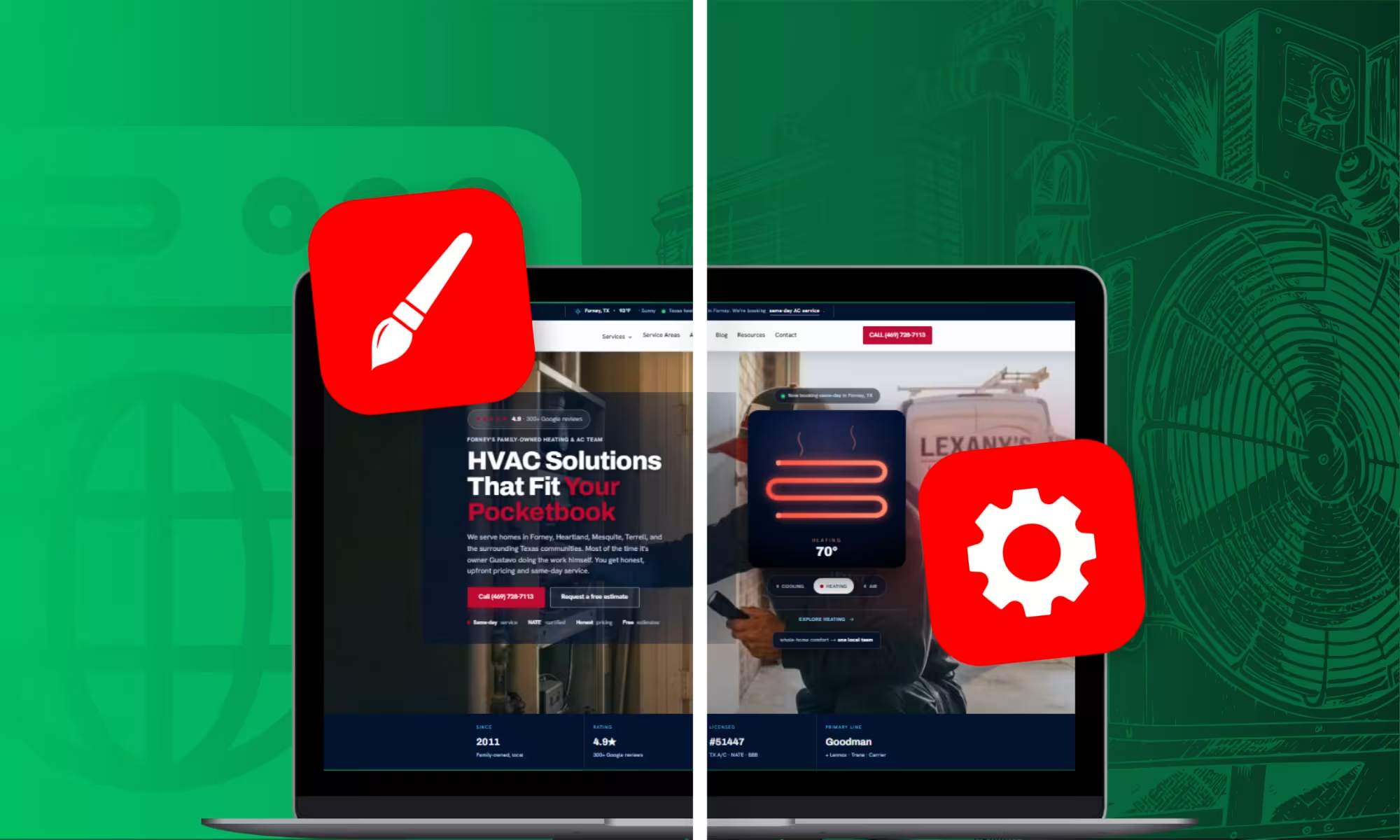
Sometimes that is exactly the right move. Other times, a redesign replaces a website that already has useful rankings, traffic, and authority when a focused round of optimization could have produced results faster.
The decision should not start with whether you like the design. It should start with a more useful question:
Is the current website fundamentally limiting growth, or is it a workable asset that is simply underperforming?
That distinction determines whether you need a new foundation or better performance from the foundation you already have.
The Short Answer: Optimize a Sound Foundation. Replace a Limiting One
Interactive Diagnostic
Should You Optimize Or Rebuild Your HVAC Website?
Check every statement that’s true for your website. The recommendation updates as you go — no email, no form, nothing to download.
Signs It’s Worth Keeping
of 4Signs It’s Holding You Back
of 4Your Recommendation
Worth Keeping / 4
NoneAll four
Holding You Back / 4
NoneAll four
Start Checking The Boxes Above
Your recommendation will appear here once you select at least one statement.
Optimize First
Your site looks like an asset worth protecting. Fixing conversion, content, and SEO will likely pay off faster than a rebuild. An audit shows you exactly where to start.
Rebuild First
The foundation is fighting you. A purpose-built site removes the constraints before you pour more money into fixes that cannot stick. A strategy session confirms the scope.
A Phased Plan Fits Best
You have strong assets and real constraints. The smart move is usually to stop the lead leaks now, preserve what ranks, then rebuild around a stronger structure. Let us map the sequence with you.
Read Your Own Score
This browser can’t run the live scoring, so tally it yourself. If the left column wins by two or more, optimize first. If the right column wins by two or more, rebuild first. Anything closer than that is a phased plan.
This is a directional read, not an audit. Not sure which side a statement lands on? Bring it to the call — Sarah Gonzales will walk your site with you, screen by screen.
Quick rule of thumb: a site that ranks but doesn’t convert is an optimize job. A site that converts but can’t grow past a handful of service and city pages is a rebuild job.
- Choose HVAC website optimization when the current site has a usable structure, credible branding, and pages that already receive traffic, but it is losing opportunities through weak SEO, unclear messaging, poor calls to action, missing service pages, or incomplete tracking.
- Choose an HVAC website redesign when the platform, architecture, user experience, or technical setup prevents meaningful improvement. A site that cannot support your services, locations, tracking, or growth strategy may cost more to keep patching than to rebuild correctly.
|
Your situation
|
Usually the better first move
|
|---|---|
|
Existing pages rank, but few visitors call
|
Optimize conversion paths and messaging
|
|
Important services or locations have no dedicated pages
|
Expand and optimize the current site if the structure allows it
|
|
The site is difficult to use on mobile
|
Optimize if the issue is isolated; redesign if it affects the full site
|
|
The platform limits page creation, tracking, or technical SEO
|
Rebuild on a stronger foundation
|
|
Branding looks dated, but the site performs well
|
Improve the visual system without automatically replacing everything
|
|
The site has been patched repeatedly and remains slow or unreliable
|
Plan a strategic redesign
|
A strong HVAC website design is not just a cleaner homepage. It creates a structure that supports local SEO, conversion rate optimization, advertising, content growth, and reliable lead tracking.
Start With the Business Problem, Not the Appearance
Contractors often judge a website by what they can see: the colors, photos, layout, and whether it feels modern. Homeowners notice those things too, but appearance is only one part of performance.
A website can look dated and still generate qualified calls. It can also look polished while failing to rank, explain services, build trust, or guide visitors toward booking.
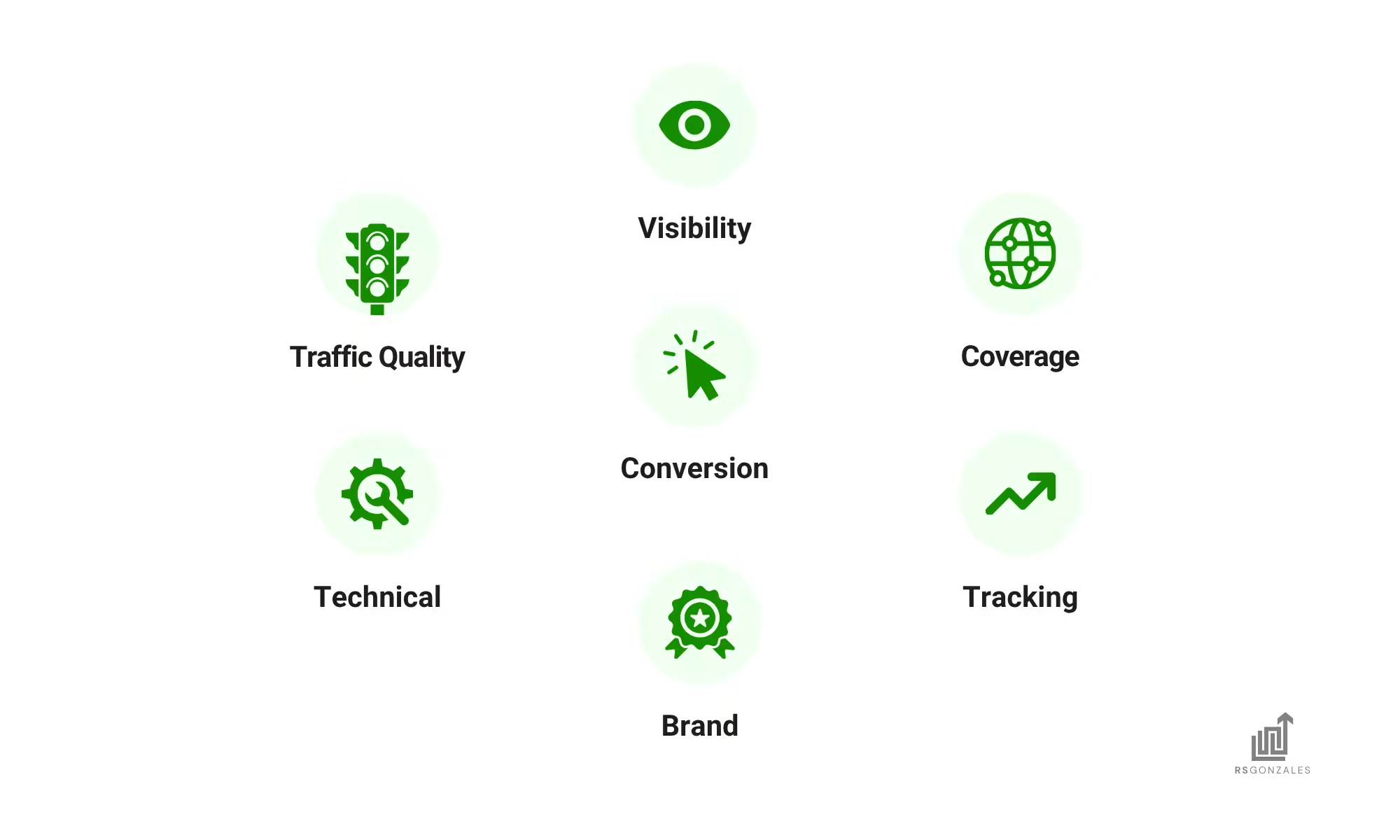
Before approving a redesign, identify the underlying problem:
- Visibility problem: The right homeowners are not finding the site.
- Traffic-quality problem: The site attracts visitors who are not likely to hire.
- Conversion problem: People visit, but they do not call, submit a form, or schedule.
- Coverage problem: Important services and cities do not have dedicated pages.
- Technical problem: The site is slow, unstable, difficult to crawl, or hard to update.
- Brand problem: The company has outgrown a generic or outdated presentation.
- Tracking problem: Leads arrive, but no one can reliably connect them to the page or campaign that produced them.
Different problems require different fixes. Rebuilding the whole site to solve one weak call-to-action is wasteful. Rewriting a few pages on a structurally broken website is equally shortsighted.
What HVAC Website Optimization Includes
Website optimization means improving how the current website gets found, communicates value, and turns visitors into leads. It is broader than changing a headline or compressing a few images.
Depending on the site, optimization may include:
- Reworking navigation so homeowners can quickly find the right service
- Strengthening headlines and calls to action
- Improving mobile usability and page speed
- Adding service pages for high-intent searches
- Expanding location coverage without producing thin, repetitive city pages
- Clarifying financing, warranties, emergency availability, and service-area information
- Adding reviews, certifications, and team photos as trust signals
- Improving internal linking between services, locations, and educational content
- Improving existing content according to the current SEO best practices
- Correcting technical SEO and indexing issues
- Connecting forms, call tracking, analytics, and the CRM
- Testing which pages produce calls and where visitors leave
Optimization is usually the smarter first move when the website already has assets worth protecting.
This is where HVAC SEO and conversion rate optimization need to work together. Rankings create opportunities, but the page still has to persuade the homeowner to take the next step.
A service page that ranks but does not explain the problem, establish trust, or make contacting the company easy is only doing half its job. The same applies to core brand pages. For example, a high-converting HVAC About Us page should do more than share a company history. It should help a homeowner understand why your team is credible, local, and safe to invite into their home.
When You Should Optimize the Current Website First
1. Existing Pages Already Rank
Pages with search visibility, backlinks, and steady traffic have accumulated value. Replacing them without a careful migration plan can disrupt performance.
When useful URLs already exist, it may be better to improve the copy, calls to action, internal links, and supporting content rather than discard the page.
2. The Website Has a Flexible, Manageable Structure
A workable content management system should let your team create service pages, location pages, landing pages, and blog content without fighting the platform every step of the way.
The platform name alone should not determine the decision. A WordPress website can be poorly built. A site on another platform may still meet the company’s current needs. What matters is whether the system supports the strategy you need now and the growth you expect later.
3. The Brand Still Represents the Company Well
You do not need a complete redesign simply because the site is a few years old. If the branding is credible and the layout is usable, targeted improvements may be enough.
Updated photos, clearer messaging, better page hierarchy, and stronger trust elements can materially improve performance without rebuilding every page.
Starting to feel like one more quote on the table?
See How We Build HVAC Brands Homeowners Trust
4. Traffic Exists, but Conversion Is Weak
When people are already reaching the site, the fastest gains may come from fixing the path between arrival and action.
Common conversion leaks include:
- A phone number that is difficult to find on mobile
- Long forms that ask for unnecessary information
- Generic headlines that do not mention the service or location
- Important proof buried near the bottom of the page
- Too many competing buttons
- No clear difference between your company and the next contractor
- No explanation of financing, guarantees, or what happens after contact
In this situation, a conversion-focused optimization plan can improve the value of traffic you already have before you spend more to acquire additional visitors.
When Does Your HVAC Company Need a New Website
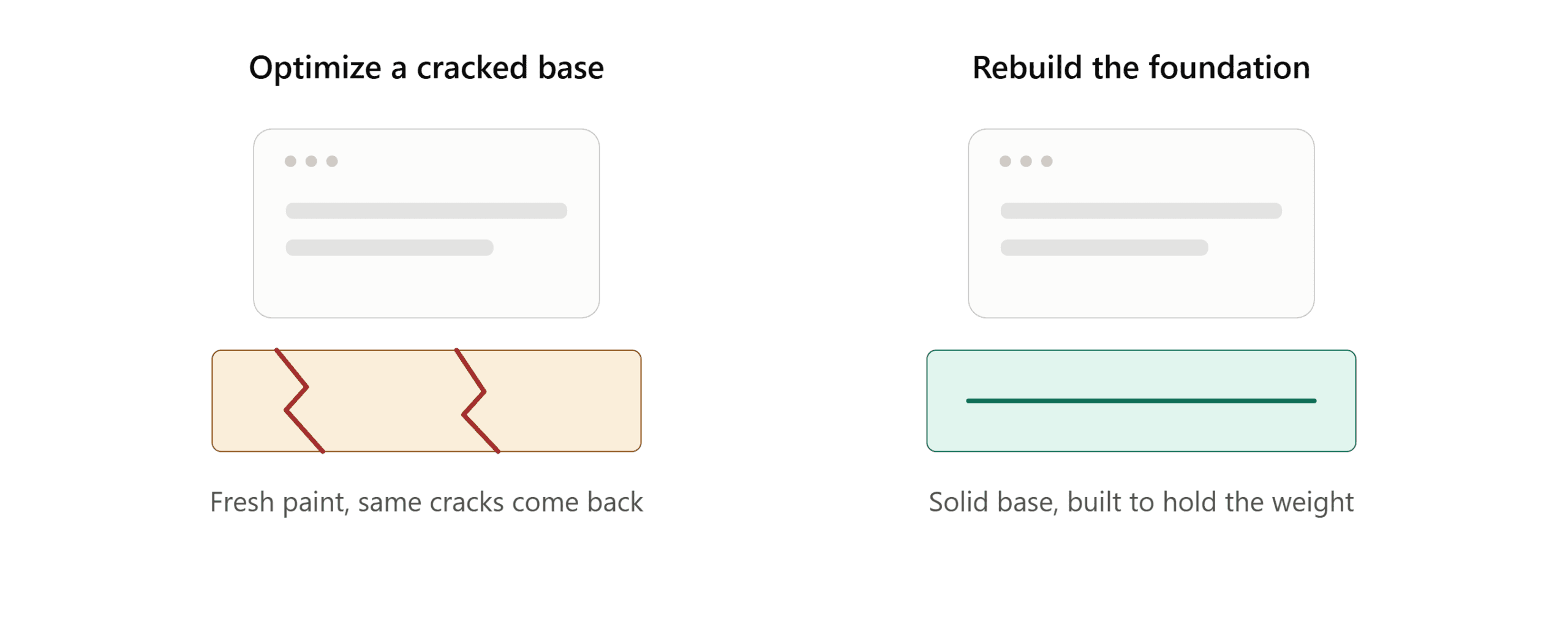
Optimizing a broken website is like repainting a house sitting on a cracked foundation. It looks better for a little while, then the same cracks push right back through. A rebuild earns its cost when the site itself is holding you back, not when you are simply tired of looking at the homepage.
The Architecture Cannot Support Your Services and Markets
An HVAC company serving several cities and offering repair, replacement, maintenance, indoor air quality, and commercial work cannot rely on one generic services page.
The website needs a logical structure that gives each important service and market enough room to rank and convert. If adding those pages creates confusing menus, duplicate URLs, or disconnected content, the architecture may need to be rebuilt.
The Platform Blocks Meaningful Improvement
A site becomes a growth constraint when basic work requires awkward workarounds or cannot be completed reliably.
That may include limitations around:
- Page templates and service-page expansion
- Mobile layouts
- Structured data
- Redirects and URL control
- Call and form tracking
- CRM integrations
- Page speed
- Ownership and portability
At that point, continued patchwork can create a larger bill without producing a stronger asset.
Tired of paying to patch a site that keeps fighting you?
See What a Purpose-Built HVAC Website Looks Like
The User Experience Is Broken Across the Site
One slow page can be optimized. A sitewide mobile experience that hides buttons, shifts layouts, buries navigation, and makes forms difficult to complete may need a full rebuild.
The same applies when the site has inconsistent page designs created by years of one-off edits. When every section behaves differently, isolated fixes rarely create a coherent customer journey.
The Company Has Outgrown Its Positioning
A startup website may no longer represent a company with multiple trucks, a growing team, financing options, memberships, commercial capabilities, or several service areas.
When the business has changed substantially, the website may need more than cosmetic edits. The structure, messaging, photography, proof, and conversion paths should reflect the company you are becoming, not the company you were when the first site launched.
No One Can Measure What the Website Produces
If forms are not tracked, calls are not attributed, analytics are incomplete, and leads do not reach the CRM consistently, optimization becomes difficult because no one can see the baseline.
A redesign can be the right time to rebuild the measurement infrastructure, but tracking should never be treated as an optional item added after launch.
What Should You Fix First When the Website Needs Both?
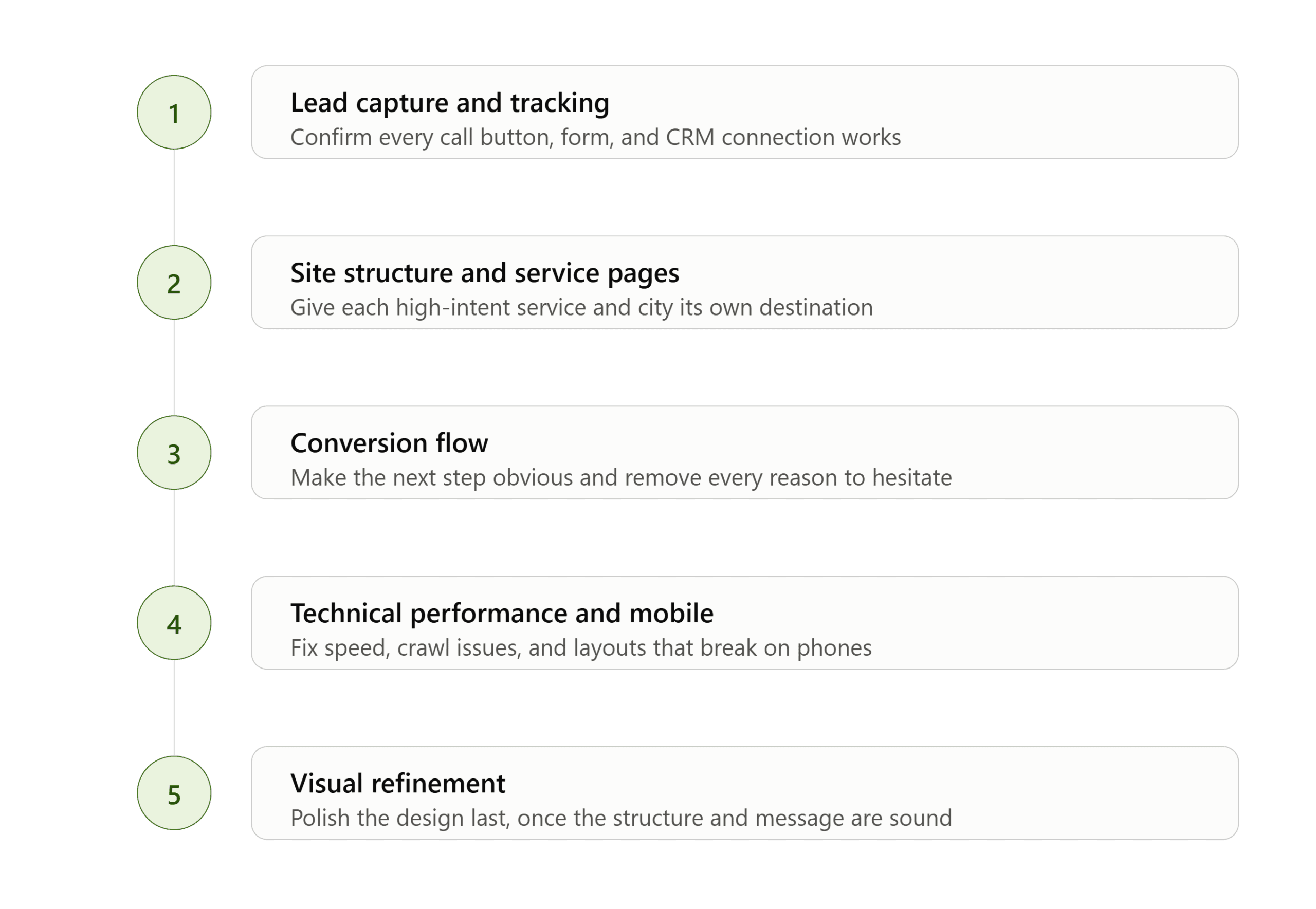
Here is the frustrating part: most HVAC websites do not need one or the other. They need better design and stronger optimization at the same time, and the bill for doing everything at once can be brutal. So the smart move is not picking one over the other. It is fixing things in the right order, so every dollar you spend makes the next fix work harder instead of paying to redo it.
1. Lead Capture and Tracking
Before debating fonts or animation, confirm that every call button, form, scheduling tool, and CRM connection works. A website cannot be evaluated accurately when leads disappear or attribution is missing.
2. Site Structure and Service-Page Coverage
Next, map the services and locations that matter most to revenue. The website should give high-intent searches a relevant destination instead of forcing every visitor onto the homepage.
This does not mean publishing dozens of thin pages. Each page should have a clear purpose, distinct search intent, useful information, and a natural path to contact.
3. Conversion Flow
Make it easy for the homeowner to understand:
- What you do
- Where you work
- Why they should trust you
- What action to take next
- What happens after they contact you
Good conversion rate optimization removes uncertainty. It does not rely on aggressive pop-ups or constant pressure.
4. Technical Performance and Mobile Experience
Fix the issues that prevent visitors and search engines from using the site reliably: slow pages, broken layouts, crawl problems, duplicate content, missing redirects, and forms that fail on mobile.
5. Visual Refinement
Once the structure, message, and conversion path are sound, the design should reinforce them. Strong visual design creates clarity and credibility. It should not distract from the reason the page exists.
This order prevents a common mistake: paying for a visually impressive redesign that carries the same weak structure and messaging into a newer template.
Why Website Optimization and Website Maintenance Are Not the Same
These terms are often used interchangeably, but they solve different problems.
- Website optimization improves lead generation, visibility, messaging, and conversion performance.
- Website maintenance protects the site after it is live through updates, backups, security monitoring, form testing, speed checks, and ongoing technical support.
You need both. Optimization helps the website perform better. Maintenance keeps that performance from slipping without anyone noticing.
A form can stop delivering even when the page still looks normal. A plugin update can affect a mobile layout. Broken links and outdated information can accumulate over time. That is why ongoing HVAC website hosting and maintenance should support the website after design and optimization work is complete.
Protect Existing SEO During a Redesign
A redesign should improve the website without erasing the authority it has already earned.
Before changing URLs or removing pages, identify:
- Which pages receive organic traffic
- Which URLs rank for valuable searches
- Which pages have external links
- Which content generates calls or form submissions
- Which internal links support important pages
- Which redirects will be required
The new site should preserve useful URLs when possible. When a URL must change, it needs a relevant redirect and a clear replacement page.
This is one reason a redesign should not be treated as a purely visual project. Design decisions can affect rankings, navigation, content depth, internal links, and lead flow.
It is also worth challenging common assumptions before making changes. Our guide to HVAC SEO myths that cost contractors leads explains why rankings, traffic, design, and lead generation cannot be evaluated as separate goals.
The Right Choice Depends on the Stage of Your HVAC Business
New HVAC Company
A new contractor usually benefits from building the right foundation once: clear branding, essential service pages, local relevance, tracking, and a structure that can expand as the company grows.
That does not require an enormous website on day one. It requires a plan that avoids rebuilding the entire structure every time a service or city is added.
Established Company With an Underperforming Site
Start with data. If the site already has rankings, traffic, and recognizable branding, optimization may create faster gains with less disruption.
If the analysis reveals platform constraints, fragmented architecture, or unreliable lead capture, then a redesign becomes a strategic investment rather than a cosmetic expense.
Company Expanding Into New Services or Locations
Growth often exposes structural weaknesses. Adding a new division or market may require new navigation, page templates, location strategy, and conversion paths.
A flexible site can be expanded. A site that was never designed to scale may need to be rebuilt before more content is added.
Company Spending Heavily on Ads
Paid traffic makes website weaknesses more expensive. Every unnecessary field, slow page, unclear headline, or missing trust signal can waste part of the advertising budget.
Before increasing spend, make sure campaign traffic reaches a relevant, conversion-focused page and that every lead is tracked. In many cases, optimizing landing pages should happen before approving a broader redesign.
Spending big on ads that land on a leaky page?
See How We Run HVAC Ads That Convert
A Practical Decision Checklist
You are more likely to need optimization first when most of these statements are true:
- The website already ranks for useful service terms
- Several pages receive qualified traffic
- The platform allows new pages and tracking integrations
- The branding still feels credible
- Mobile usability is generally sound
- The main issue is weak conversion, missing content, or incomplete SEO
- The website is stable and easy to manage
You are more likely to need a redesign first when several of these statements are true:
- The platform prevents necessary SEO or conversion work
- The site cannot support your full service and location structure
- Mobile problems affect most pages
- Branding no longer reflects the business
- Tracking and CRM connections are unreliable
- Years of patches have created inconsistent layouts and technical debt
- The website is difficult to update or cannot be moved easily
- Fixing the current build would cost nearly as much as replacing it
The best answer may also be a phased plan: correct urgent lead leaks now, preserve valuable pages, then rebuild the site around a stronger architecture.
Stop Guessing. Find Out What Your Website Needs With RS Gonzales
The most expensive option is not always a new website. It is spending month after month fixing the wrong problem.
RS Gonzales evaluates the website as part of the complete growth system: design, SEO, service-page coverage, conversion paths, tracking, ads, and lead handling. We look at what is already working, what is limiting performance, and whether the smartest next move is to optimize, rebuild, or phase the work.
Book a free HVAC strategy session to get a clear, practical assessment of what your website should do next. You will leave with specific insights you can use, even if we do not work together.