Ever Google your own HVAC company and find your website playing hide-and-seek on page two? That’s a sign your site isn’t built the way search engines want, and it’s costing you calls.
Here’s the good news: the fundamentals that fix it are learnable, mostly free, and you can do them yourself. This is the do-it-yourself playbook for your own website.
Is DIY HVAC Website SEO Worth Your Time?
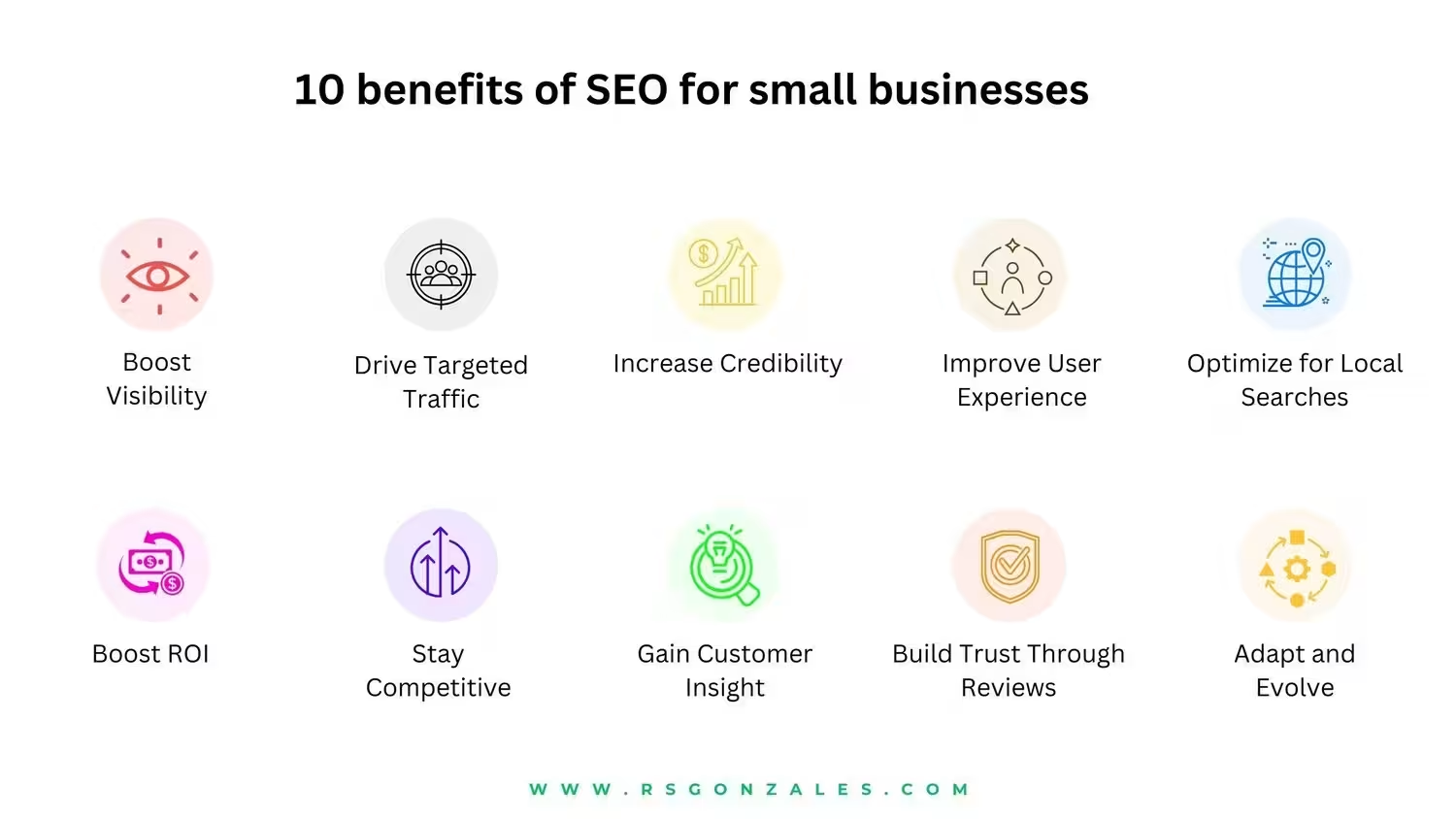
Let’s be honest first. SEO is hard, and doing it well normally calls for a mix of skills that rarely sit in one person: website design, writing, technical know-how, and a network of sites willing to link to you. On top of that, you already have a company to run.
It’s also slow. Anyone promising you the #1 spot in 30 days is selling something. Most HVAC sites take three to six months to see movement, and closer to a year to feel it in booked jobs. Here’s the realistic timeline.
So is it worth it? For the on-site fundamentals below, yes. They don’t need an agency, only a few free tools and a couple of focused afternoons. With more than 150,000 HVAC contractors online, the ones who get these basics right are the ones homeowners find first.
See Where Your Website Stands
Get a free 15-minute audit that flags the technical and on-page issues holding your site back.
5 Fundamental Questions to Ask If You Want To Do Your Own Website SEO
It helps to split SEO into two halves. On-site work is everything on your own website: how fast it loads, how it’s built, and what each page says. Off-site work is everything that points to your site, like backlinks and reviews.
You can DIY most of the on-site half, and that’s what this guide covers. The off-site half is harder to do alone, so we’ll be honest about that when we get there. Here’s the free toolkit for the on-site work:
| Fundamental | Free tool to use |
|---|---|
|
Website audit
|
Ubersuggest
|
|
Competitor research
|
SpyFu
|
|
Speed and technical
|
Google PageSpeed Insights
|
|
On-page data
|
Google Search Console and Analytics
|
|
Backlink check
|
Ahrefs free backlink checker
|
Work through them in order. Each one builds on the last.
1. How Do You Audit Your Own Website?
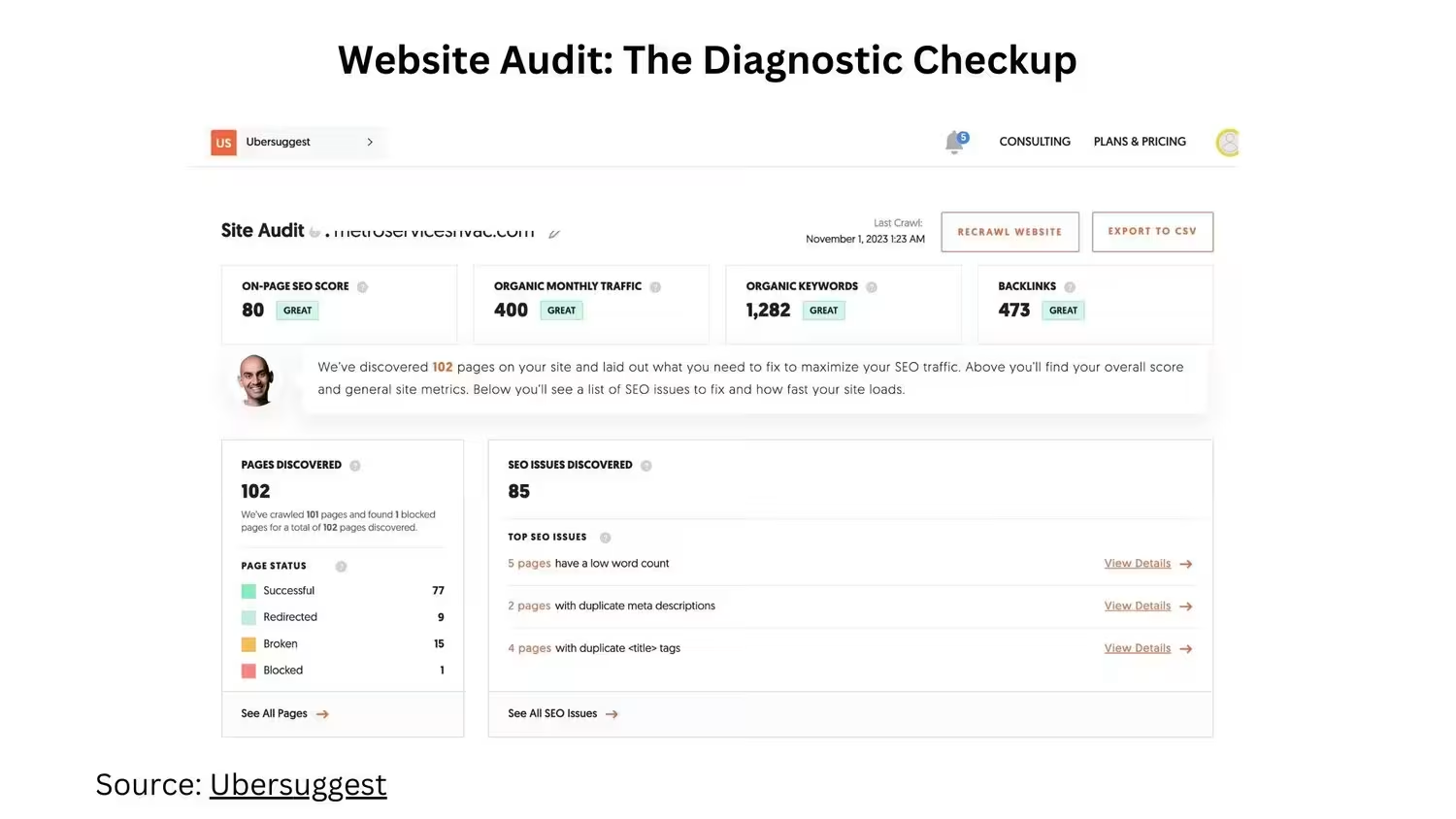
An audit is a health check for your site. It surfaces what’s holding your rankings back, so you fix the right problems instead of guessing.
A good audit looks at four things:
- Technical health. Page speed, mobile-friendliness, and whether Google can crawl your pages.
- On-page setup. Titles, meta descriptions, headers, and keyword use.
- Content quality. Whether your pages are thorough and original, not thin or duplicated.
- Backlinks. Which sites link to you, and whether any low-quality links are dragging you down.
Run your site through Ubersuggest, and you’ll get a prioritized list of fixes in minutes. Start at the top and work down. That list becomes your to-do plan for everything below.
2. What Are Your Competitors Already Doing Right?
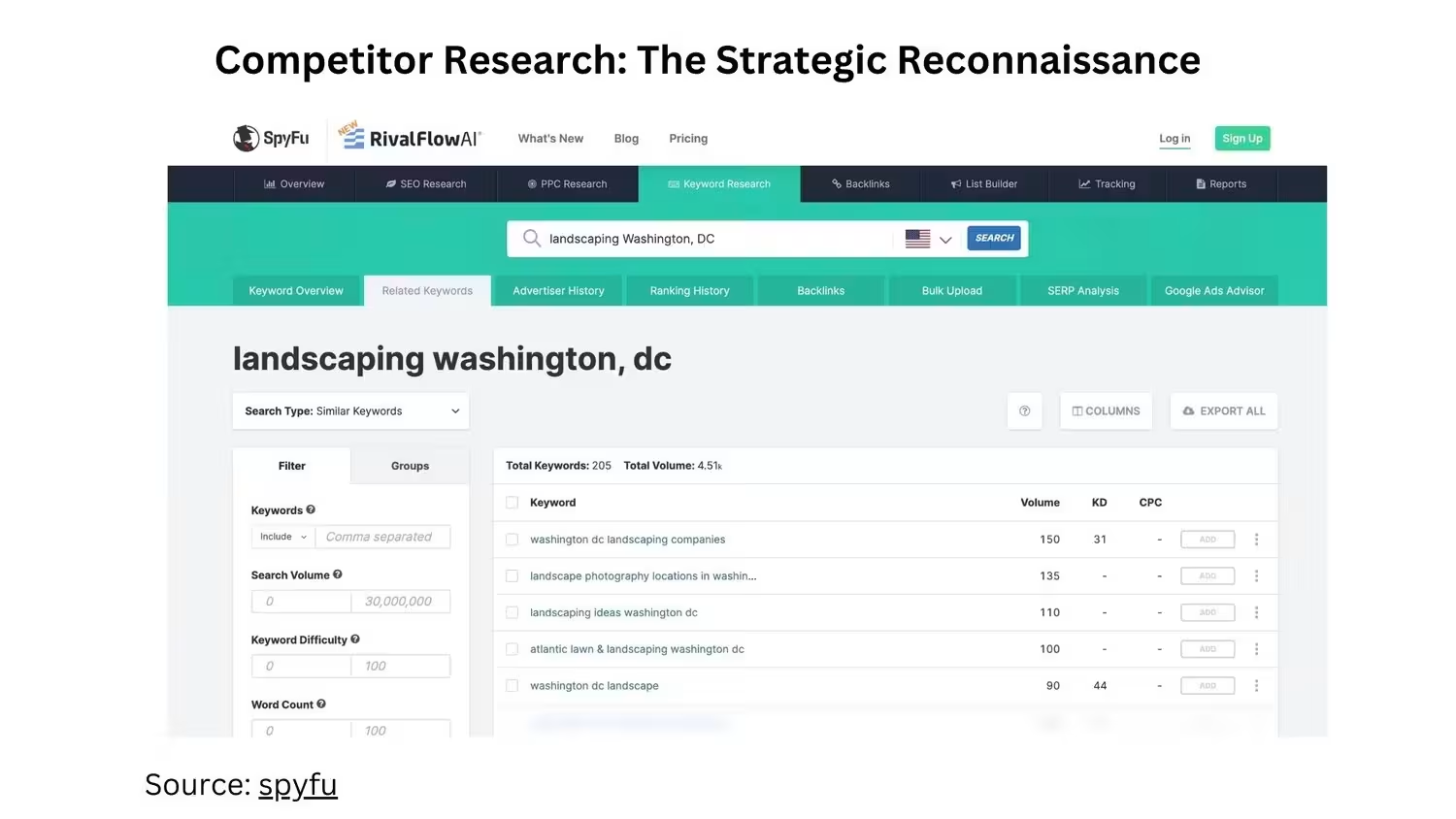
The HVAC companies outranking you have already tested what works in your market. Competitor research lets you skip the guesswork and build on what’s proven.
Look at three things for the sites above you:
- Their keywords. The exact search terms sending them traffic, and the ones you’re missing.
- Their content gaps. Topics they cover well that you don’t, which become your next pages or posts.
- Their backlinks. The local sites linking to them, which may link to you too.
SpyFu shows you the keywords and pages a competitor ranks for. Pair that with your audit, and you have a website plan built on evidence instead of hunches.
3. Is Your Site’s Technical Foundation Solid?
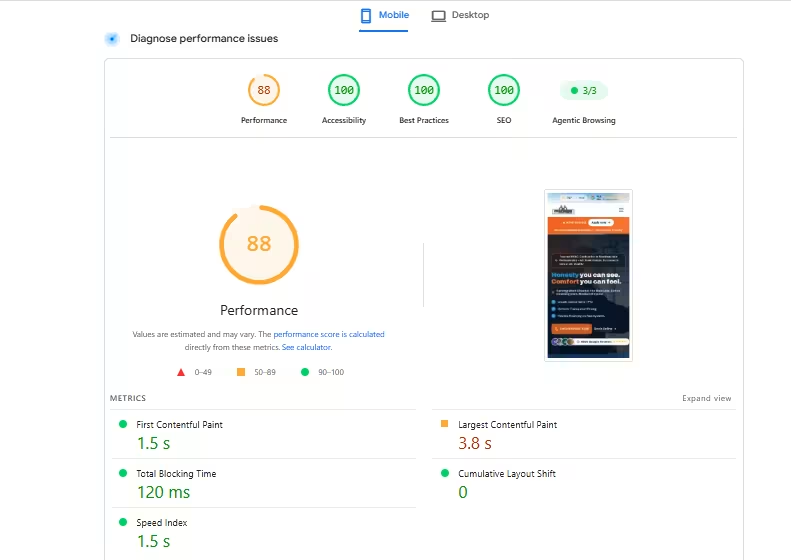
Technical SEO is the least glamorous fundamental and the one most sites fail. If Google can’t crawl, read, and load your pages quickly, nothing else you do matters.
Focus on the basics that move rankings:
- Speed. Compress images and cut heavy code so pages load fast, especially on phones.
- Mobile-first. Most emergency HVAC searches happen on a phone, so your site has to work thumb-first.
- Crawlability. Make sure search engines can reach every page, and submit an XML sitemap so they find them faster.
- No duplicate pages. Use canonical tags so Google knows the main version of a page and doesn’t split your ranking across copies.
- Structured data. Schema markup tells Google exactly what your pages are, which can earn you richer search results.
Run your site through Google PageSpeed Insights for a free speed report with step-by-step fixes. For the structured-data side, our schema markup guide for HVAC contractors walks through it.
4. Are Your Pages Optimized for Search?
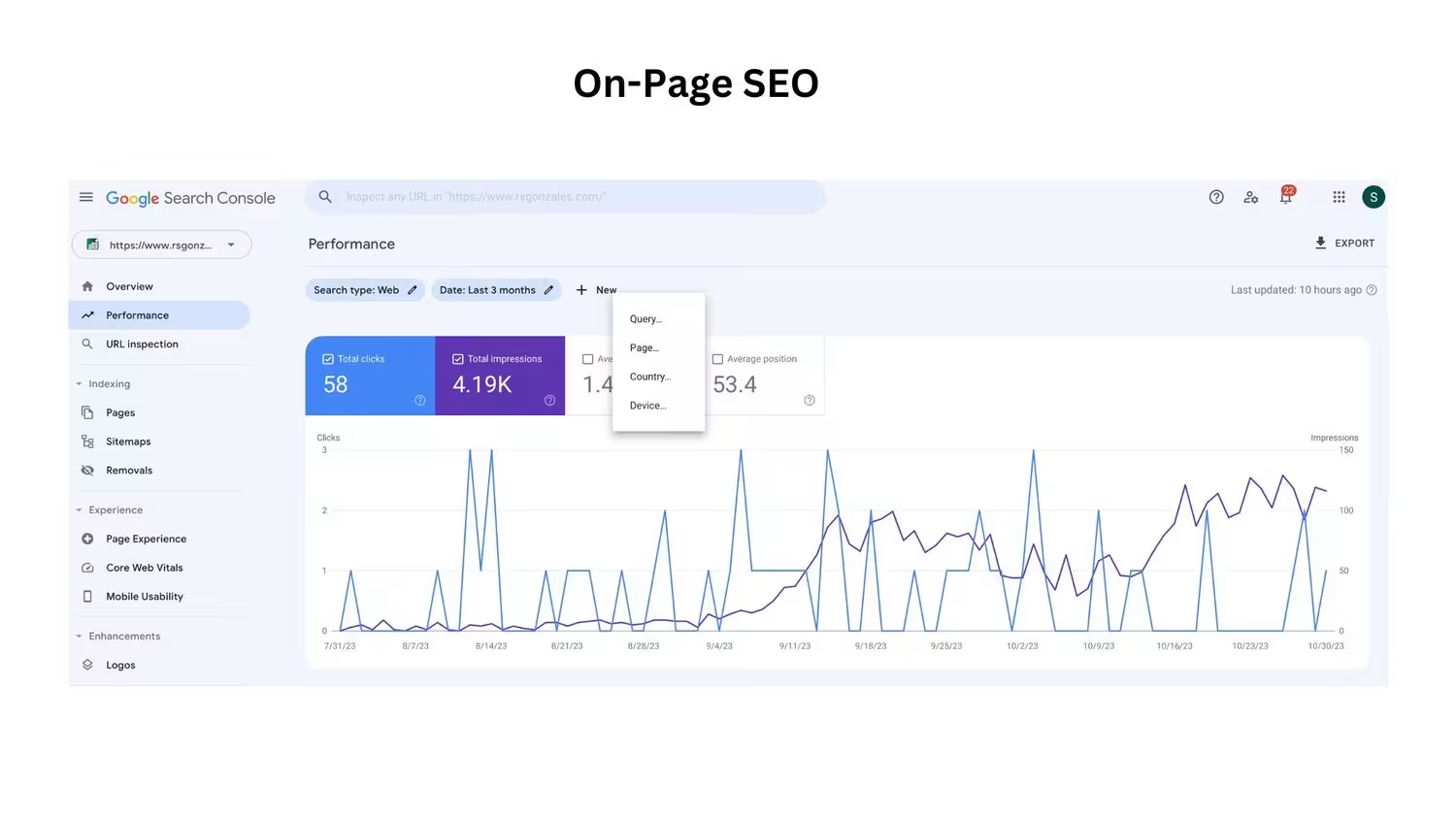
On-page SEO is tuning each page so Google understands it and homeowners want to click. This is where your service and location pages earn their rankings.
Cover these on every important page:
- Title tag and meta description. Lead with the service and city, and write them to earn the click.
- One clear H1 and structured headers. Tell readers and Google what the page is about.
- Clean URLs and image alt text. Describe the page and its images in plain, keyword-aware language.
- Internal links. Connect related pages so visitors and Google move through your site easily.
Install Google Search Console and Google Analytics, both free, to see which pages rank and convert. For the full page-by-page method, our guide on how to optimize an HVAC service page for SEO goes deep, and our HVAC SEO metrics guide shows what to track once you do.
5. What About Off-Page SEO?
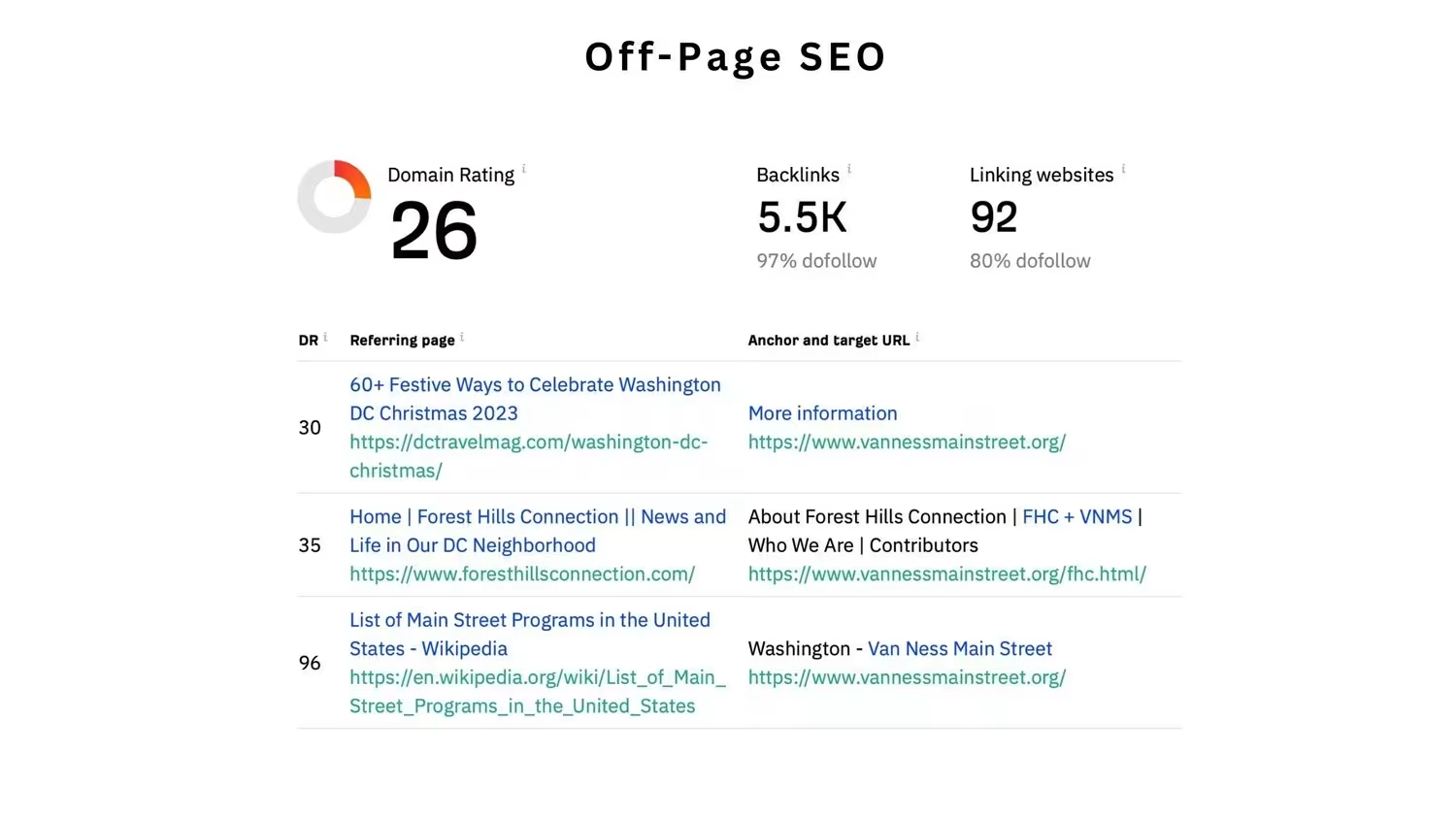
Off-page SEO is everything that happens away from your site: backlinks, citations, and mentions that tell Google other people vouch for you. It’s the most powerful fundamental and the hardest to do yourself.
Building quality backlinks and keeping citations consistent is slow, relationship-heavy work that eats hours you probably don’t have. A free tool like the Ahrefs backlink checker shows you where you stand, but the doing is another matter. Our local citation building guide covers the citation side, and the ultimate guide to local SEO covers reviews and the rest of the off-site picture.
How Do You Decide What to Fix First?
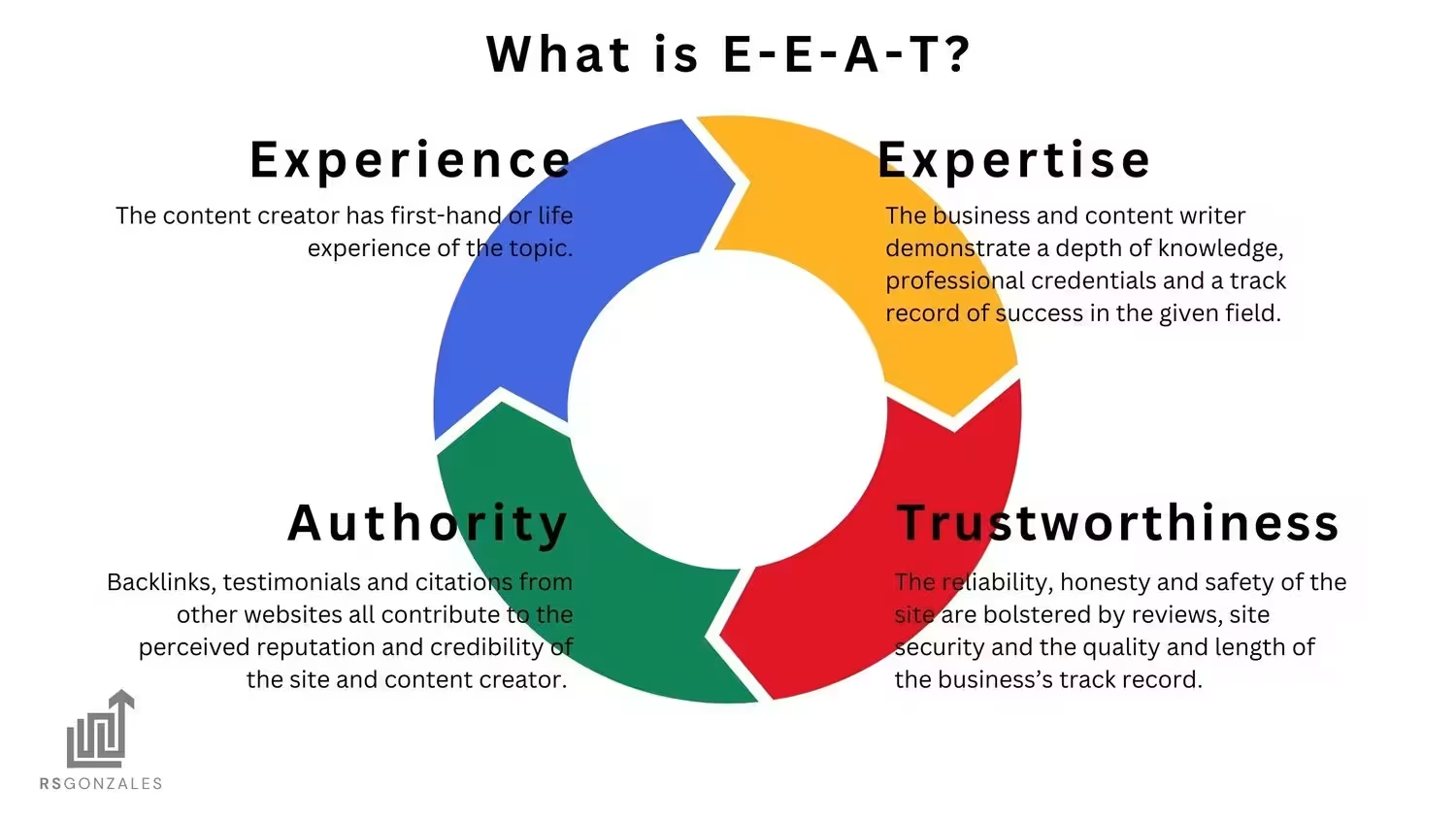
If the five feel like a lot, Google gives you a simple lens for what to tackle first. E-E-A-T stands for Experience, Expertise, Authoritativeness, and Trust. When you’re choosing where to spend an afternoon, pick the task that best proves one of those four. Our E-E-A-T explainer breaks down how Google reads it.
How Much Does It Cost to DIY Your HVAC Website SEO?
Less than you’d expect, if you stick to the on-site work. The audit, technical fixes, and on-page tuning can be done with the free tools in the table above, so your only cost is your time.
Where money starts to matter is off-page. Backlink and competitor tools like Ubersuggest, SpyFu, or Ahrefs run roughly $30 to $100 a month once you move past their free tiers. Most owners start on the free versions, learn what they’re looking at, and only pay for a tool once they know it’s earning its keep.
Rather Not DIY the Technical Side?
We'll show you what a done-for-you website SEO plan looks like, with no pressure to sign anything.
Further Reading
Rather Not DIY the Technical Side? Skip the Trial and Error With RS Gonzales
The audit, competitor research, technical fixes, and on-page work are all within reach for a busy owner with a few free tools. Plenty of contractors get solid traction doing exactly that.
Where DIY runs out of road is the ongoing part: consistent link-building, fresh content every month, and technical upkeep, all on top of running your company. That’s usually when handing it off pays for itself. If that’s you, see what a full system costs and whether it’s worth it for your market.
See What Done-for-You Costs
Straightforward pricing built for HVAC contractors, with no setup fees and a 30-day money-back guarantee.