


Somewhere in the last year, that company sold to a private equity firm. That is an investment group that buys businesses, grows them, and sells them again a few years later. Nobody in town got an announcement, and most of its customers still think it is the family business it used to be.
Most independent owners feel this squeeze, and most assume the answer is to spend more. You cannot win a spending contest with a company backed by investors, and you do not need to. In this blog, we cover what private equity changes in your market, where its money wins, what it cannot buy, and how to keep winning.
What Changes When Private Equity Buys HVAC Companies in Your Market?
Private equity firms are buying HVAC companies faster than they were a few years ago, and they often keep the local name on the trucks. PitchBook counted 55 private equity deals in HVAC in 2024, up from 32 the year before, and many smaller purchases are never reported at all.
The national numbers are smaller than they feel from inside your own market. Orbital tracks 167,717 US HVAC contractor locations, and the ten largest private equity platforms hold about 12,000 of them, under 8 percent. More than nine in ten HVAC locations are still independent, so most homeowners in your town are still choosing between companies like yours.
What does change is how a bought company runs once the deal closes:
- The name stays, but the decisions move. An ACCA board chair told ACHR News that buyers often keep the original name. A homeowner can collect three quotes and get all three from the same corporate owner.
- Phones move to a central call center. Dispatch, scheduling, and customer records go into one shared system that serves every company the group owns.
- Marketing moves to a central team with a bigger budget. One team buys ads for several brands at once, often with national vendor deals behind it.
- Pricing gets set above the local level. The same ACCA chair said that “typically, we see huge price increases when a local company is purchased by a private equity group.”
None of that makes these companies bad operators. They are built to grow quickly and sell again in a few years, and that goal shapes every decision they make about a customer.
Where Does a Private Equity-Backed HVAC Company Have the Advantage?
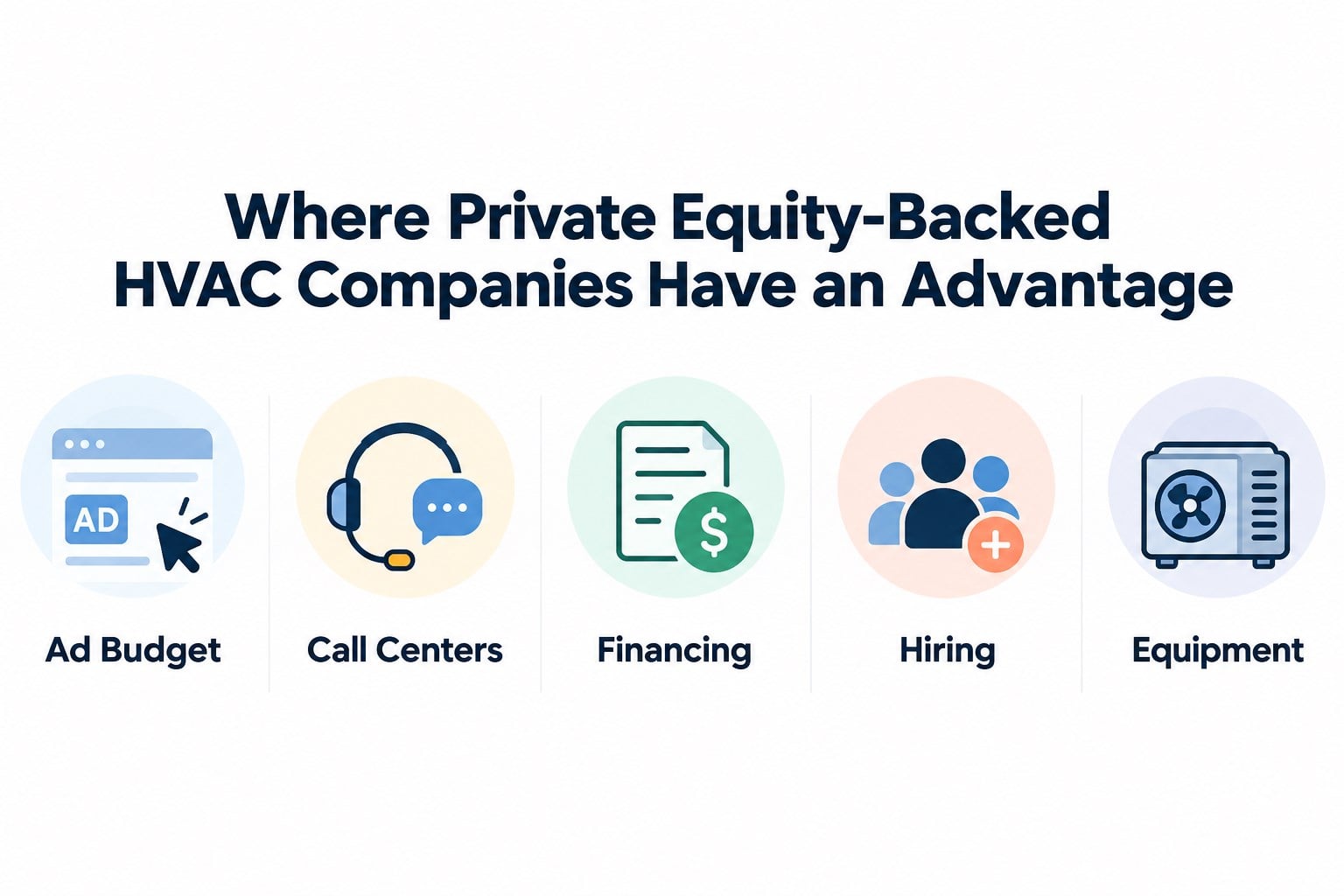
A private equity-backed company wins some fights outright. Pretending otherwise sends your ad budget into fights you cannot win. These are the places where its budget makes a difference, and what each one means for you.
| Where they have the edge | What it looks like in your market | What it means for you |
|---|---|---|
| Ad budget | Their ads show on more searches, in more zip codes, for more hours of the day. | You lose a straight bidding war on broad searches like “AC replacement.” |
| Google’s ad auction | A bigger budget bidding on your searches makes the auction more competitive. | Your cost per click can rise even though nothing in your account changed. |
| Phones | A call center answers nights and weekends. | A call you miss at 7 p.m. becomes their job. |
| Equipment and financing | National vendor deals and in-house financing offers. | Their install quotes can look sharper on paper. |
| Hiring | Sign-on offers and promises like no night or weekend calls. | Your best technicians start getting calls from their recruiters. |
The auction row catches most owners off guard. Google says the price of a click depends partly on how competitive the auction is. A well-funded company bidding on your searches can raise what you pay without anyone touching your account. Matching their budget dollar for dollar is the fight we steer owners away from first.
Five Things Private Equity Money Can’t Buy an HVAC Company
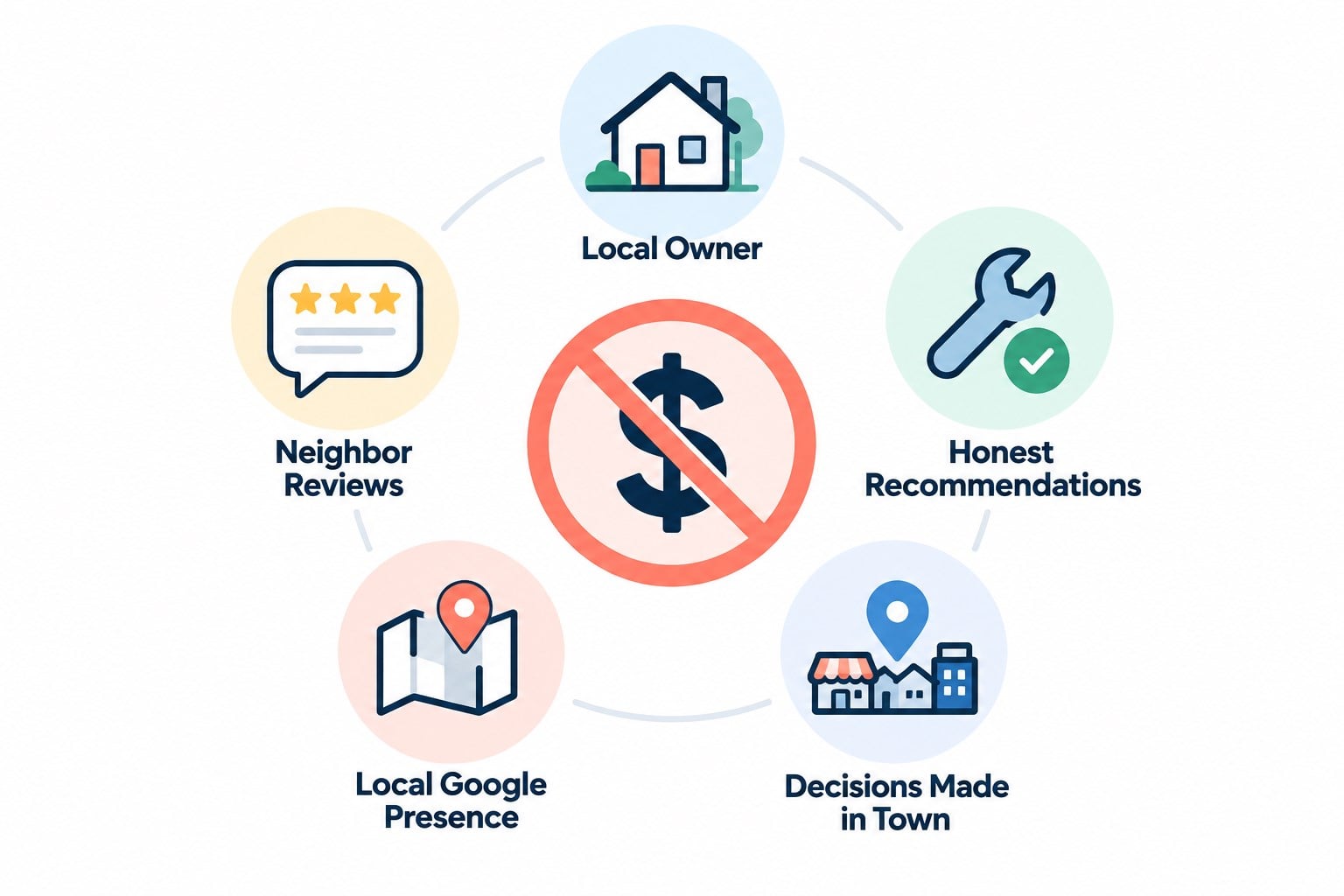
Homeowners are clear about what they want from a home service company, and it is not the biggest name. A February 2025 Tinuiti survey of 1,000 US homeowners asked what matters most. More than twice as many put “locally owned” in their top three qualities as put “nationally recognized” there. These five advantages are what “locally owned” looks like to the person deciding who to let into their home.
1. An Owner Who Lives in the Same Town
A contractor we work with in Chester County, Pennsylvania, hears one question on the phone more than any other. Homeowners ask, “Are you local, or are you private equity-owned?” Most of the established companies around them have sold, so a plain “we are local, not private equity-owned, and the owner lives here” now wins jobs on its own.
That answer only helps if homeowners see it before they call. Put the owner’s name and face on your website, your Google Business Profile, and your trucks. A person with a reputation in town is the one hire a holding company cannot make. It is why we build the owner’s personal brand beside the company brand, so the homeowner meets a person before they meet a price.
2. Reviews That Read Like Neighbors Wrote Them
Homeowners read reviews for signs of a person behind the company. Recent reviews that name your technicians and your street carry more weight than a wall of short five-star ratings. BrightLocal’s 2026 consumer survey found that 74% of people look for reviews from the last three months, and 80% favor a business that replies to all of them.
A reply signed by the owner, mentioning the job, is easy for a local company and hard to copy at scale. That is why a review system that runs after every job ends with the owner’s own replies, not a template from a central office.
3. A Repair Recommendation With No Sales Target Behind It
Fear of being overcharged is one of the first things a homeowner brings to a service call. In one long r/HVAC thread about private equity, technicians described price books jumping after a buyout. Independent owners in the same thread said coming in under those quotes made them look like the hero.
Say your repair-first policy out loud, on your website and in the driveway. A line like “If a $300 repair fixes it, that’s what we’ll recommend” costs you nothing and answers the fear before the homeowner has to raise it.
4. A Spot on Google Maps Close to the Customer
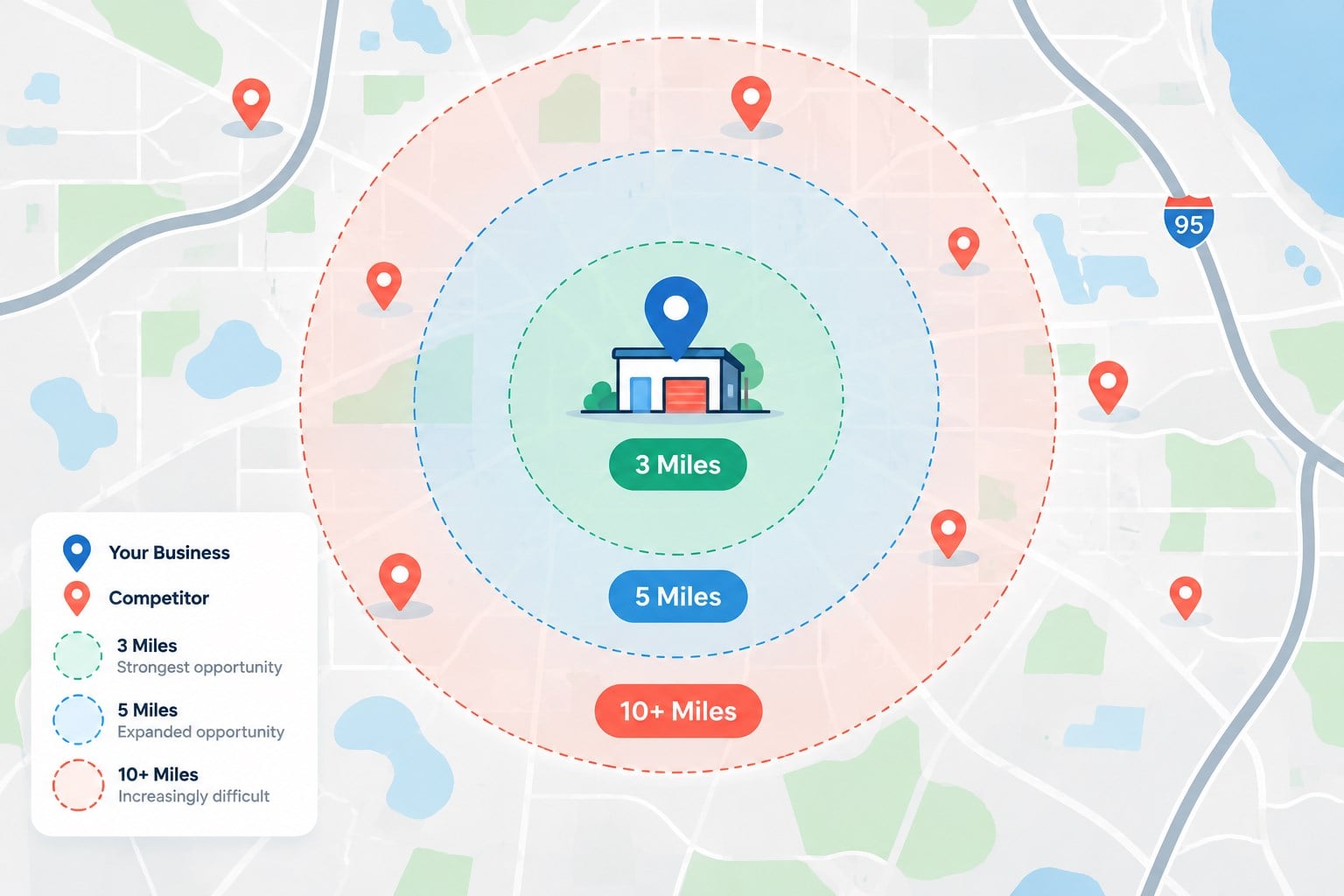
Google ranks local results on relevance, distance, and prominence, and its own guidance says there is no way to request or pay for a better local ranking. Reviews help with prominence, but distance is the one a budget cannot move.
Whitespark’s 2026 survey of local search experts ranked the searcher’s distance from the business second of 187 factors. A physical address in the searched city ranked fourth. Money can open a new office, but not one in every town at once. That makes ranking in the Google Maps pack for each town you serve the place where a local shop starts ahead.
5. Decisions Made by an Owner in Town, Not a Regional Office
An independent owner can change an offer at lunch and have it running by the evening. When a cold snap hits, you can move a crew, open Saturday slots, and tell your customers about it before noon.
A platform company often runs those choices through a regional manager and a marketing team that serves several brands at once. Every extra approval costs time, and in a heat wave or a cold snap, the homeowner books whoever answers first.
See How We Build HVAC Brands Homeowners Choose
How Should a Small HVAC Company Market Against a Private Equity Competitor?
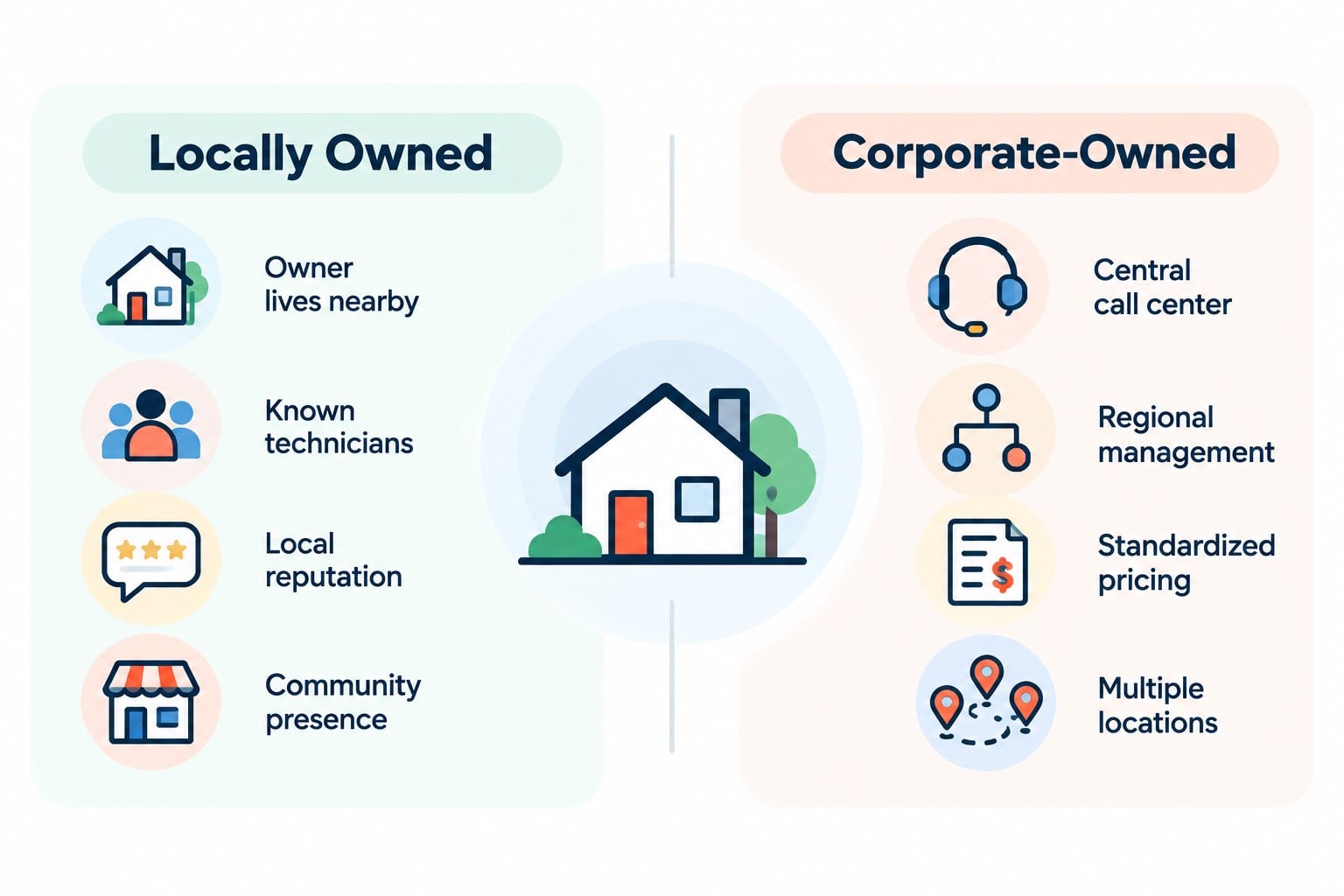
Most independent owners who lose ground to a private equity-backed competitor are out-positioned, not out-worked. Their crews do better work, but online the bought company looks bigger, answers faster, and shows up first. The marketing job is to make your local ownership, your reviews, and your honest repairs visible before a homeowner ever calls.
- Say “locally owned” with proof, everywhere. “Family owned” is painted on trucks a holding company bought last spring, so the phrase alone proves nothing. Put the specifics on your homepage, your Google Business Profile, and your estimates. Say who owns the company, which town they live in, and how long they have served it.
- Pick the ad fights you can win. Skip the broad, expensive searches where their budget sets the price. Put your money into Local Services Ads, the listings at the top of Google with the green Google Guaranteed check. Add repair searches in the towns closest to your shop.
- Answer every call faster than a call center. Google ranks Local Services Ads on your responsiveness and your reviews as well as your bid, and missed calls count against you. Route after-hours calls to a person, and set up a CRM, the software that tracks every lead and job, to text back any missed call automatically.
- Turn past customers into a list you own. Every household you have served is a homeowner the new competitor has to buy an ad to reach. Send them seasonal tune-up reminders and a short note from the owner, so past customers book with you first instead of searching.
- Tell AI assistants who you are. Tools like ChatGPT read your reviews, your website, and what other sites say about you before they name an HVAC company to a homeowner. A clear, consistent story about who owns the company and where it works is exactly what those tools repeat.
Should You Sell Your HVAC Company to Private Equity or Keep Competing?
Plenty of owners reading this have already had a call from a buyer, and selling can be the right decision for a family and a business. A broker told ACHR News in 2024 that companies in the $10 million to $40 million range were “already gobbled up.” Buyers are now calling much smaller shops.
Read the earnout terms closely if you do talk to a buyer. An earnout is the part of the price paid later, and only if the company hits set targets. ACHR News has warned that earnouts can leave sellers empty-handed even when they hit those targets.
Either way, the work in front of you is the same. A website you own, a strong review history, and a customer list make you hard to beat. They are also what raises an HVAC company’s value to a buyer. Building them now protects you whether you stay for twenty more years or sell in five.
Want to See Where You Stand Against the Private Equity Shop in Your Town?
The Private Equity Competitor Audit Sheet puts a competitor’s ownership, Google Business Profile, reviews, ads, and phone response side by side with your own. Then it turns the gaps into a plan for your next month.
Download the Private Equity Competitor Audit Sheet
So Where Should an Independent HVAC Owner Start This Month?
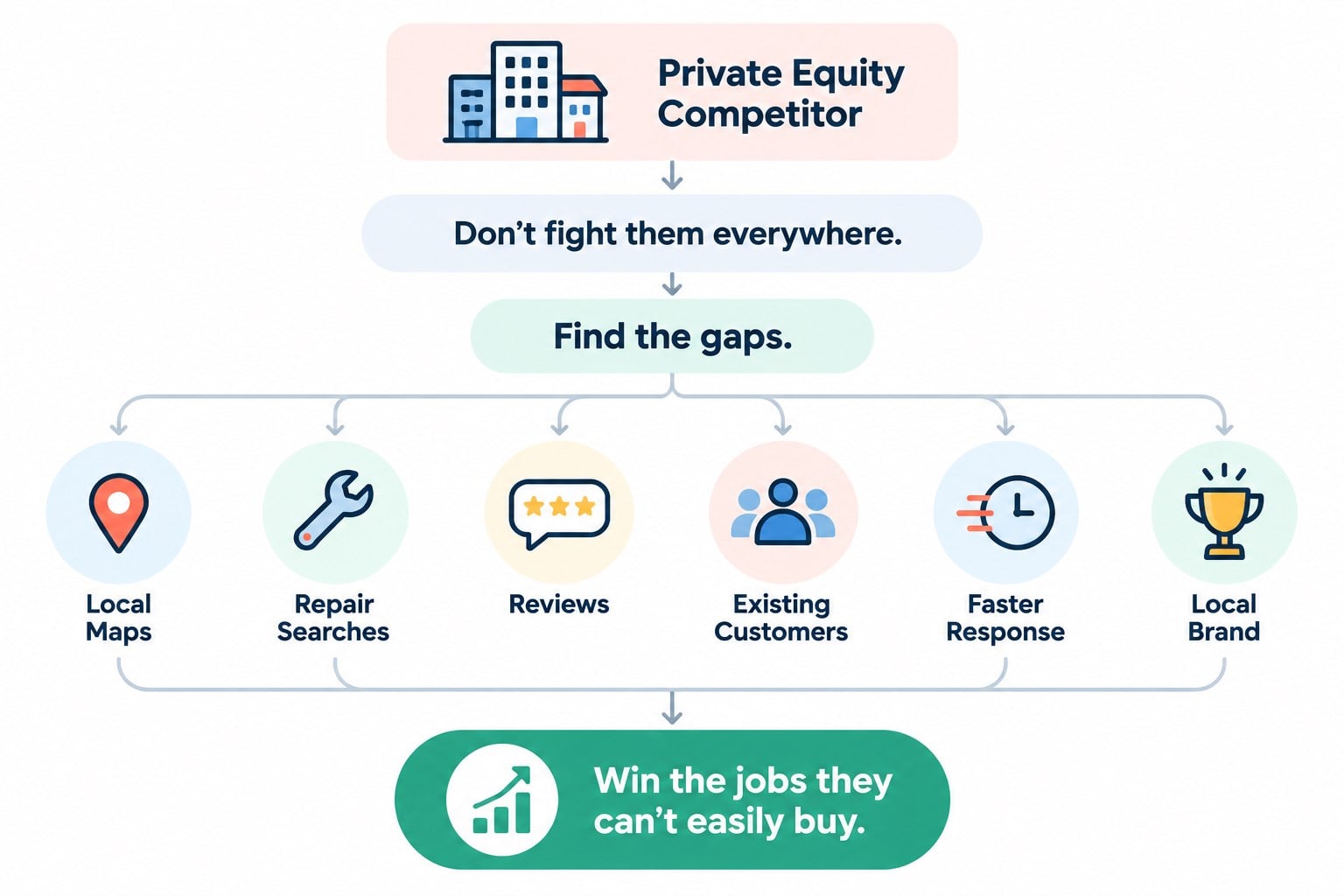
A private equity-backed competitor can outspend you every month of the year. It still cannot be as local as you are, and homeowners say local ownership matters to them more than a national name.
Start with these three:
- Find out who owns the companies around you. Check the About page, press releases, and state business filings for the five companies nearest you on Google Maps, and note which ones have sold.
- Put the owner’s name and town on your website and Google Business Profile. One sentence about who owns the company and where they live, added this week, answers the question homeowners are already asking.
- Move part of your ad budget from broad searches to Local Services Ads and repair searches near your shop. Then track your cost per booked job for 30 days.
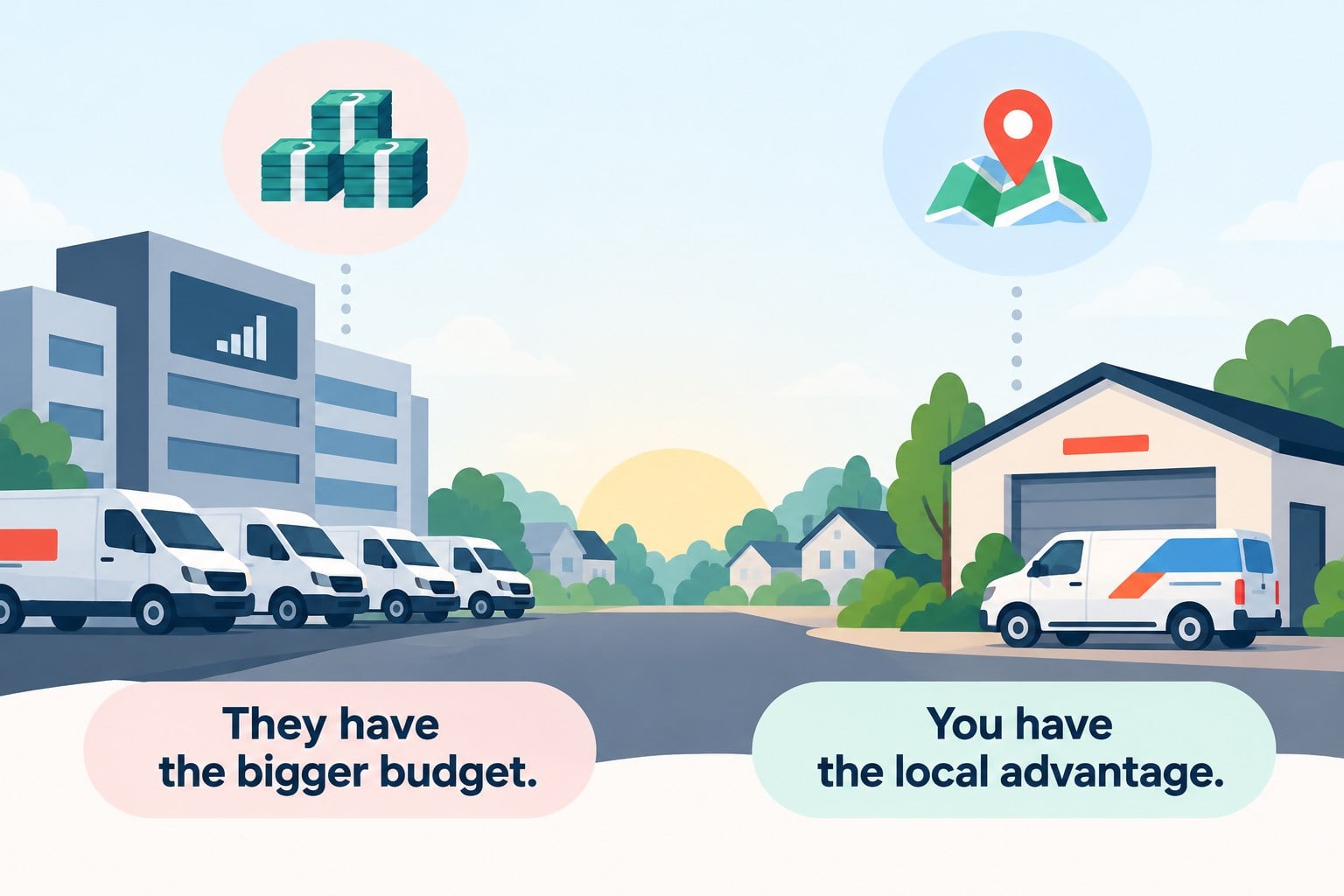
The company down the road has a bigger budget. You have the local trust its new owners paid to buy.