

Most owners have a list instead: Google Ads, Facebook, reviews. A list doesn’t say what to do in March, how much to spend in July, or whether any of it worked.
A marketing plan for an HVAC company covers what the list leaves out: a calendar for each month, a budget that moves with your seasons, and the numbers you check.
In this blog, we cover what to gather first, what to do each month of 2027, and how to split your budget. Set it up before January, and every dollar next year has a job.
Why Most HVAC Marketing Plans Fall Apart by March
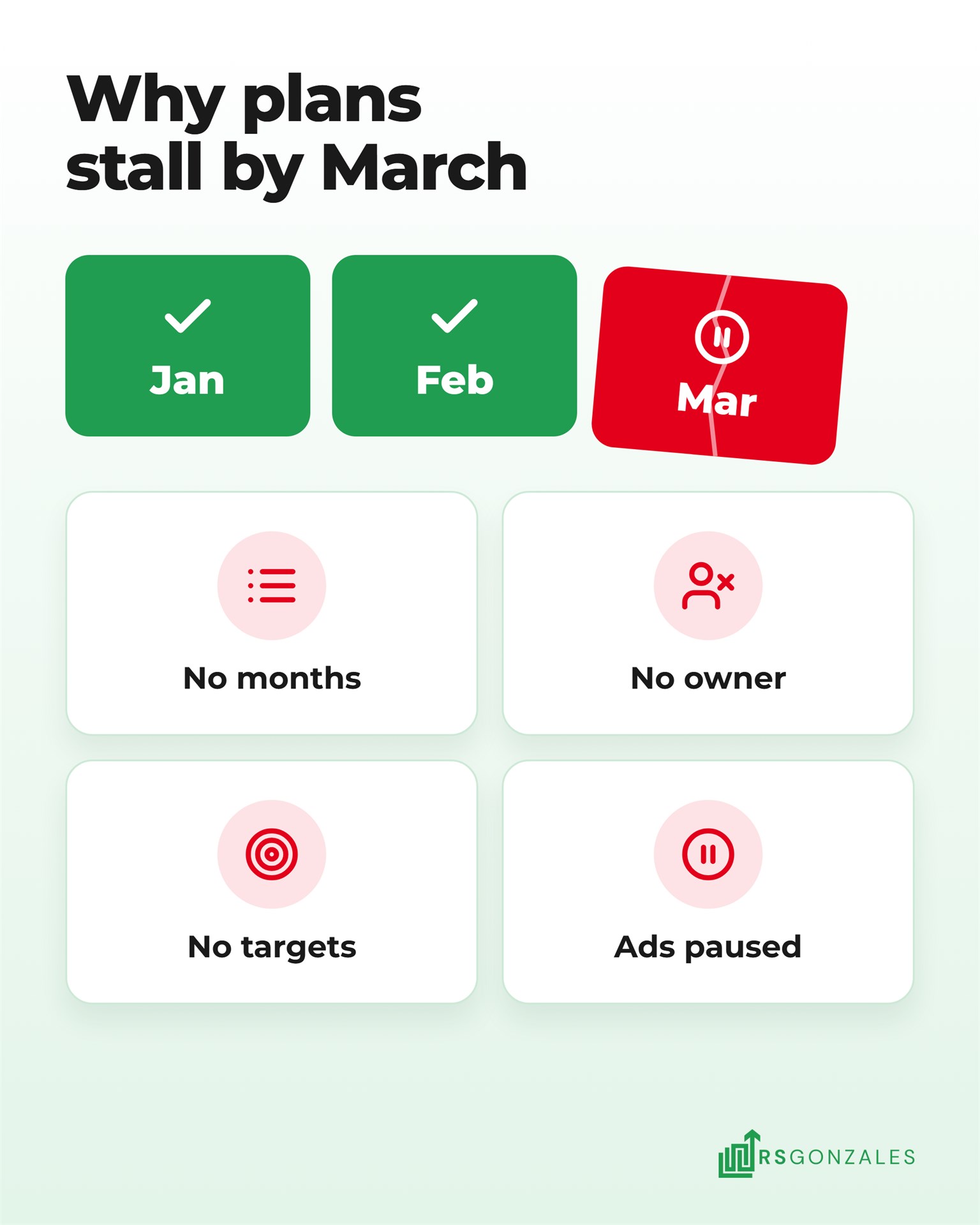
Most HVAC marketing plans break in the first quarter, when the heating calls slow down and nobody remembers what was supposed to happen next. The causes are almost always the same.
1. The Plan Lists Channels but Not Months
A list like “Google Ads, Facebook, SEO” tells you what to run, not when to push it. Without a calendar, the spring tune-up offer goes out in May, after most homeowners have already booked with someone else. A plan names what happens in each month, so the work starts before the season does.
2. Nobody Owns Each Line of the Plan
When a task belongs to “the office”, it belongs to nobody. The review requests, the maintenance renewal email, and the monthly ad check each need one name next to them, whether that name is yours, your office manager’s, or your agency’s.
3. The Plan Has No Numbers to Check Against
Without a target, a slow month and a failing channel look the same. A plan needs last year’s booked jobs by source and a goal for each quarter, so you can tell whether a quiet March is normal or a warning.
4. The Marketing Stops Right After a Good Season
Two moments end most plans. In peak season, owners pause ads because the schedule is full. In the fall, after a strong summer, some cut marketing because business feels fine. Both leave you starting from zero when the next season turns, and the slow months are the months that need the work most.
What Your HVAC Marketing Plan Needs Before You Pick a Channel
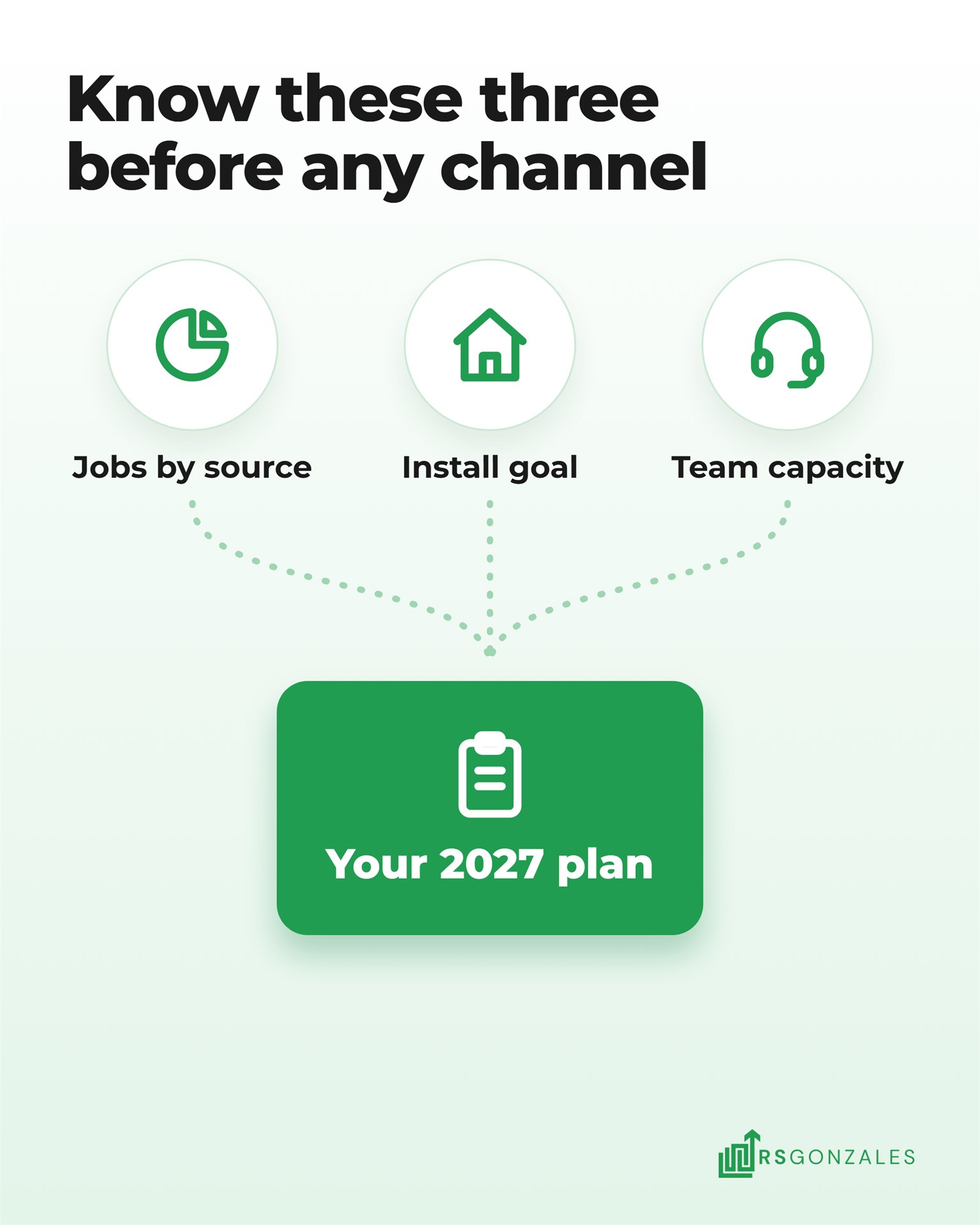
Fixing those gaps starts with your own business, not with a channel. Your HVAC marketing strategy sets who you serve and what makes you different. The plan turns that strategy into dates and dollars, and it starts with where last year’s jobs came from, the work you want more of, and how many calls your team can take.
Your 2026 Booked Jobs by Source
Pull every booked job from 2026 and tag where it came from: Local Service Ads (the pay-per-lead listings at the top of a Google search), Google search ads, your Google Business Profile, your website, referrals, or repeat customers.
Your field-service software, such as ServiceTitan, Housecall Pro, or Jobber, holds the jobs, and call tracking numbers, separate phone numbers that show which ad or listing a call came from, hold the source. If you can’t split jobs by source yet, fixing that is the first line of your 2027 plan, because every other decision depends on it.
Your Install Versus Repair Goal for 2027
Repairs and replacements are two different sales. A repair customer calls one of the first companies they find, often within the hour. A replacement buyer thinks about it for months, compares quotes, and often needs financing.
Decide what share of 2027 revenue you want from installs, because a shop chasing more replacements spends more of its year on follow-up, financing offers, and staying in front of homeowners who are not searching yet.
How Many Calls Your Team Can Handle in Peak Season
Marketing only pays when someone answers the phone and a technician can get to the job. Count how many calls your CSRs, the customer service representatives who answer the phone and book jobs, can take on your busiest day, and how many jobs your technicians can run in a week.
If last July’s calls already outran your team, the 2027 plan needs a hire or an overflow answering plan before it needs more ads.
A Month-by-Month HVAC Marketing Plan for 2027
Download the 2027 HVAC Marketing Plan
With those numbers in hand, your HVAC marketing calendar is where the plan comes together. Use the four quarter tables as your HVAC marketing plan template: copy them, change the months to match your climate, and put a name next to each action. A shop in Phoenix or Dallas has a short, mild winter and a long cooling season, so its heating months shrink and its AC months stretch. The tables use the channel names you see in your accounts, and Meta ads means ads on Facebook and Instagram.
Each quarter carries one main HVAC marketing campaign, and each month has one action that matters more than the rest. Seasonal SEO for HVAC adds the website updates to make each quarter, so your service pages and Google profile match what homeowners search that season.
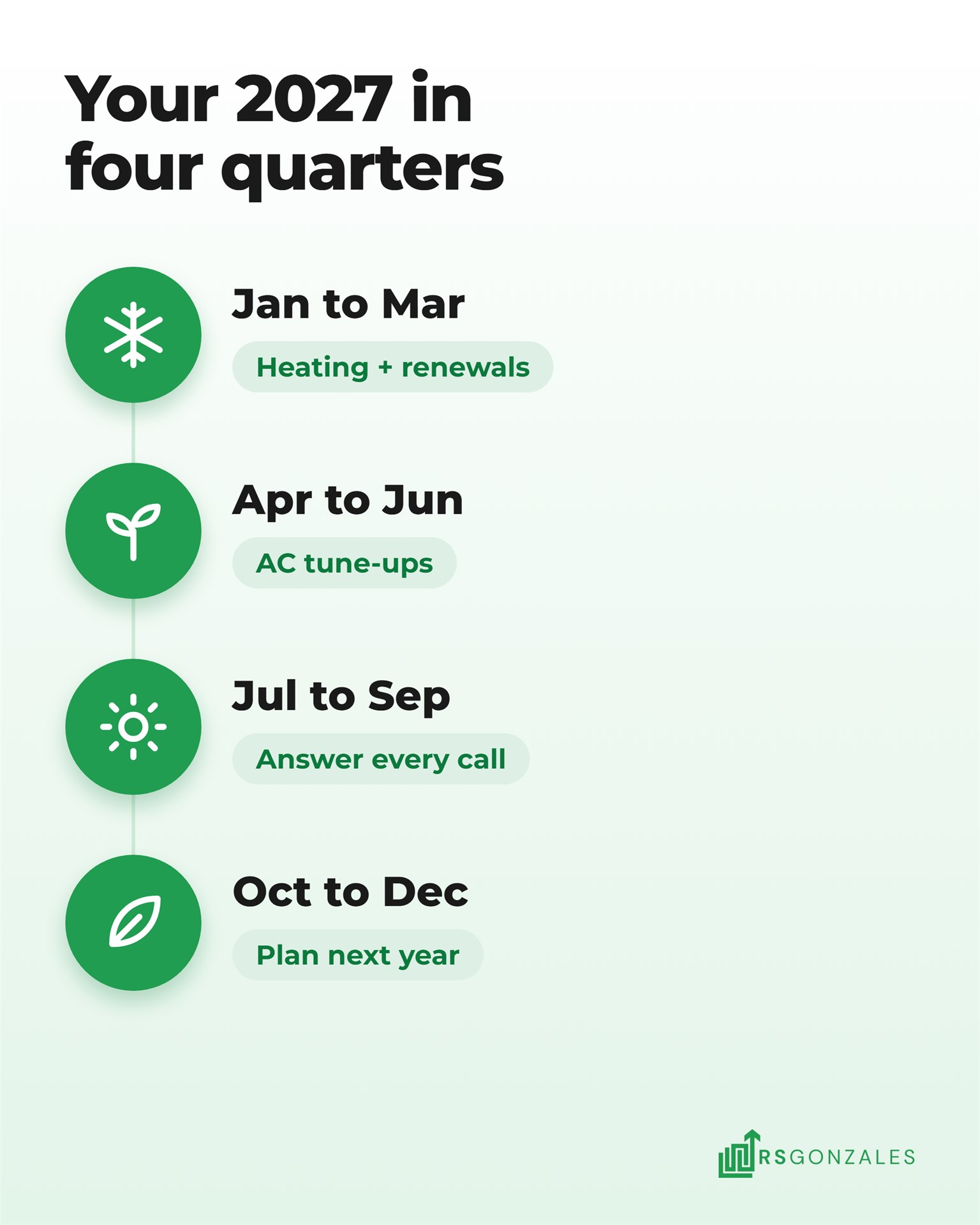
January to March: Heating Calls, Tax-Refund Season and Maintenance Renewals
In cold markets, the year opens with heating calls. ServiceTitan found that cold spells, which tend to strike in January and February, raised same-day HVAC calls by about 20% and daily revenue by about 70%. The IRS usually opens the filing season in late January and issues most refunds in fewer than 21 days, so February and March are when many homeowners can finally afford the replacement they put off.
| Month | Focus | Channels | The one action that matters |
|---|---|---|---|
| January | Heating repairs and maintenance renewals | Local Service Ads, Google search ads, email | Email every maintenance plan member whose renewal falls this quarter |
| February | Replacement offers for tax-refund season | Meta ads, email, your website’s financing page | Launch a replacement and financing offer the week refunds start landing |
| March | The first shoulder month | Google Business Profile, website, reviews | Book spring AC tune-ups before the first warm week |
Maintenance plan members are among the easiest jobs to book all year, because they already trust you. HVAC email marketing handles the renewal reminders so they go out on time, even in your busiest heating week. Winter HVAC ads carry January’s heating push, and HVAC marketing tips for tax season help you time February’s replacement offer.
April to June: AC Tune-Ups and Getting Ready for the Rush
Spring is the quiet stretch between heating and cooling, and the shops that use it well have a smoother summer. A tune-up visit fills your technicians’ schedule now, and it often finds the aging system that becomes a replacement sale in July.
| Month | Focus | Channels | The one action that matters |
|---|---|---|---|
| April | AC tune-up season | Email, Google Business Profile posts, Meta ads | Fill the tune-up calendar for the next six weeks |
| May | Phones and capacity before the rush | Your CRM, call routing, ad schedules | Call your own business line at lunch and after hours, and fix every call that goes unanswered |
| June | The first heat wave | Local Service Ads, Google search ads | Raise budgets on the channels that book same-day repairs |
May is the month most plans skip. A CRM, the customer relationship management software that keeps your leads, jobs, and follow-up in one place, can text back every missed call and send review requests on its own. Automating your HVAC marketing before the busy season takes about four weeks of setup, so May is the last month to start it. For the tune-up push itself, spring HVAC ad ideas give you offers to test in April.
July to September: Peak Season, Reviews and Answering Every Call
Summer is when the plan gets tested. In ServiceTitan’s data from about 800 shops, summer heat waves raised daily calls by about 20% and average daily revenue by 55%. A call your team misses in July can be a job that goes to the next company on the list.
| Month | Focus | Channels | The one action that matters |
|---|---|---|---|
| July | Answering every call | Local Service Ads, Google search ads, your CRM | Check missed calls every week and close each gap the same week |
| August | Reviews from every summer job | Review requests, Google Business Profile | Ask for a review on every finished job, the same day |
| September | Keeping the marketing on after the rush | Meta ads, email, your website’s heating pages | Follow up on every replacement quote still open from the summer |
Keep the ads running when the schedule is full. Pausing them in peak season hands your spot to a competitor, and the ad platforms have to relearn your account when you switch them back on. Summer HVAC ads do the most when every call they bring gets answered. August reviews also carry into the winter, because homeowners comparing companies pay attention to how recent your reviews are, and getting more HVAC Google reviews works best as a habit after every job, not a campaign once a year.
October to December: Heating Tune-Ups, Shoulder-Season Offers and Next Year’s Plan
The fall is when many owners cut their marketing, and it is the worst time to stop. October is a shoulder month with room in the schedule, so it is the time to sell heating tune-ups and maintenance plans before the first freeze fills the board.
| Month | Focus | Channels | The one action that matters |
|---|---|---|---|
| October | Furnace tune-ups and maintenance plans | Email, Google Business Profile posts, Meta ads | Sell heating tune-ups while your technicians have open days |
| November | The first cold snap | Local Service Ads, Google search ads | Turn heating budgets up before the first freeze, not after it |
| December | Reviewing the year and writing the next plan | Your CRM reports, call tracking | Block one afternoon to pull the year’s numbers and set the 2028 calendar |
Fall HVAC ads keep October’s tune-up offer in front of homeowners before their furnace fails. December closes the loop: the numbers you pull that afternoon become the starting point for next year’s plan.
How to Split Your HVAC Marketing Budget Across the Year
Once the calendar is set, the budget decides how hard each month can push. Our working rule for an HVAC marketing budget is 5 to 10% of revenue across all marketing, including ads, signage, and agency fees, and our HVAC advertising team plans budgets from that range. A $1.5 million shop at 7% has about $105,000 for the year, or roughly $8,750 a month on average.
Shops aiming to grow often spend more. In the 2025 Contractor of the Future study from the Air Conditioning Contractors of America (ACCA) and Farmington Consulting Group, contractors who put at least 12% of revenue toward marketing and advertising reported a 9% net profit, against 5% for those under 12%. That shows the two went together, not that the spending caused the profit, so treat it as a ceiling to grow toward rather than a starting point.
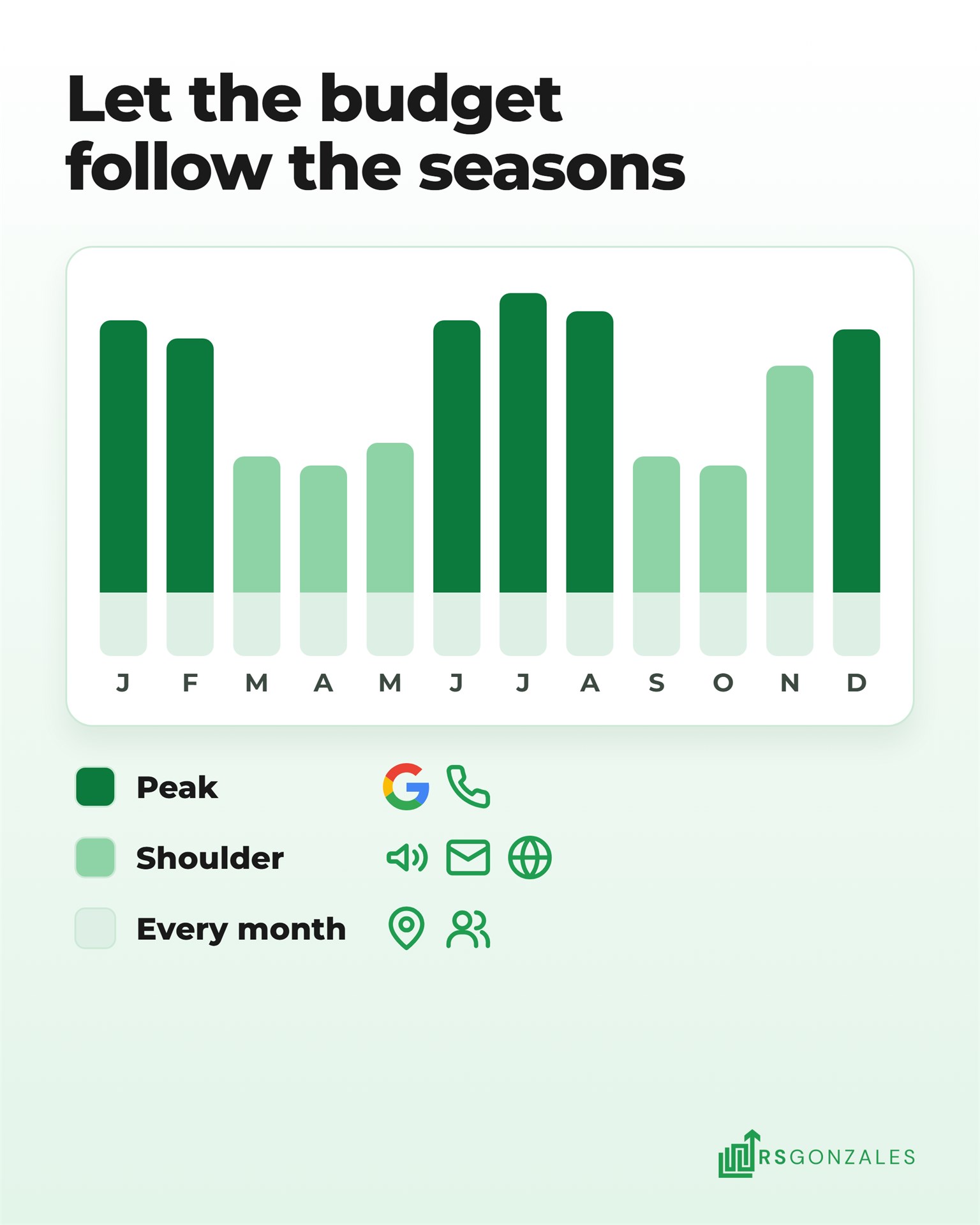
The average is not how you spend it. The money should rise and fall with your seasons:
| Season | Where more of the money goes | Why |
|---|---|---|
| Peak months (June to August, and December to February in cold markets) | Local Service Ads and Google search ads | Homeowners are searching right now, and these channels book same-day repairs |
| Shoulder months (March and April, September and October) | Meta ads, email, your website, SEO (ranking on Google without paying per click), and reviews | Replacement buyers are deciding, and the work you do now pays off in the next peak |
| Every month | Google Business Profile, CRM follow-up, and call tracking | These hold up every other channel, so they never switch off |
Splitting the year this way also keeps you out of the install versus repair trap: paying search-ad prices to reach replacement buyers who are not searching yet. Replacement buyers are easier to reach in the shoulder months, on Facebook and Instagram and in your customers’ inboxes, while they are still thinking it over.
See How We Plan HVAC Ad Budgets Across Every Channel
What Changed in 2026 That Your 2027 HVAC Marketing Plan Must Account For
A plan copied from last year misses what changed in 2026, and each of these changes needs a line in your 2027 plan.
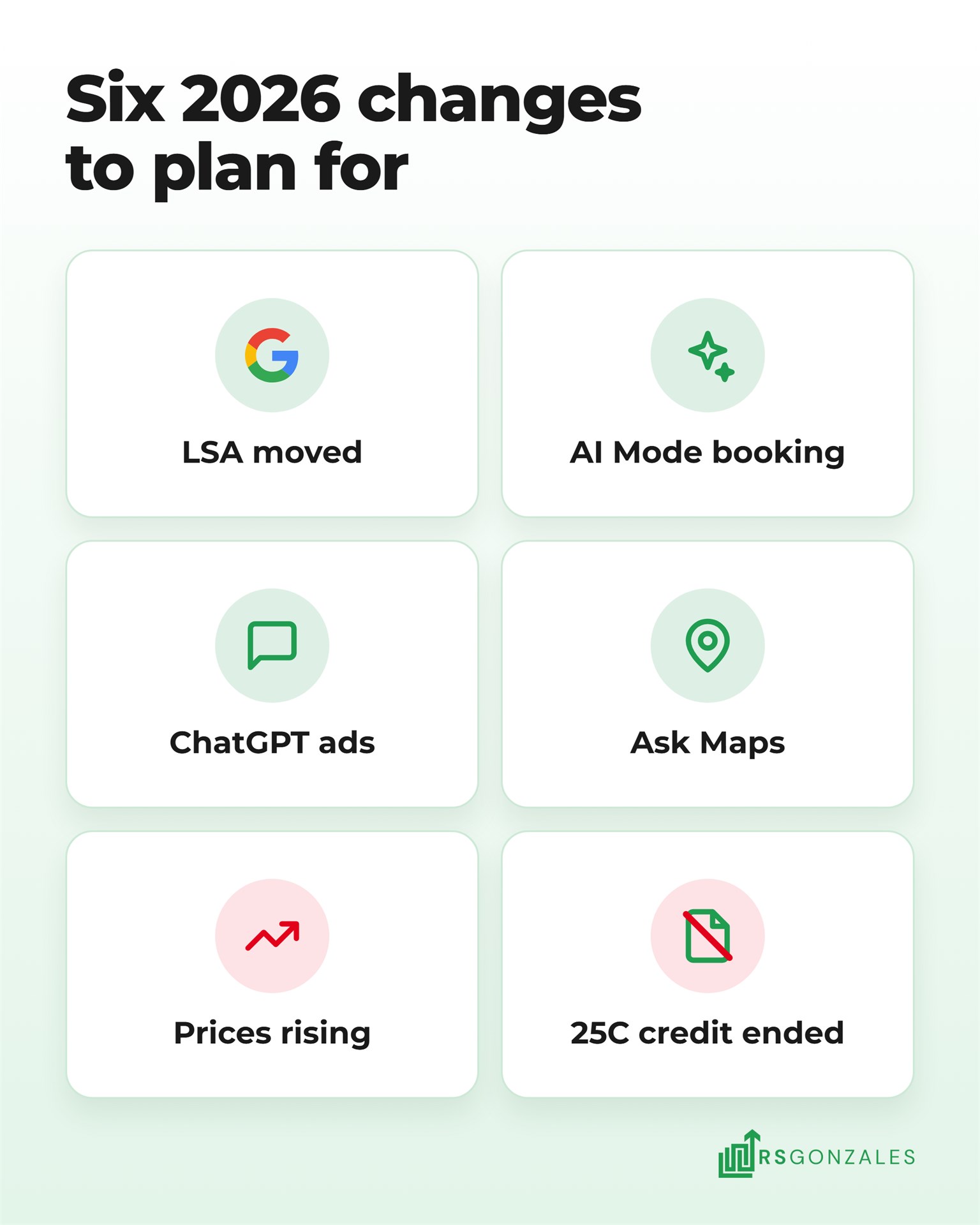
1. Local Service Ads Moved Into Google Ads and Started Billing Some Missed Calls
Local Service Ads are the pay-per-lead listings at the top of a Google search. Since August 2026, Google has been moving Local Service Ads into Google Ads, and budgets change from weekly to daily. Since October 1, Google’s lead rules also charge for a business-hours call that goes unanswered for more than 20 seconds. Your 2027 plan needs a line for phone coverage, not only for ad spend.
2. Google’s AI Mode Can Book HVAC Jobs
AI Mode is Google’s chat-style search tab, where homeowners ask a question and get a written answer. Since November 4, 2026, it can show booking and quote links through Angi, Thumbtack, Housecall Pro, and Jobber in the US, with ServiceTitan listed as coming soon. Check whether your booking software connects, and keep the calendar it shows honest, because a homeowner who books an unavailable slot calls someone else.
3. ChatGPT Sells Ads Under Its Answers
ChatGPT began showing ads to US users in February 2026, and since May, US businesses have been getting access to buy them on their own. A ChatGPT ad sits under the answer, labeled as sponsored, and it does not change which companies ChatGPT names. If you advertise on ChatGPT in 2027, budget it as a test with its own tracking. Being named in the answer is separate work, and AI search optimization for HVAC is how a company earns that.
4. Google Maps Replaced Questions and Answers With an AI Ask Button
Google removed the Questions and Answers section from Google Maps at the end of 2025, and searchers now get an AI answer built from what your business has listed and what your reviews say. In March 2026, Google added Ask Maps, a way to ask Google Maps questions using Gemini, Google’s AI model. Those answers can only be as good as your profile, so Google Business Profile optimization belongs in every month of the plan, with services, service areas, and descriptions written out in full.
5. Equipment Prices Kept Climbing
Carrier announced an 8% price increase on residential equipment for the end of 2026, citing tariffs and the cost of steel, copper, and aluminum, and Lennox said it plans an increase in early 2027. A higher replacement quote takes longer to say yes to. Plan for more follow-up on open quotes and a financing offer that is easy to find on your website.
6. The Federal 25C Tax Credit for Heat Pumps and AC Ended
The 25C credit was the federal tax credit homeowners claimed for heat pumps, central AC, and furnaces. The IRS confirmed that it is not allowed for equipment placed in service after December 31, 2025. Any ad, page, or sales sheet that still promises the federal credit needs to come down. Marketing heat pumps after the tax credit means selling on comfort, lower bills, and any local utility rebates instead.
How to Tell Each Month Whether Your HVAC Marketing Plan Is Working
All of that only helps if you check it. Block 30 minutes in the first week of each month and check these numbers. The goal is not more leads. The goal is more booked jobs for the money you spent.
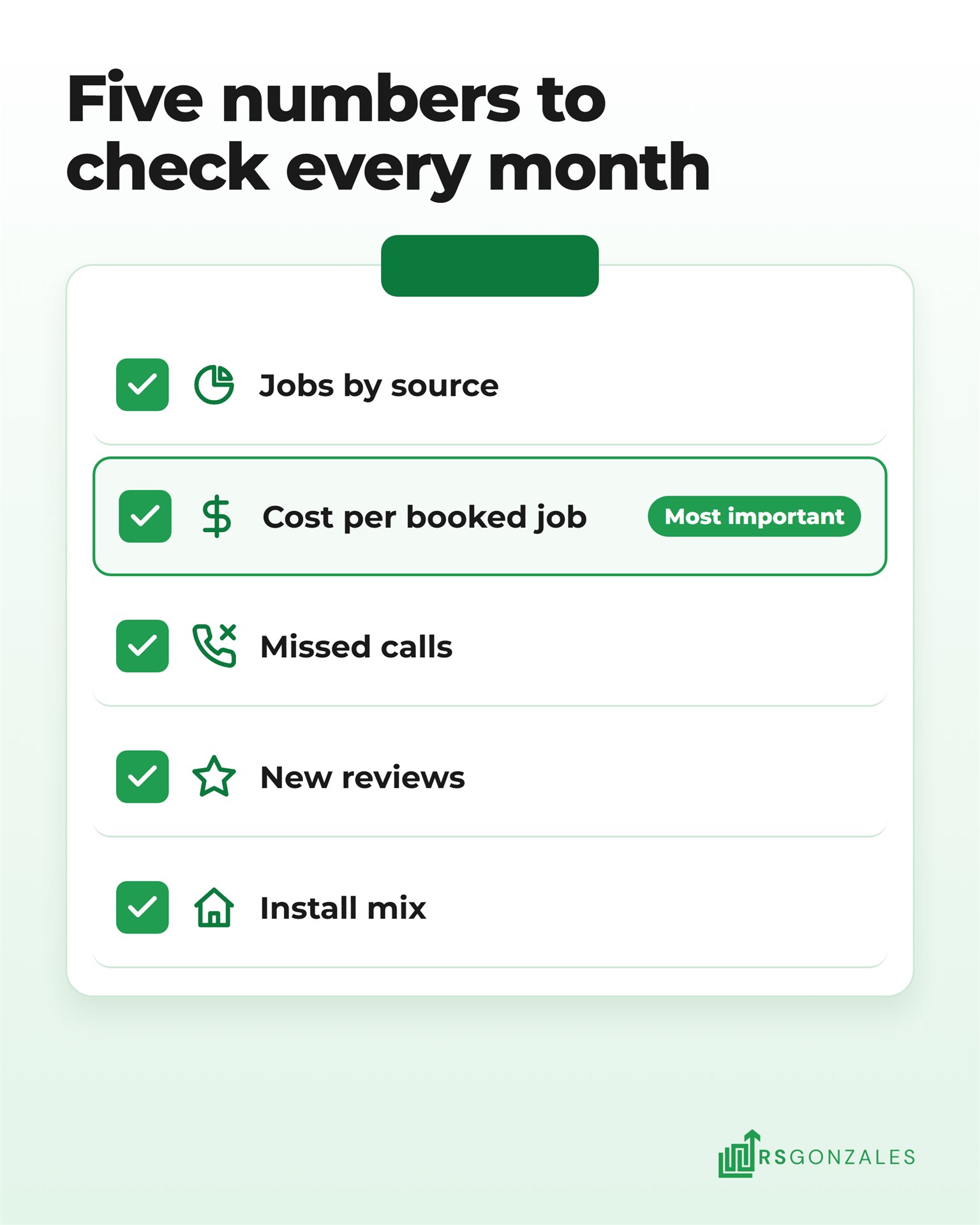
| What to check | Where to find it | What a bad month looks like |
|---|---|---|
| Booked jobs by source | Your field-service software or CRM | One channel brings leads but no booked jobs |
| Cost per booked job by channel | Ad spend divided by the jobs each channel booked | It climbs two months in a row |
| Missed calls and callback time | Call tracking and your Local Service Ads lead list | Missed calls cluster at lunch or after 4 p.m. |
| New reviews | Your Google Business Profile | Fewer reviews than the jobs you finished |
| Install versus repair mix | Your booked jobs, split by job type | Replacements fall behind your goal for the quarter |
Cost per booked job is the number that matters most. A cheap lead that never books costs more than an expensive lead that turns into a $12,000 system, and HVAC cost per lead benchmarks for 2026 show how far lead prices swing by channel and season. The HVAC CRM included in every RS Gonzales plan tracks each job back to the call or form it came from, and it syncs with ServiceTitan, Housecall Pro, Jobber, and FieldEdge.
See How Our HVAC CRM Tracks Every Booked Job
Should You Run Your HVAC Marketing Plan Yourself or Hand It Off?
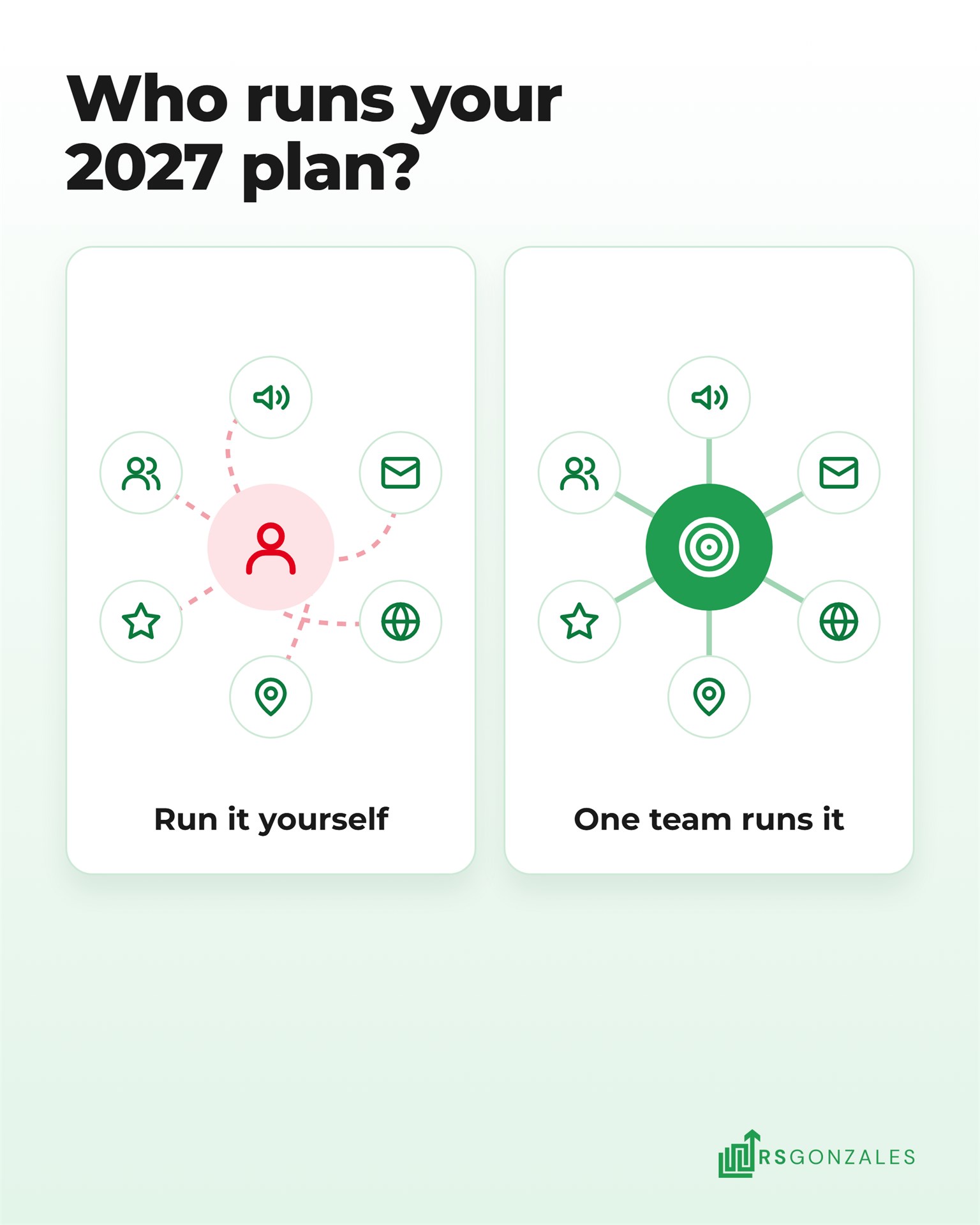
With the plan written, the last question is who runs it. Plenty of owners run their own plan well, especially in their first years. The trade-offs come down to your time and how many channels the plan asks for.
Running Your HVAC Marketing Plan Yourself Versus Hiring an Agency
| Running it yourself | Hiring an HVAC marketing agency | |
|---|---|---|
| Cost | No agency fee, but your hours have a price, and so does a mistake in an ad account | A monthly fee on top of your ad spend |
| Time | A few hours a week, more in peak season, when you have the least time | About 30 minutes a month to review results and approve changes |
| Learning | Each platform has its own settings, and they changed again in 2026 | The agency keeps up with platform changes for you |
| Control | You decide every offer and every dollar | You set the goals and approve the plan, and the agency runs it |
| Reporting | You pull numbers from each platform yourself | One report that ties spend to booked jobs |
If your plan uses two channels and you enjoy the work, running it yourself can make sense. Once it spans ads, your website, your Google profile, reviews, email, and follow-up, the hard part is keeping every channel pointed at the same goal.
Why HVAC Owners Hand Their Plan to RS Gonzales
RS Gonzales works only with HVAC contractors, and one team runs every channel toward the same number: booked, profitable jobs. Every program includes your website, SEO, Google Business Profile, ad management, and your HVAC CRM, so the plan never depends on five vendors agreeing. Each account manager works with about 12 clients, so the person who knows your plan has time to run it.
The 90-day HVAC growth plan is how that starts. The first 90 days build the foundation, launch the channels that fit your market, and set up tracking, and Day 90 ends with a review of what worked and the plan for the next quarter. Programs are listed on our pricing page, from $2,200 a month.
What HVAC Owners Should Take Away About Planning 2027
You build an HVAC marketing plan for 2027 from your own numbers, not from a list of channels. Start with last year’s booked jobs by source, your install goal, and your team’s capacity. Then give every month one action, let the budget follow your seasons, and check cost per booked job once a month. A plan like that keeps every part of your HVAC lead generation working toward the same goal.
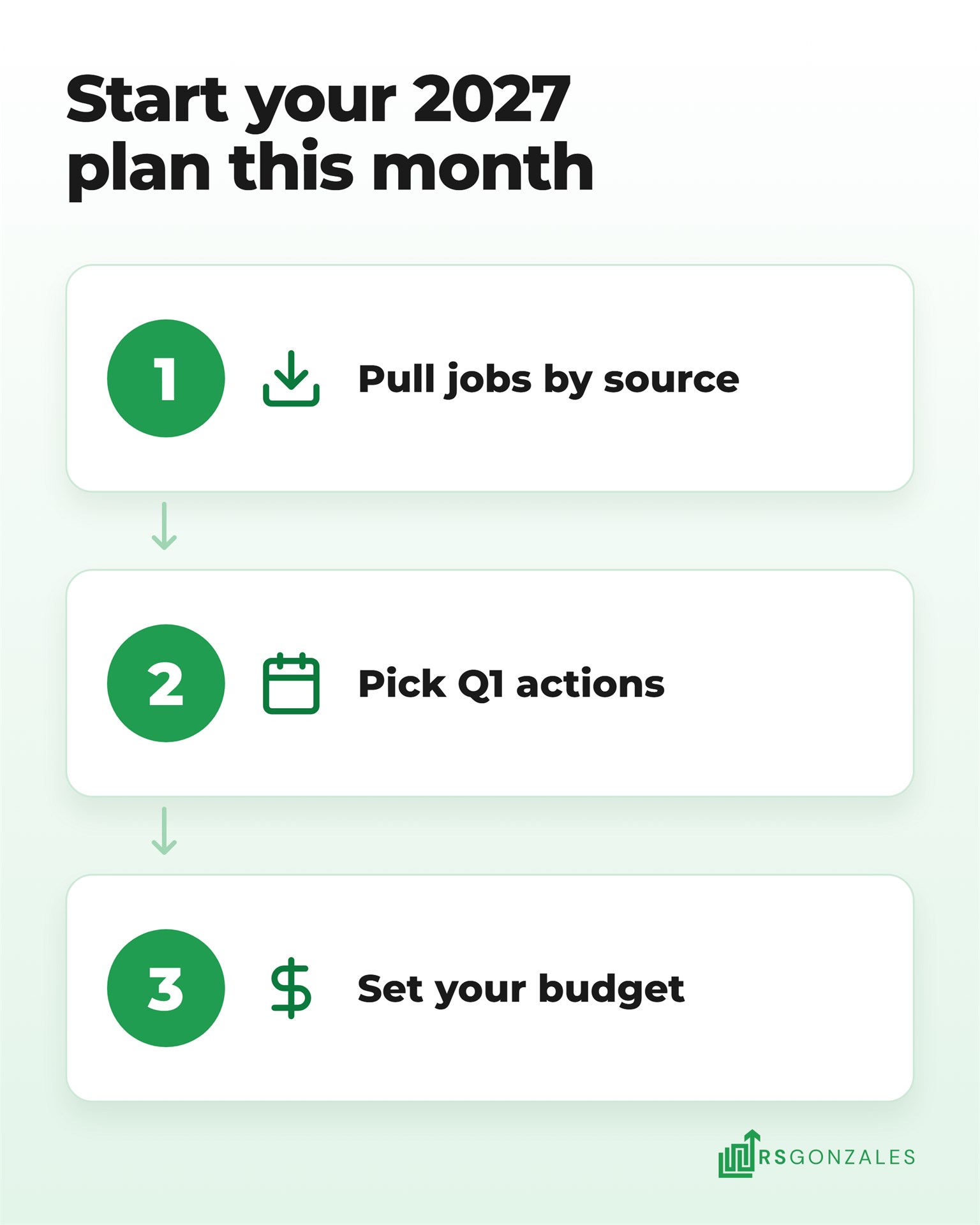
Start with these three steps this month:
- Pull your 2026 booked jobs by source. Every other decision in the plan depends on knowing which channels booked work. Export the year’s jobs from your field-service software and tag each one with where the customer found you.
- Pick your one action for January, February, and March. The first quarter is where most plans fall apart, so it needs the most detail. Copy the first-quarter table, put a name next to each action, and set the dates in your calendar.
- Set your 2027 budget as a share of revenue. A number tied to revenue grows with the business and keeps the slow months funded. Start inside the 5 to 10% range, then mark which months get more and which get less.
An afternoon spent on the plan in December is worth more than any single ad you run in July.